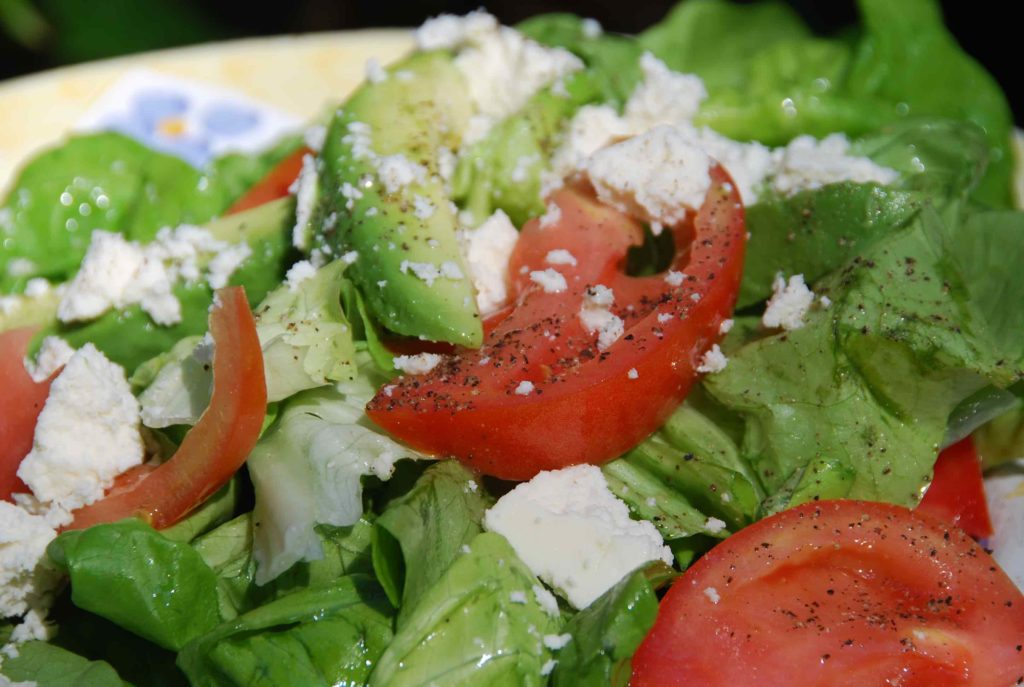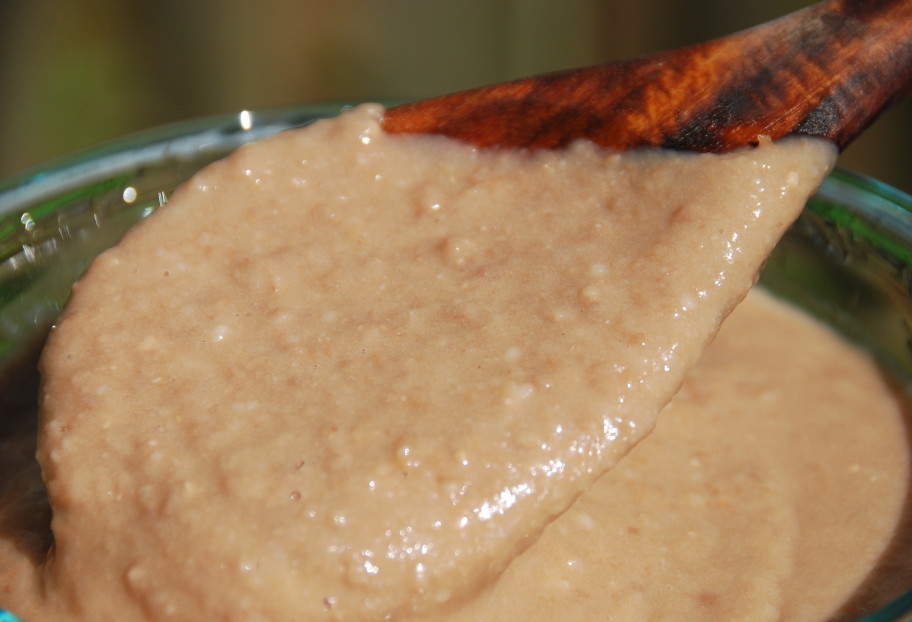
Under 15 Min

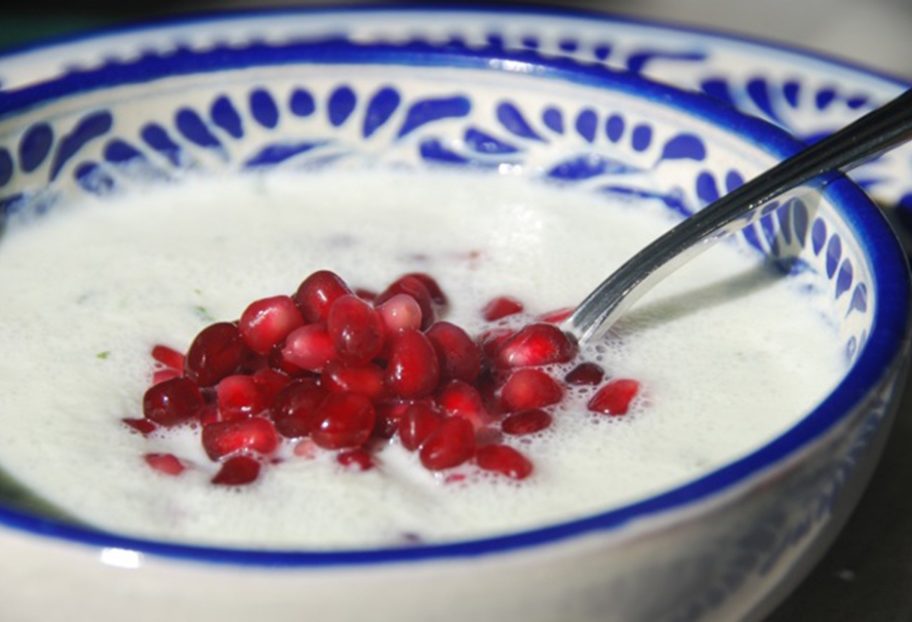
Cucumber Soup with Mint, Jalapeño and Pomegranate

Last post was about that Cucumber Martini I could drink an entire pitcher of. It feels like a century has passed, and I have so, so, so many stories and recipes to share with you. But only now, after a wildly crazy hectic summer desperately missing this blog, am I able to sit down and write. And guess what? I have no choice but to continue with cucumbers!

This is why: I thought I knew cucumbers, I really did, until I visited Mr. Jose Luis Rodrí­guez Rojas’ cucumber green house in the state of Morelos, a state known as “Mexico’s Spring”. Cucumbers grown there are the slicers, ironically called pepino Americano or pepino común in Mexico. Slicers are the cucumbers mostly used in Mexico’s kitchens. And the ones I use all the time.

Now I know how little I knew about them.

Sure I have peeled, sliced, diced and julienned a gazillion and have used them in so many ways, from salads to sorbets. I know it’s taste: mild, watery, fresh, wanting to be lemony. I know it’s bite: soft yet crisp. I know the coolest trick to help them never be bitter (cut ends and rub the opposing sides before peeling).

But I had never seen their plants in their youngest form, as Miguel, one of the farmers showed me.
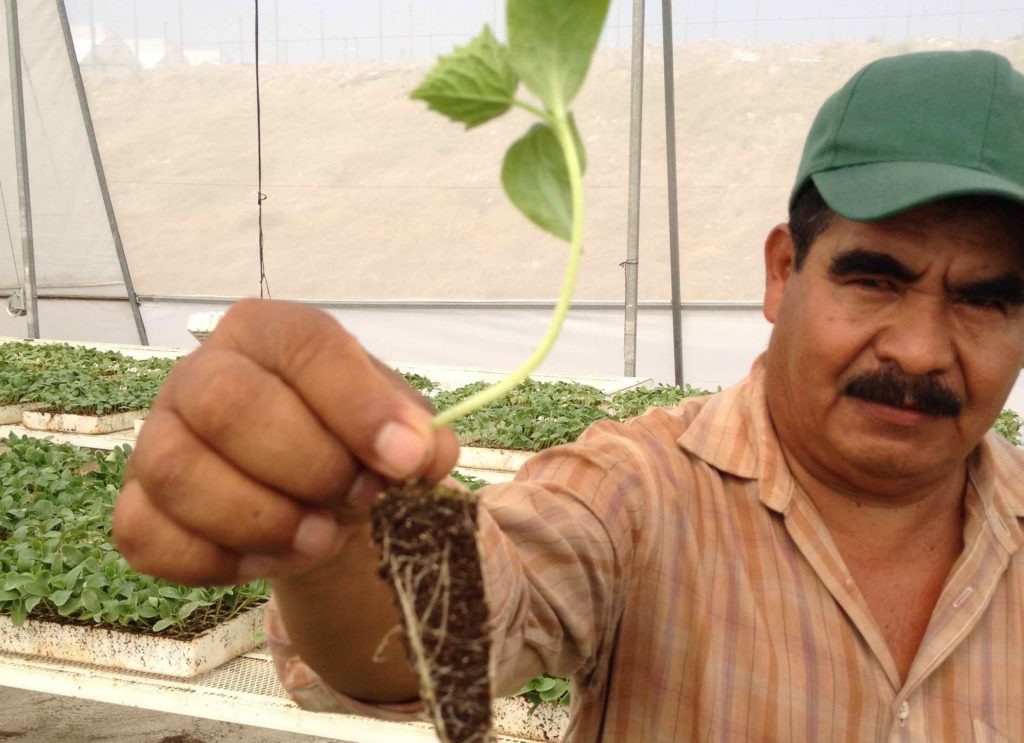
Cucumber Soup 1

Nor was I aware, that after just one month of protected care, they grow to have jungle like looks and size.
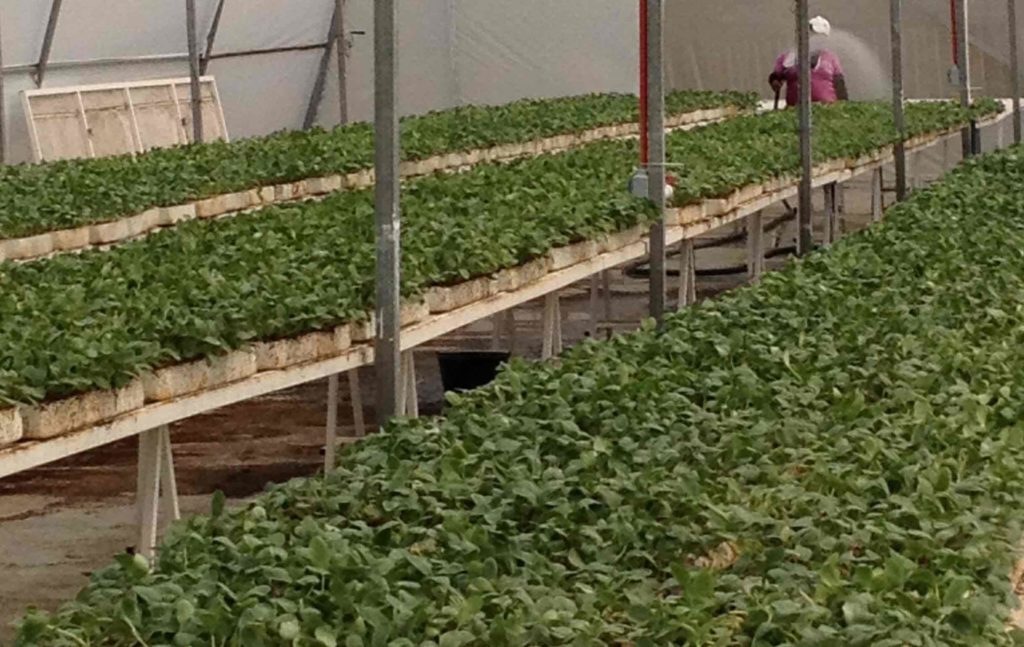
Cucumber Soup 2

Look at them!

If I could only embed here the moist and clean smell of the plants and the velvety feel of their immense fully grown leaves, I would be so pleased.
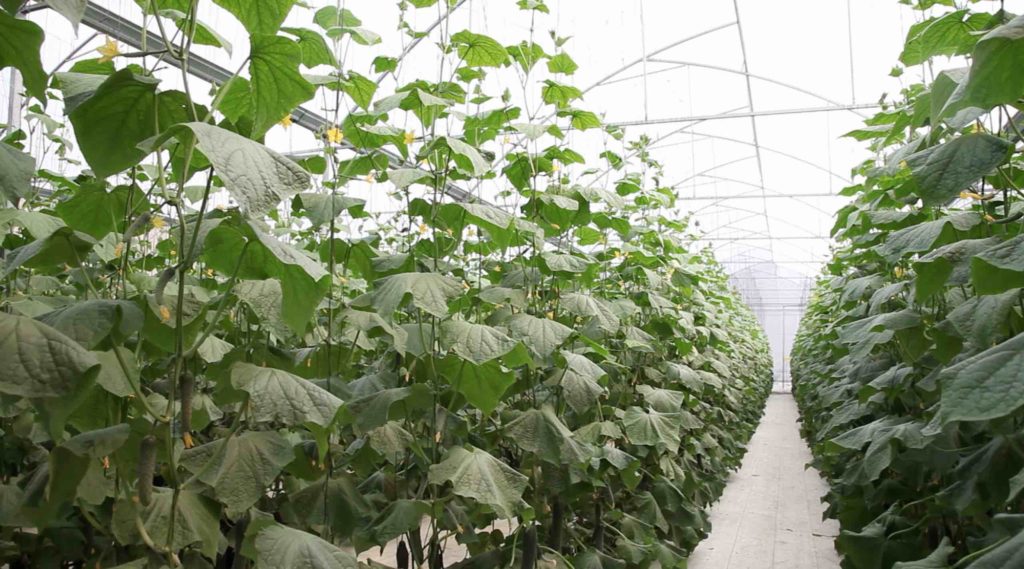
Cucumber Soup 3

Much to my surprise, the flowers from where those huge cucumbers grow from are delicate and feminine. Their color a strong yellow that seems to want to fade right before your eyes, just as their petals seem to tell you to please be careful if you dare touch them.

There are male and female cucumber flowers and they are both as pretty. It is the female pollinated flowers, which grow a miniature baby cucumber right behind, covered in tiny-prickly-thin-like thorns that protect it as it grows. So they have ways of telling you not to touch them.
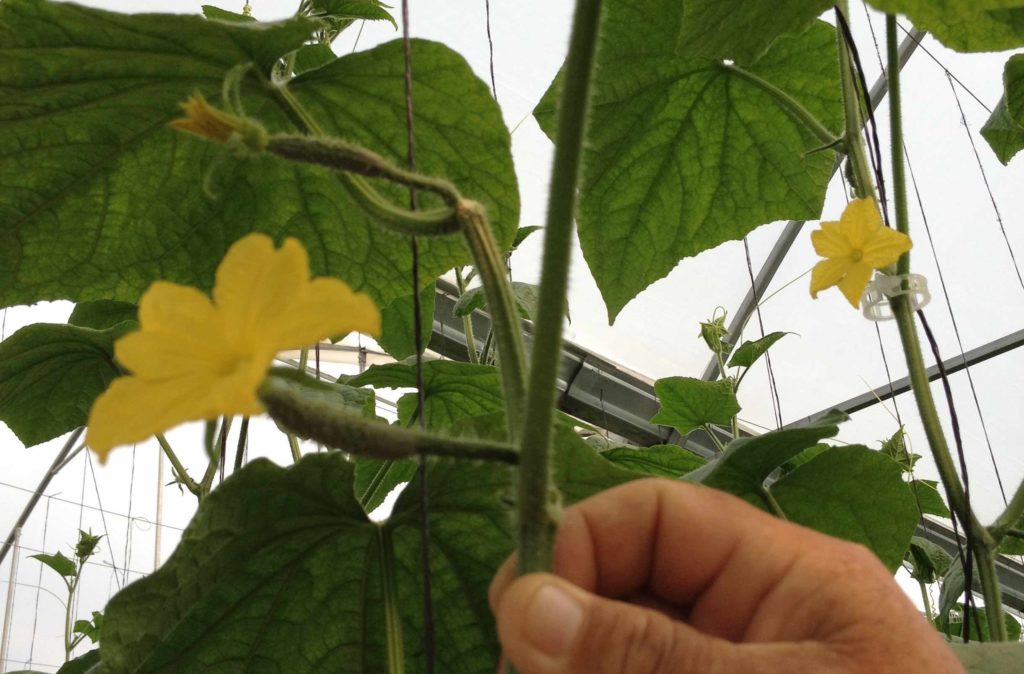
Cucumber Soup 4

The flower holds on, as the cucumber grows. See below?

I marveled.

After a while, I had to make an effort to stop ooooohing and aaaaahing at every site (I have to act more my age, you know).
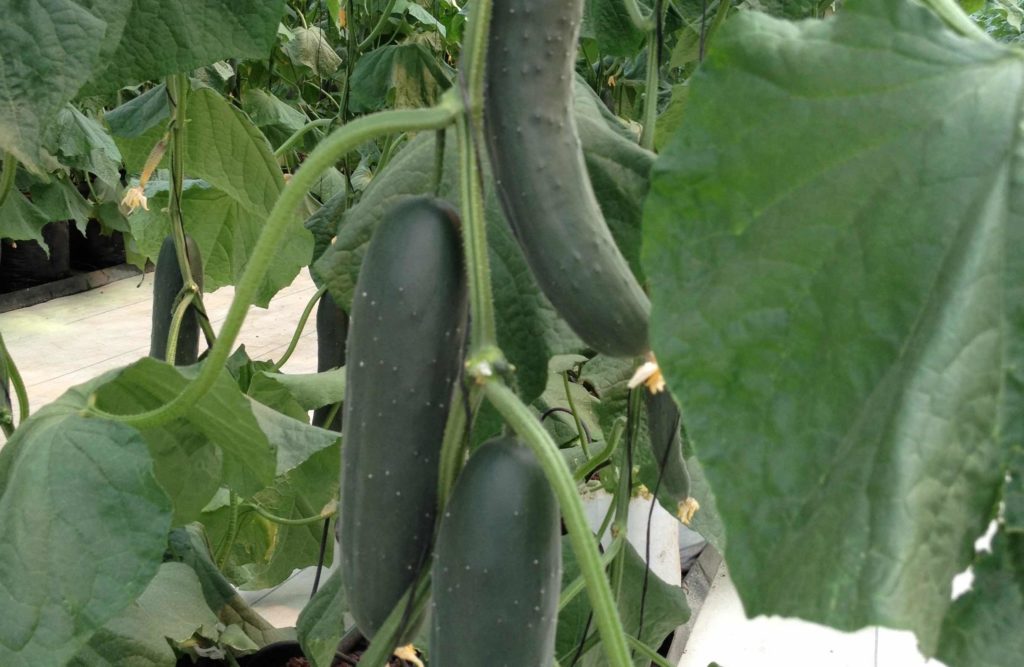
Cucumber Soup 5

After they pick the cucumbers, they clean them and pack them up.
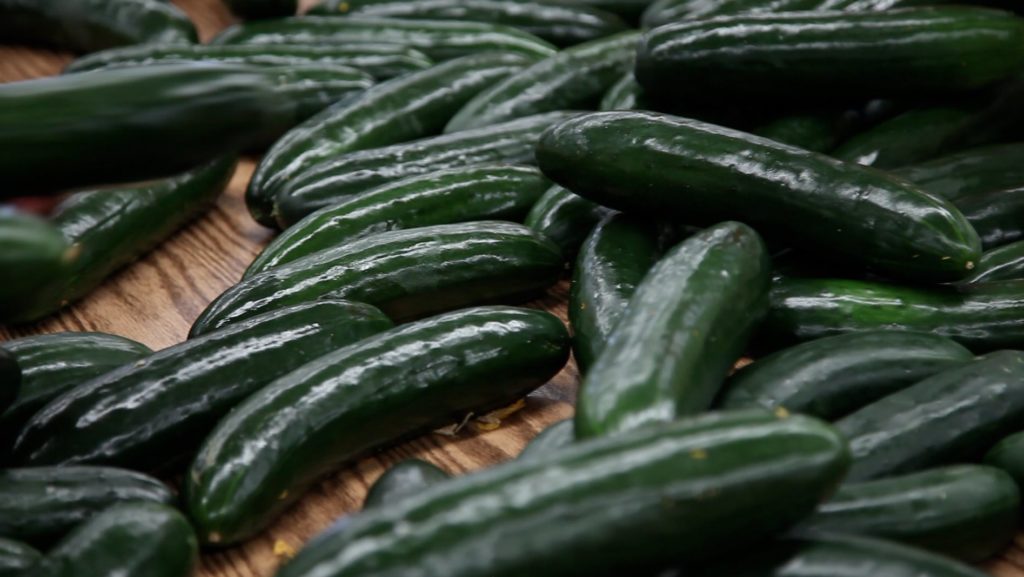
Cucumber Soup 6

Mr Jose Luis employs about 300 people a year. Each person I met, seemed proud about their job and meticulous in their care of the green house facilities and mostly, the plants. “No one kneels here to work”, Mr. Jose Luis repeated a couple times, “work here is worthy, dignified”. Truth is, it genuinely felt that way. It seemed that people felt vested in the business. Their faces lit up when I asked any question that popped out of my mouth (if you know me by now you know I have an endless stream of questions…).

Crazy Nacho Guani, who was filming with Cortez Brothers and I (for Season 2, which launches this weekend, yey!) was filming up there like a wild monkey (if you knew Nacho you’d know he climbs anything that has any height… )

Cucumber Soup 7

Mr Jose Luis’ chest seems to burst as he talks about the history of his green house, more so about the vegetables he grows. He drastically changed careers, like I did too. He, also, has never looked back.

After spending the day, Mr Jose Luis, who could not have been more friendly, asked if we were hungry. We were starved. He immediately offered to take us to his favorite place for a late lunch-early dinner. But that’s another story.
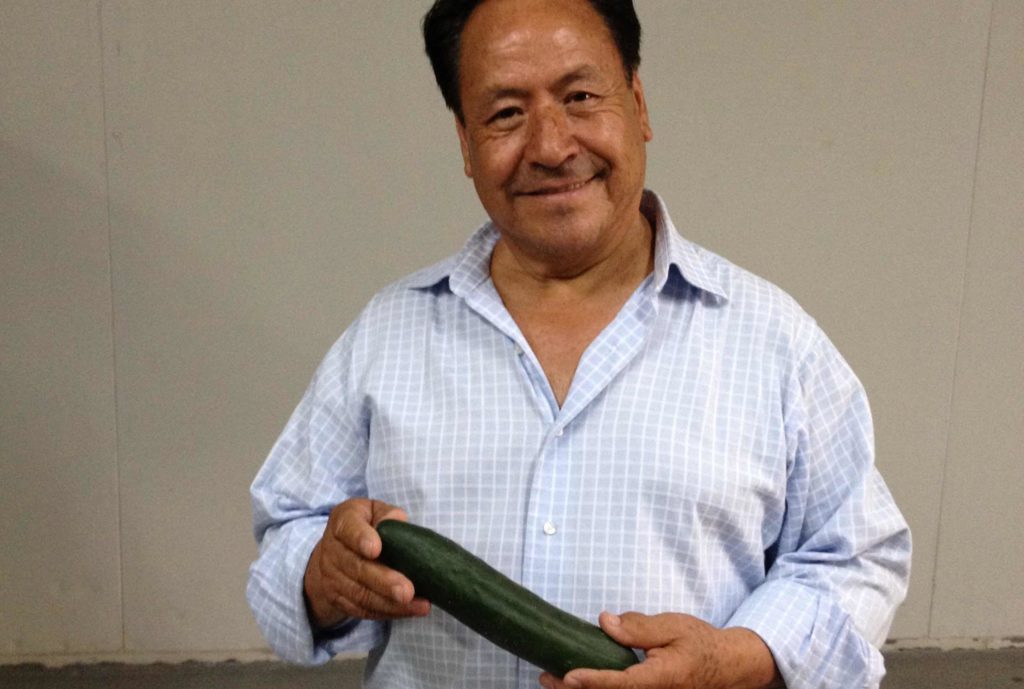
Cucumber Soup 8

Lesson learned, yet again: no ingredient, no single one is common. Even if it goes by the name pepino común, or common cucumber. Not even if you have used it a thousand ways and have chopped it a gazillion times.

Getting to know cucumbers, from flower to tops, made me think of so many new ways to use them. In a cold soup? With a bit of a bite from a jalapeño? With the wide echo from some mint? Topped with something sweet and crunchy and tart to make it all go wild in your mouth?

I played with the idea and once that I nailed a take I liked, I can’t stop making it.

Think of it as a Mexican tzatziki or as a white cucumber gazpacho of sorts. Or better yet, indulge me please and just make it. To boot: takes but 2 minutes in the blender.

p.s. Party or Holidays coming soon? Serve it in little mugs or cups for people to drink and munch along.

Cucumber Soup main
Print Recipe
5 from 2 votes

Cucumber Soup with Mint, Jalapeño and Pomegranate

Getting to know cucumbers, from flower to tops, made me think of so many new ways to use them. In a cold soup? With a bit of a bite from a jalapeño? With the wide echo from some mint? Topped with something sweet and crunchy and tart to make it all go wild in your mouth? I played with the idea and once that I nailed a take I liked, I can’t stop making it.
Prep Time10 minutes
Cook Time5 minutes
Course: Soup
Cuisine: Mexican
Keyword: cucumber, jalapeno, lime, mint, onion, pati's mexican table, pomegranate, yogurt
Author: Pati Jinich

Ingredients

  • 1 1/2 cups thick Greek yogurt
  • 3 pounds slicer/common cucumbers about 2 1/2
  • 1 tablespoon red onion chopped
  • 1 clove garlic
  • 1 tablespoon jalapeño chopped or more to taste (seeding optional)
  • 15 mint leaves
  • 2 tablespoons fresh squeezed lime juice
  • 1 teaspoon kosher or coarse sea salt or more to taste
  • 3/4 cup pomegranate seeds or more to taste

Instructions

  • Wash cucumbers, cut the ends and use them to rub the opposing cut ends of the cucumber. Peel and cut lengthwise into 4 long strips and slice off the seeds. Discard the seeds and cut into chunks.
  • In the jar of a blender, place the yogurt, cucumbers, red onion, garlic, jalapeño, mint, lime juice and salt.
  • Puree until smooth. Pour inside a mug or container and store in refrigerator until ready to serve.
  • Serve and sprinkle pomegranate seeds on top.
Notes

Sopa de Pepino con Jalapeño, Menta y Granada

Totally Unexpected: Cucumber Martini

I had fallen for the city of Puebla almost 20 years ago. And you know how that goes, sometimes when going back to things you loved while young and are nostalgic about, there’s a risk of disappointment.

Just the first night I was back, I felt myself falling for it all over again. After days of scouting, eating, researching, testing and filming with Cortez Brothers, I left with a disorganized mental list of things I didn’t even had the chance to try.

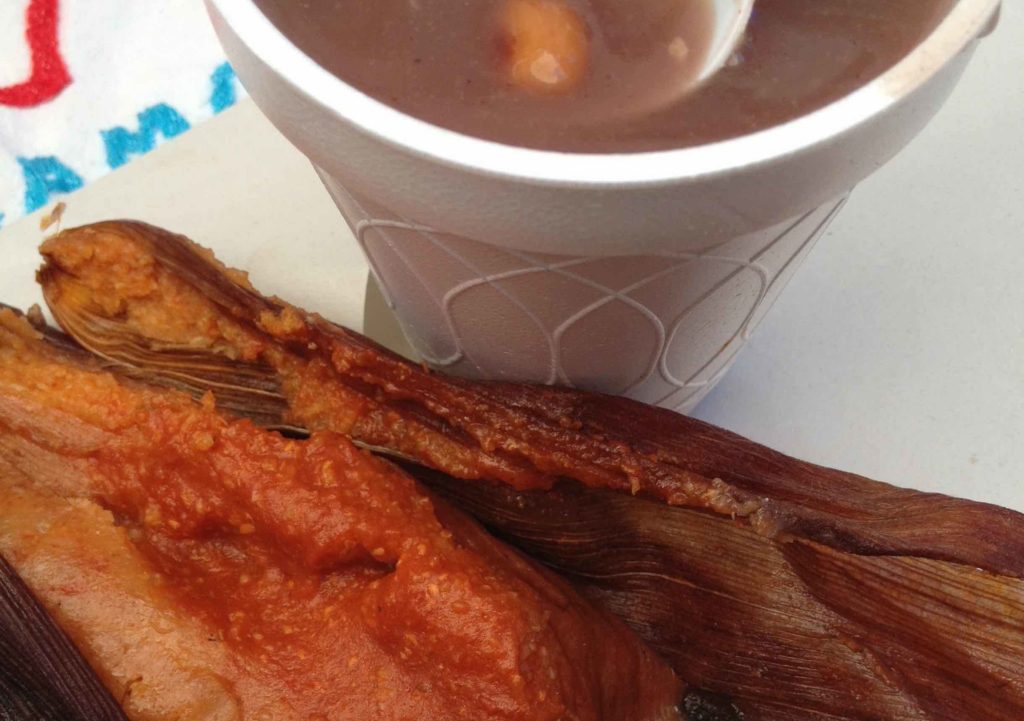
See, the charm is everywhere, from the history inhaled in each corner to the talavera tiles splattered all over buildings, tables, vases and plates; to the food which makes you want to lick the plates clean, be it paper plates at markets – like this one holding cumin tamales with a side of peanut atole…

Cucumber Martini 1

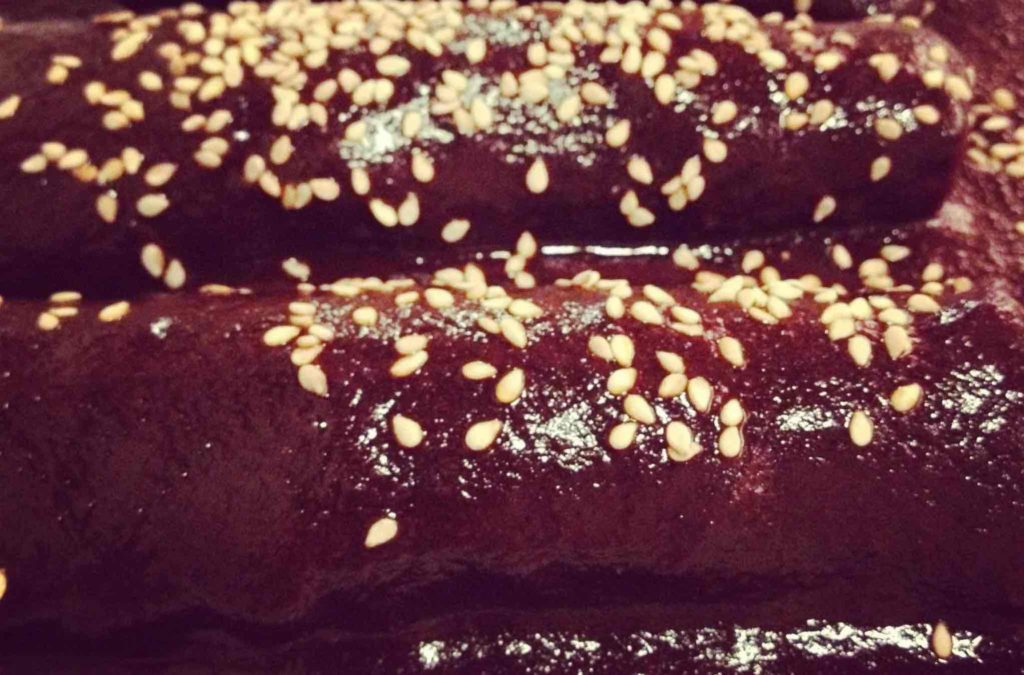
…or fine talavera holding Mole Poblano enchiladas…

Cucumber Martini 2

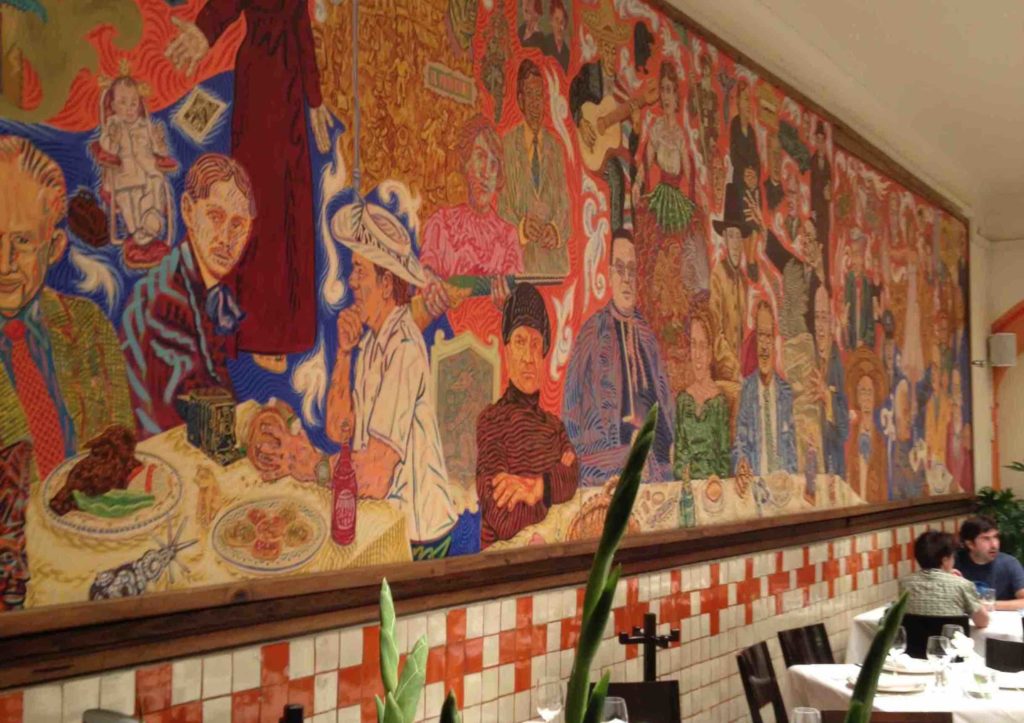
…at El Mural de los Poblanos, one of the city’s top restaurants with to-die-for food.

Cucumber Martini 3

But what I fell for the most, were Poblanos-namely the people from Puebla. Poblanos will give you their time and attention, no matter how busy their schedule may be. And they will do it wholeheartedly with care and sweet enthusiasm.

No wonder why, in the midst of a city where just about any random street gives you a thousand photo shots to aim at, Poblanos are falling all over each other.

Cucumber Martini 4

Seriously: There are people hugging everywhere…

Cucumber Martini 5

…despite posts, whether it rains or shines, and no matter what time of day.

I mean, forget about hugging, there seemed to be a lot of kissing too (I am all for public displays of affection, because hey, we have just so much time on this earth and if someone is lucky to be with whom they love and they want to show it, I say go for it).

Cucumber Martini 6

So, I fell for Puebla, which was to be expected. But what was totally unexpected in my hunt for tasting more scrumptious Mexican food, which is found in every corner of this city, was finding some of the best Italian food I have ever tried.

That’s right.

In the middle of the heart of Puebla.

And what do you know? There had to be a love story involved.

Cucumber Martini 7

Photo Nacho Guani

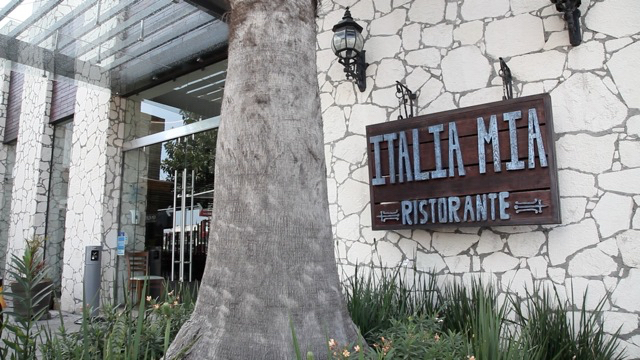
Luis Carpintero, the owner, had worked in restaurants and bars for most of his life -since he was a kid in his mother’s small restaurants. He fell in love with Monica and for years their dream was to open up a restaurant together. Since Puebla has such extraordinary Mexican food wherever you turn, they opted for Italian, which is their favorite after Mexican (like me…).

A friend of a friend of a friend of Luis knew of a Mexican woman, who had gone to Italy 3 decades ago. She had fallen in love with an Italian chef named Piero Giangrande and dragged him to Tlaxcala, a neighboring state of Puebla, where he opened up shop. Luis and Monica sought him out and for ten years planned this Italia Mia endeavor.

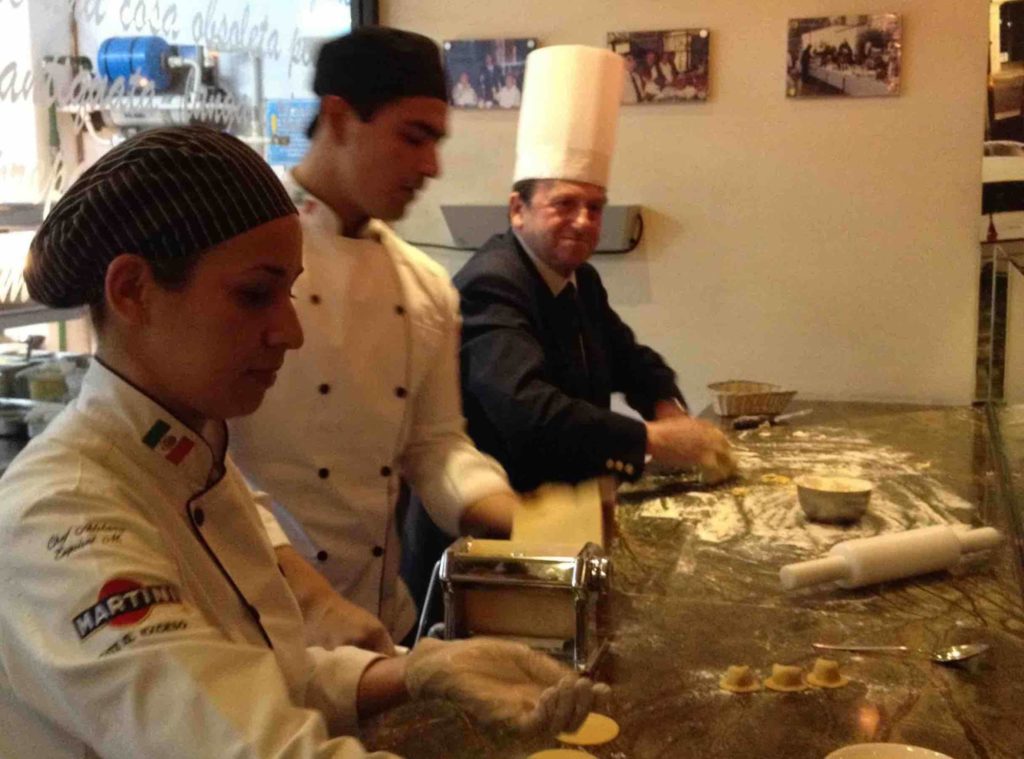
There is a large wooden oven for pizza and pasta made from scratch. About that pasta… I had such a hard time choosing which to have that I ended up sampling from everyone’s plates and still couldn’t decide. Chef Piero, watches over the staff as they roll out every single sheet of pasta. That one right there is stuffed with veal, pork, Parmesano Reggiano and Prosciutto, and it is served with a white truffle sauce that is as delicate in your tongue and as strong in its intensity after you swallow.

Cucumber Martini 8

Luis and Monica put their lifetime savings and the entirety of their hopes and hard work into this place. And you can feel it – sparks fly when they light up the bar (photo does not do justice to it really, it was taken with my phone).

They have a Martini menu with 22 options where they serve, as Luis calls, tragos coquetos – flirty drinks. And flirt they do!

Cucumber Martini 9

The Cucumber Martini that Luis and Monica suggested I try bewitched me so, that as soon as I had the chance back in DC I ran to the liquor store to get Limoncello, one of its main ingredients. I even made it at a function last week and guests were marveling about it.

Cucumber in a Martini?!? Yeah, that’s what I thought. Try it, you will not believe how charming it tastes. Just like Puebla, anything that I tried there, whether Mexican or not, makes me want to come back for more.

Cucumber Martini 10

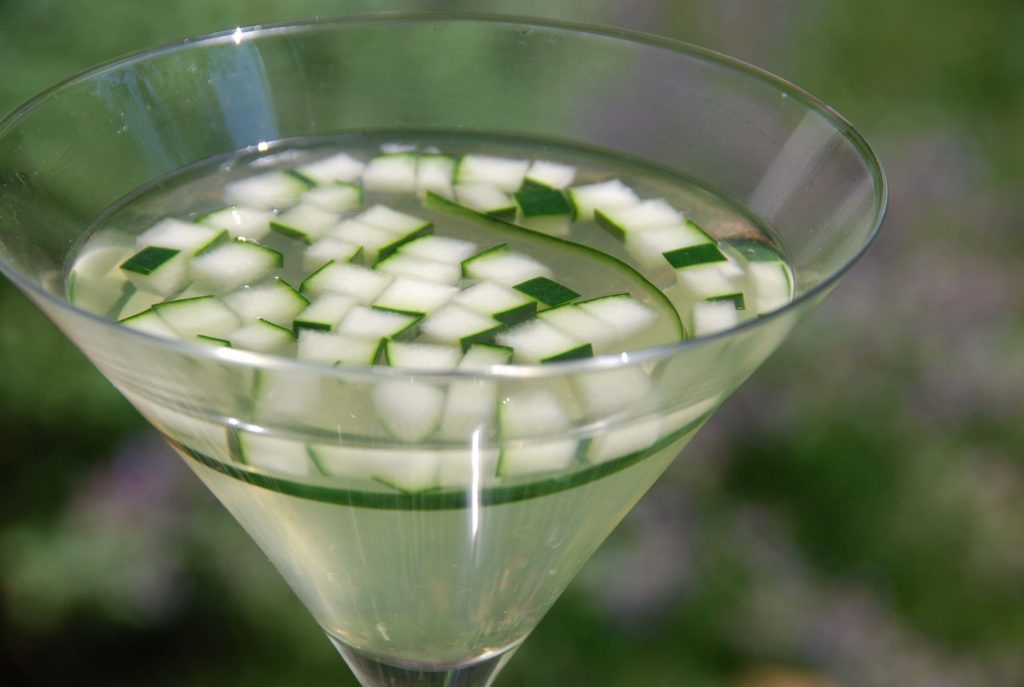
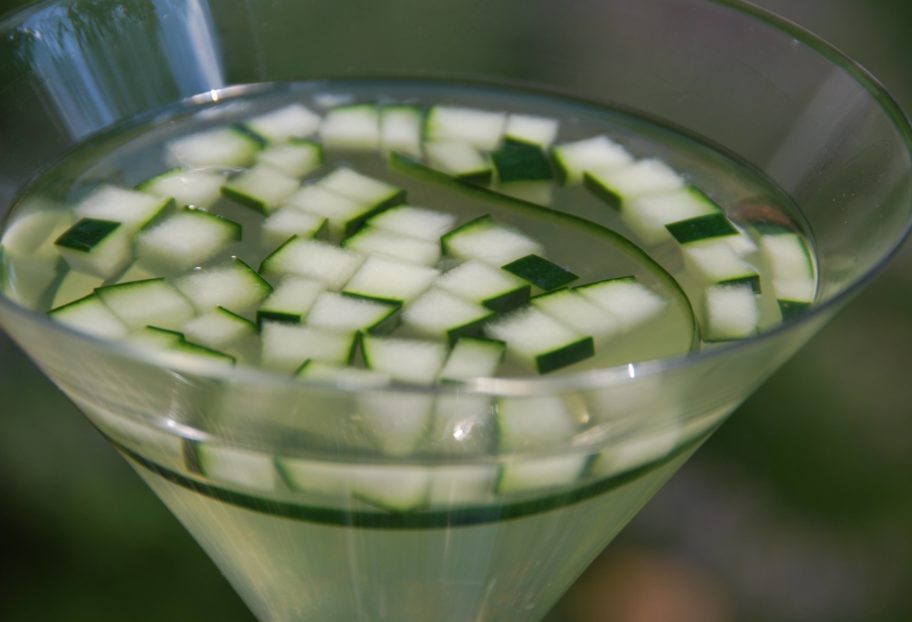
As you take each sip, you get the chance to munch on the diced cucumber, which has been soaking in the martini. When you try it, you will find the experience to be totally unexpected too.

Cucumber Martini main
Print Recipe
4.75 from 4 votes

Cucumber Martini

The Cucumber Martini that Luis and Monica suggested I try bewitched me so, that as soon as I had the chance back in DC I ran to the liquor store to get Limoncello, one of its main ingredients. I even made it at a function last week and guests were marveling about it. Cucumber in a Martini?!? Yeah, that’s what I thought. Try it: you will not believe how charming it tastes.
Prep Time5 minutes
Cook Time1 minute
Course: Drinks
Cuisine: Mexican
Keyword: cocktail, cucumber, gin, lemon, Limoncello, Recipe, simple syrup
Servings: 1 martini
Author: Pati Jinich

Ingredients

  • 1 1/2 ounce Bombay Gin or gin of your choice
  • 1 ounce Limoncello
  • A slice of lemon and cucumber to macerate
  • 1/2 ounce natural or simple syrup
  • 1 tablespoon diced cucumber

Instructions

  • In an empty shaker or martini mixer combine all the liquors, slices of lemon and cucumber, and the syrup. Mix and macerate all the ingredients for about 5 minutes. If making a large quantity, let it sit in the refrigerator in a pitcher up to 12 hours.
  • Fill the shaker with ice and shake vigorously for 1 minute. Strain and pour the liquid into a chilled martini glass. Decorate the martini with the small pieces of cucumber and a spiral of cucumber skin.

Notes

Martini de Pepino

Apple, Radish, Watercress Salad with Pistachio and Chile de Arbol

A couple weeks ago, right as I was setting up for one of my classes, “A Culinary Compass of Mexico,” at the Mexican Cultural Institute, Alberto Roblest came over and asked me a great question.

“Pati, do you cook traditional Mexican recipes OR do you create your own?”

Alberto is doing a project with the support of The Office on Latino Affairs. It is called Hola Cultura and explores the contributions of Latinos to DC life and culture, from art to language to sports to cooking.

I think he meant for me to respond with an either or. He really did. Come on Pati, “traditional” OR “new,” he insisted. But I kept answering “BOTH!” As I kept trying to explain why, I realized so wholeheartedly that both traditional and new not only describe my cooking style but also one of the many wonders of Mexican cuisine.

See… I thrive on exploring, traveling, tasting, testing, recreating and passing on traditional Mexican cuisine and recipes. If I get to live to be 120 years old, I won’t have enough time to taste and share all the rich and vibrant regional cuisines and dishes that exist across Mexico.

Mexican cooking has such sturdy pillars and is so strong, partly because generation after generation, tried and true recipes are passed on, sometimes written and sometimes not. When a dish and its traditions somehow get lost in a family, neighborhood, or community… once it is found and recreated again, a lifeline that holds us together suddenly appears! Even if its on the other side of the globe.

When I receive a request for that “much needed but can’t be found” recipe, I jump for joy! I am sent on a serious mission, and I don’t stop until it is completed.

Apple Radish Watercress Salad 1

At the same time, Mexican cuisine is so strong because it has a treasure trove of fabulous ingredients that are so accommodating in their use. As long as one understands the ingredient and its genuine nature, there are so many ways to experiment with it. That is also how a cuisine expands, by creating new combinations and testing the limits, sometimes failing and sometimes succeeding. Surely, many of the traditional takes were once new too.

While I dedicate so much of my time researching and passing on what has existed for generations and centuries, I can’t resist creating new dishes. Funny, that it happens many times with salads, like the Watermelon and Tomatillo Salad.

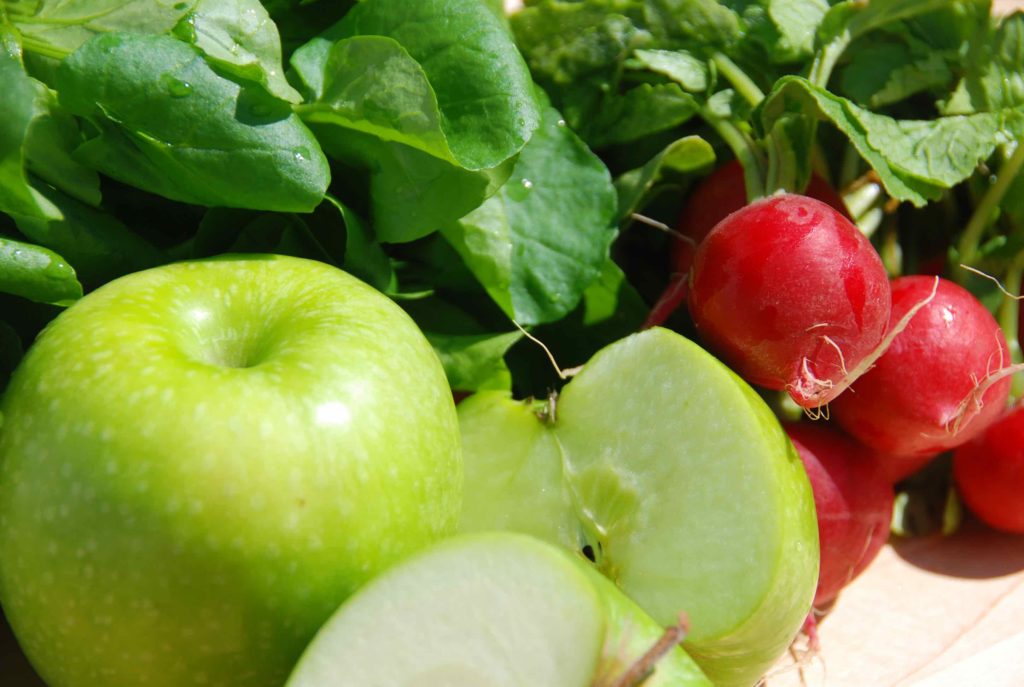
For the one on this post, which I have been obsessively repeating, I use watercress, called “berros” in Mexico (I happen to love that word). They are used tremendously in Mexican kitchens for salads. They are delightful: a bit bitter, made up on thin leaves but packed with flavor and such a nice delicate bite.

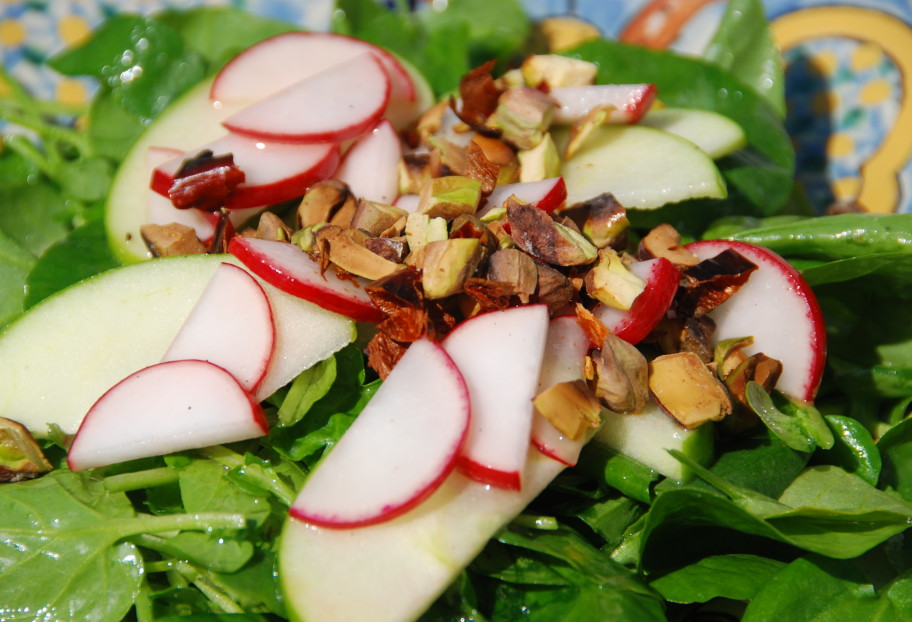
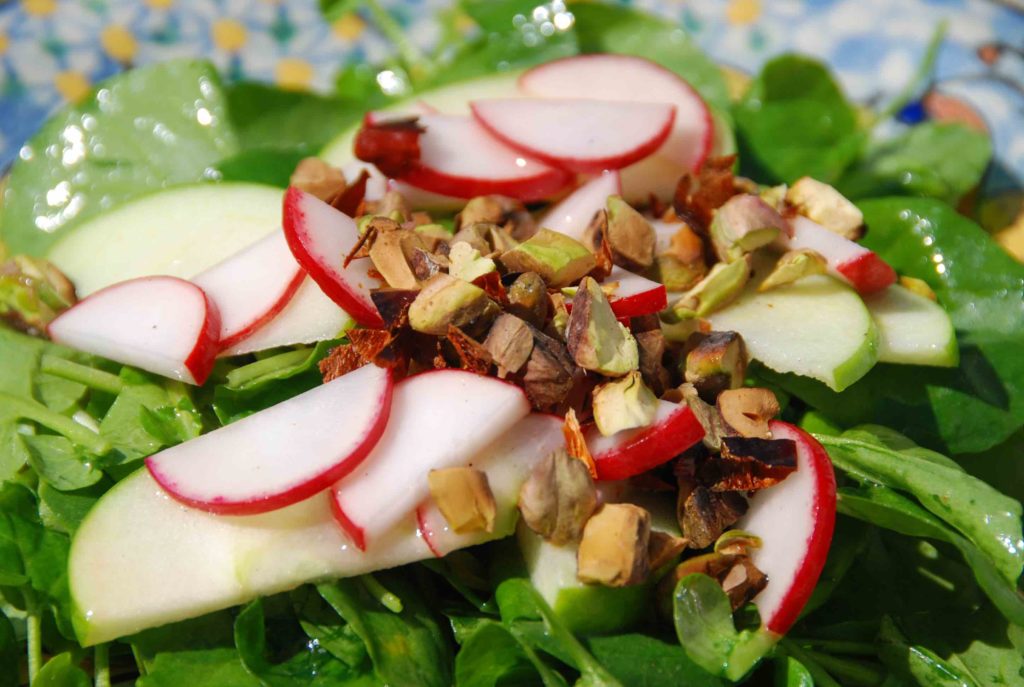
On top goes a combination of thinly sliced tart green apples and pungent radishes. One ingredient snapped from a tree and another pulled from the ground! Both ingredients have a bright colorful outer skin, yet, inside are crisp white. I use them both raw, and get the most of their watery crunch and contrasting taste.

Then it is all covered in a light vinaigrette with a bit of mustard and a bit of honey. Then a stellar topping tries to steal away the show.

Apple Radish Watercress Salad 2

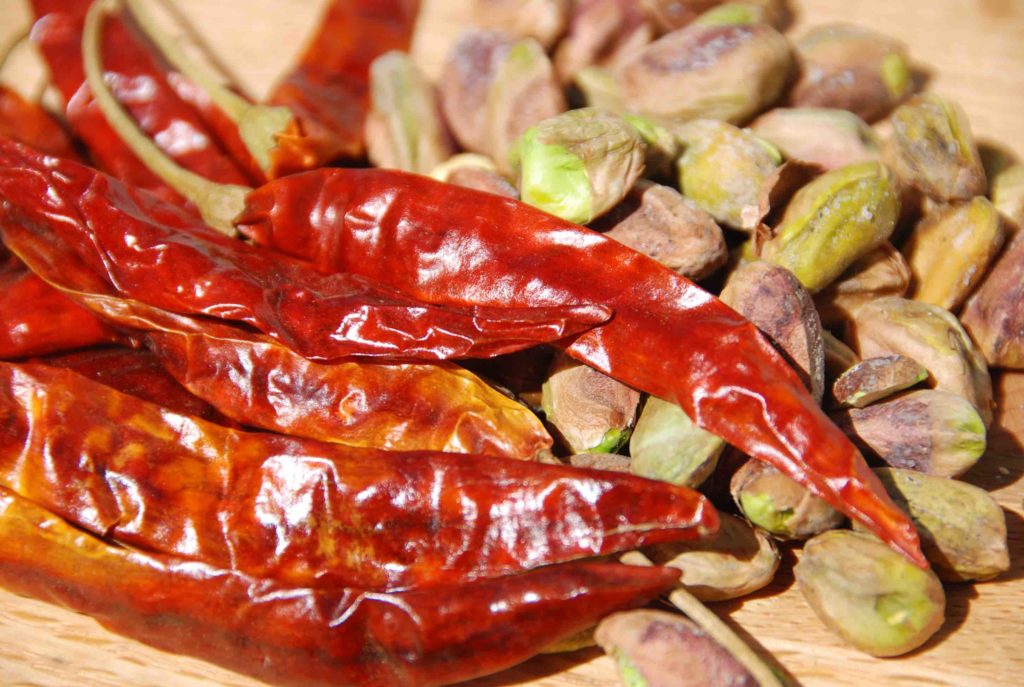
Toasted chile de árbol and pistachios, chopped together. A smoky, lightly spicy, crunchy, nutty and ironically sweet combination.

You won’t believe how sweet the pistachios taste on each bite.

Apple Radish Watercress Salad 3

Give it a try!!

Its fresh, its crunchy, lightly tart, with a nice kick and a combination of unexpected flavors that I hope will have you making it time and again as the seasons move on…

p.s. All that said: send along more requests for any more Mexican recipes you are craving at any time.

apple, watercress, radish and chile de arbol salad
Print Recipe
5 from 4 votes

Apple, Radish, Watercress Salad with Pistachio and Chile de Arbol

For the one on this post, which I have been obsessively repeating, I use watercress, called “berros” in Mexico (I happen to love that word). They are used tremendously in Mexican kitchens for salads. They are delightful: a bit bitter, made up on thin leaves but packed with flavor and such a nice delicate bite. On top goes a combination of thinly sliced tart green apples and pungent radishes. One ingredient snapped from a tree and another pulled from the ground! 
Prep Time10 minutes
Cook Time5 minutes
Course: Salad
Cuisine: Mexican
Keyword: chiles de arbol, green apple, honey, lime, mustard, pistachios, radish, Recipe, salad, vinegar, watercress
Servings: 4 servings
Author: Pati Jinich

Ingredients

  • 2 bunches watercress rinsed, dried and the tougher ends of stems removed
  • 1 green apple rinsed, and cut into thin wedges
  • 1 bunch radishes (or about 4 ounces or 1 cup already sliced), rinsed, stems and roots removed, halved and thinly sliced
  • 1/4 cup pistachios lightly toasted and chopped
  • 2 chiles de arbol toasted, chopped (seeding optional)
  • 1/4 teaspoon dijon mustard
  • 1/2 teaspoon honey
  • 1/2 teaspoon kosher or sea salt or to taste
  • freshly ground black pepper to taste
  • 1 tablespoon rice vinegar (natural unseasoned)
  • 2 tablespoons freshly squeezed lime juice
  • 3 tablespoons olive oil
  • 2 tablespoons vegetable oil

Instructions

  • Place the apple and the radishes in a bowl. Place the watercress in another bowl.
  • Heat a a small 6 inch skillet set over medium low heat, add the pistachios and toast anywhere form 3 to 5 minutes, stirring often, until they are nicely toasted, but don't let them burn. Remove form heat. In the same skillet, toast the chiles de arbol anywhere from 3 to 5 minutes, flipping sides, 1 or 2 times along the way, remove from the heat.
  • Remove the stems from the chiles de arbol. In a chopping board, chop the chiles de arbol. You may remove the seeds once they are chopped or keep them. Add the pistachios and chop them along with the chile de arbol creating a pistachio chile de arbol mixture.
  • In a small bowl, combine the mustard, honey, salt, pepper, rice vinegar and lime juice with a whisk or fork. Slowly, pour in the oils and whisk or mix very well until thoroughly combined. Pour half onto the apple-radish mix and half onto the watercress.
  • To serve, on small appetizer plates, add watercress, top with the apple-radish mixture and sprinkle some of the pistachio-chile de arbol mix on top.

Notes

Ensalada de Berros con Manzana y Rábanos

Make It, Freeze It, Take It: The Mexican Casserole

Every few months, my family gets together with a Latin group of friends and their families for a pot luck.

This winter it was our turn. As tradition goes, the host brings the main dishes to the table and the others bring the rest. I eagerly announced my plans to share Mexican casseroles, also called cazuelas, budines or pasteles. The Mexicans couldn’t hide their joy- “Pati! De veras? Budin Azteca? Cazuela de Tamal?!”- and quickly thought of other “very” Mexican sides to pair with them. The Argentines and Costa Ricans tried to understand what “Mexican casserole” meant and whether it was supposed to be any good. The Americans in the group (though they consider themselves Latin) were clearly not excited about it.

No doubt about it, casseroles have had their ups and downs in culinary history. Their weakest stand seems to have been in the United States, after being fashioned into “two-step-many-can” versions in the 1930 and ’40s. But think of all the bright stars in the casserole universe: French cocottes enveloped in mother sauces; British potpies encrusting fillings as wet as British weather; irresistible Italian lasagnas layered with pasta; Peruvian causas with seasoned meat encased in mashed potatos; Greek spanakopitas with an extra-savory cheese-spinach mix covered with phyllo dough; Middle Eastern moussakas stacked with layers of eggplant; and the not-so-well-known, yet gloriously tasty Mexican cazuelas…

All of those casseroles are assembled, baked and served in the same vessel, which makes them convenient, practical and savvy. They are cooked tightly covered without a hurry, giving their fillings time to become succulent with fully blended flavors. Then their messy beauty unravels on your plate. One has to wonder: Why don’t we see more of them around, when we all crave flexible meals that can be made in advance?

In the Old World, casseroles’ prestige may have peaked in the early Renaissance.They were served at royal feasts, with artful decorations fit for competitions and complex fillings; some even had live birds fly out of them with an exhilarating song as the first piece was cut. Such a high-pitched recipe is found in the first British cookbook published during the mid-16th century. It also was recorded as part of one of the most extravagant banquets ever: the wedding of Marie de Medici and Henry IV of France, held in 1600 in Florence. This theatrical dish might have inspired the nursery rhyme “Sing a Song of Sixpence,” in which “four and twenty blackbirds” are baked in a pie.

Fast-forward to 2009: British celebrity chef Heston Blumenthal felt obliged to replicate it in his Medieval episode of “Heston’s Feasts” in England.

Surprisingly, I recently found the nursery rhyme’s muse of a pie in the anonymous 1831 Mexican cookbook “El Cocinero Mexicano.” I am always amazed at how ingredients and recipes hop around the globe. But this I found to be absurdly funny: As if Mexican cooks needed any more outrageous ideas of what to do with casseroles.

Centuries before Old World cooks were trying to impress guests with interactive creations, Mexicans were baking casseroles in underground pits and cooking them over rustic fires. The fillings might not have been able to take flight, but they did contain wild turkey, boar and/ or iguana.

The first version of a Mexican casserole seems to have been the muk-bil (literally, “to put in the ground”). Made by the Mayans on the Yucatan Peninsula since pre-Hispanic times, it is the King Kong of tamales. Truly gigantic. The corn dough wraps around a filling of turkey (after the Spanish arrived, chicken and pork were used as well) rubbed with a pungent paste seasoned with achiote (annatto) seeds, spices and tomatoes. It resembles the flavors of cochinita pibil, a robust Yucatan dish.

So prized was this tamal in ancient times that it was designated meal for major festivities, and it still is. You can bet there will be a lot of muk-bils made this year with all the talk of 2012 marking the end of the Mayan calendar. So it is the right time to head down there if you want a true taste.

This tamal is traditionally wrapped in fragrant banana leaves and baked underground, which gives it a smoky flavor.

Other tamal casseroles throughout Mexico have regional spins, ingredients and salsas. Just across the border in neighboring American states, tamal pie recipes appeared in cookbooks at least a hundred years ago. They called for cornmeal rather than fresh corn masa; the former leads to a much grainier and less fluffy result. That was probably because making masa from scratch involves the ancient nixtamalization process, which takes days (drying, soaking, cooking and grinding) to treat corn so that its nutritious content is fully exploited. It makes a masa so soft that it is practically airy. Today, outstanding instant masa flour that has already gone through that process is widely available, so it’s a snap to put together a real tamal casserole at home.

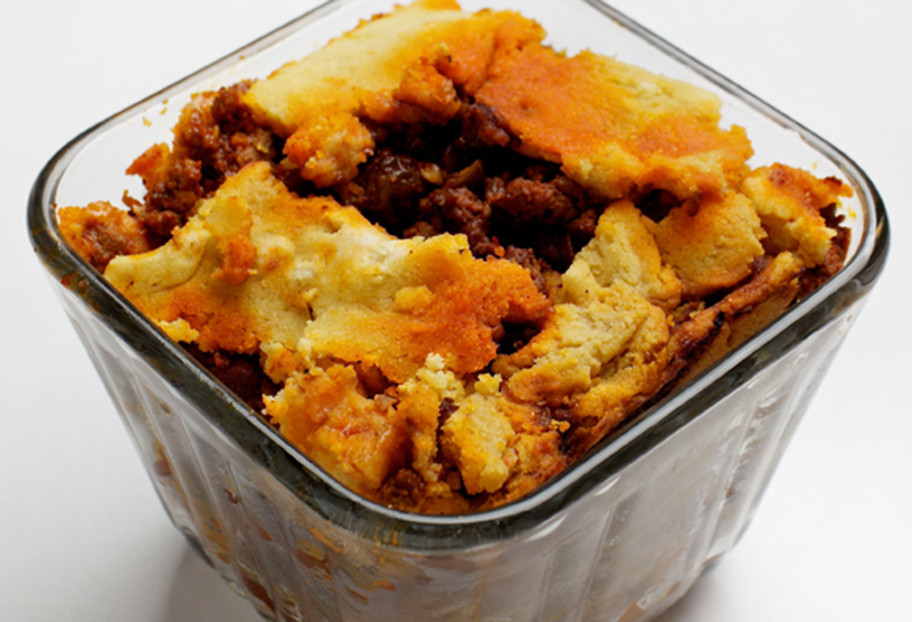
Here my go-to version: The masa dough is set in two thick layers that hold a rich and baroque filling, typical of the Mexican colonial era, when nuns used to combine Spanish and Mexican ingredients in their convent kitchens. The filling has a sauce made with my preferred pairing of dried chili peppers: sweet, almost chocolaty and prune-flavored ancho and mild, bright-tasting guajillo. It’s seasoned with onion, garlic, oregano, cloves, cinnamon and a pinch of cumin, then made hearty with juicy ground meat that is sprinkled with crunchy almonds, chewy raisins and salty manzanilla olives.

Just like a tamal casserole is a giant version of a tamal, a tortilla casserole is like a hefty stack of open-face tacos with layers of sauce and cheese. It’s a homespun version of tacos, one of the most sought-after street foods in my native country: Taco elements are layered in a cazuela, or earthenware pot. That takes away the hassle of making individual portions and allows for endless filling possibilites, just as with tacos and tamales.

The most popular casserole of them all has an imperial name: Aztec. It is traditionally made with corn tortillas, as they are much more resilient than flour tortillas. Think of a lasagna gone way down south, soaked in a spiced-up tomato sauce with handfuls of exuberant, fruity, addictive roasted poblano peppers and crunchy, sweet corn. Chicken is sometimes added to the mix, which is then bathed with Mexican crema and melty cheese. When I was growing up, and Aztec casserole was a must for successful potlucks.

Some versions use salsa verde or mole sauce instead of a tomato sauce, as well as other kinds of meats and vegetables. Good-quality corn tortillas can be found at the market, so there’s no need to make your own.

The rice casserole is the most modern of the three I’ve offered here. Brought over from Europe by the Spanish, rice has grown deep roots in Mexican cooking. The dish I have been obsessively repeating came about because I wanted to use the bounty of fresh mushrooms found in stores this time of year. Although I don’t have the wild varieties that crop up in Mexico’s rainy season, I have experimented with an accessible mix of mushroom textures and flavors, fresh herbs, epazote, cilantro, parsley, that salty crema and tangy cheese. This stew goes on top of the rice with a topping of grated dry and aged cheese. As the casserole bakes, the rice absorbs the flavored cream, the mushrooms meld with the sauce and the cheese morphs into a perfectly browned crust.

I’m wondering whether Mexican renditions can lend a bit of prestige to the state of casseroles in the United States. They certainly receive a royal welcome from my potluck friends, who heap seconds on their plates.

Article written for and published by The Washington Post. Photo taken by Deb Lindsey Photography www.deblindsey.com.

Meaty Tamal Casserole
Print Recipe
4.41 from 5 votes

Meaty Tamal Casserole

My go-to version of a tamal casserole: The masa dough is set in two thick layers that hold a rich and baroque filling, typical of the Mexican colonial era, when nuns used to combine Spanish and Mexican ingredients in their convent kitchens. The filling has a sauce made with my preferred pairing of dried chili peppers: sweet, almost chocolaty and prune-flavored ancho and mild, bright-tasting guajillo. It’s seasoned with onion, garlic, oregano, cloves, cinnamon and a pinch of cumin, then made hearty with juicy ground meat that is sprinkled with crunchy almonds, chewy raisins and salty manzanilla olives.
Prep Time30 minutes
Cook Time1 hour 45 minutes
Total Time2 hours 15 minutes
Course: Main Course
Cuisine: Mexican
Keyword: ancho chiles, Casserole, Cazuela, guajillo chiles, masa, meat, tamal, Tamales, veal
Servings: 10 servings
Author: Pati Jinich

Ingredients

For the dough:

  • 1 1/4 cups vegetable shortening or lard
  • 1 teaspoon kosher or coarse sea salt
  • 2 teaspoons baking powder
  • 1 1/2 pounds (about 5 cups) corn masa flour for tortillas or tamales such as Maseca brand
  • 4 1/2 cups homemade or no-salt-added chicken broth may substitute water

For the filling:

  • 8 dried guajillo chiles stemmed, halved and seeded
  • 8 dried ancho chiles stemmed, halved and seeded
  • 2 cups hot water or as needed
  • 1 teaspoon dried oregano
  • 5 whole cloves
  • 1 teaspoon ground cinnamon
  • Pinch ground cumin
  • 3 tablespoons vegetable oil plus more for the baking dish
  • 1 medium white onion chopped (about 1 cup)
  • 6 cloves garlic chopped
  • 2 1/2 pounds ground meat such as veal, turkey, beef, pork or a combination
  • 1 teaspoon kosher or sea salt or to taste
  • 1/4 teaspoon freshly ground black pepper
  • 2 cups homemade or no-salt-added chicken broth may substitute water
  • 1 cup raisins
  • 3/4 cup slivered almonds
  • 3/4 cup pimento-stuffed manzanilla olives chopped

Instructions

For the dough:

  • Place the vegetable shortening or lard in the bowl of a stand mixer; beat on medium speed for about 3 minutes, until it is light and airy. Stop to scrape down the sides of the bowl.
  • Add the salt and baking powder; on low speed, gradually add the corn masa flour and the broth in alternating additions, making sure each time that the addition is well incorporated. Beat for about 10 minutes to form a masa dough that is homogeneous and fluffy. Let the dough sit at room temperature while you make the filling.

For the filling:

  • Heat a comal (tortilla griddle) or skillet over medium heat. Add the guajillo and ancho peppers; toast them for about 15 seconds per side, until they become more pliable, lightly toasted and fragrant and their inner skin turns opaque. Transfer to a medium saucepan and cover with at least 2 cups of hot water. Cook over medium-low heat for about 15 minutes, or until the peppers have rehydrated, plumped up and softened.
  • Transfer the peppers and 2 cups of the liquid to a blender and add the oregano, cloves, cinnamon and cumin. Remove the center knob from the blender lid and cover the opening with a dish towel to contain splash-ups. Puree to form a smooth sauce. The yield is 2 1/2 to 2 3/4 cups.
  • Heat the oil in a large, deep skillet over medium-high heat. Add the onions and cook for 4 to 5 minutes, stirring continuously, until the onions are cooked through and beginning to brown at the edges. Add the garlic and cook until fragrant, less than a minute, then add the ground meat, salt and black pepper. Cook for 12 to 15 minutes, stirring occasionally and using a spoon to break up the meat, until it has lightly browned. Add the sauce, the broth, raisins, almonds and olives, stirring to combine; reduce the heat to medium-low, cover the skillet and cook for 20 minutes. Uncover, stir and cook uncovered for 5 minutes.
  • Preheat the oven to 400°F. Use a little vegetable oil to grease a 9-by-13-inch baking dish or the equivalent.
  • Spoon half of the prepared masa dough into the dish, forming a bit of a lip on the sides and gently leveling it out; don’t press hard. Spoon all of the meat filling on top. Cover evenly with the remaining dough. Cover the dish tightly with aluminum foil and bake for 1 hour or until the masa is completely cooked and the top appears to be firm. Remove from the oven and let it sit, covered, for 10 to 15 minutes before serving.

Notes

Cazuela de Tamal
Chicken and Tortilla Aztec Casserole
Print Recipe
3.67 from 3 votes

Chicken and Tortilla Aztec Casserole

The most popular Mexican casserole of them all has an imperial name: Aztec. It is traditionally made with corn tortillas, as they are much more resilient than flour tortillas. Think of a lasagna gone way down south, soaked in a spiced-up tomato sauce with handfuls of exuberant, fruity, addictive roasted poblano peppers and crunchy, sweet corn. Chicken is sometimes added to the mix, which is then bathed with Mexican crema and melty cheese. When I was growing up, and Aztec casserole was a must for successful potlucks.
Prep Time15 minutes
Cook Time45 minutes
Total Time1 hour
Course: Main Course
Cuisine: Mexican
Keyword: Aztec, Azteca, Casserole, Cazuela, chicken, chile, Corn, corn tortillas, Mexican lasagna, Poblano
Servings: 8 servings
Author: Pati Jinich

Ingredients

For the sauce:

  • 3 tablespoons vegetable oil
  • 1 medium white onion chopped (about 1/2 cup)
  • 2 cloves garlic minced or pressed
  • 2 pounds ripe tomatoes cored and pureed, or whole canned tomatoes, drained and pureed (to make about 5 cups tomato puree)
  • 1/2 teaspoon dried oregano
  • 1 bay leaf
  • 1 teaspoon kosher or coarse sea salt

For the tortillas:

  • 1 cup vegetable oil or more as needed, for frying the tortillas
  • 8 to 10 (9 ounces total) corn tortillas

For assembly:

  • 4 cups cooked shredded chicken
  • 4 cups fresh corn may substitute frozen (see NOTES)
  • 1 pound poblano chiles roasted, peeled, seeded and cut into rajas (see NOTES)
  • 1 cup Mexican cream (crema) Latin-style cream, creme fraiche or heavy cream
  • 12 ounces (about 3 cups) grated Oaxaca, mozzarella, Monterey Jack or mild white cheddar cheese

Instructions

For the sauce:

  • Heat the oil in a large saucepan over medium heat. Stir in the onion and cook until soft and translucent, stirring occasionally, about 6 minutes. Stir in the garlic and cook until fragrant, 30 seconds to 1 minute. Add the tomato puree, oregano, bay leaf and salt and cook for about 10 minutes, stirring occasionally, until the sauce thickens and darkens in color. Remove from the heat and discard the bay leaf.

For the tortillas:

  • Cover a large plate or baking sheet with several layers of paper towels. Pour the oil into a medium 10-inch skillet to a depth of 1/4 inch (about 1 cup). Heat over medium-high heat until hot but not smoking, about 2 to 3 minutes. Working with one tortilla at a time, use a pair of tongs to pass the tortilla through the oil for 10 to 15 seconds per side; this will make the it pliable and resistant to the sauce. The tortilla will first appear to be softening and then will become barely crisp, and its color will darken. Drain on the paper towels.

To assemble:

  • Spread one-third of the tomato sauce on the bottom of a 9-by-13-inch baking dish or the equivalent. Cover with half of the cooked chicken, half of the corn, half of the poblanos and one-third of the cream and cheese. Top with half of the tortillas, tearing them into large pieces if needed to make an even layer without much overlap. Repeat, adding one-third of the tomato sauce; the remaining half of the cooked chicken, corn and poblanos; and one-third of the cream and cheese. Top with a layer of the remaining tortillas, the remaining one-third of the sauce and the remaining cream and cheese.
  • When ready to bake, preheat the oven to 375°F. Cover the casserole dish with a lid or with aluminum foil. Bake for 25 minutes, then remove the lid or foil and bake for 15 minutes or until the top is bubbly and the cheese has melted. Serve hot.

NOTES:

  • To create rajas, or strips, char or roast the chiles, either by placing them under the broiler or directly on a grill or hot skillet. Roast for 6 to 9 minutes, turning every 3 to 4 minutes, until they are charred and blistered but not burned. Immediately place in a plastic bag; close the bag tightly and cover with a kitchen towel; this will facilitate skinning. One by one, remove each chili from the bag, peel off the skin and lightly rinse the chili with water. Cut out the stem and cut each pepper in half. Remove and discard the seeds, then cut the peppers into strips 1/2-inch wide and an inch long.
  • Frozen corn will make the dish watery if it is not precooked to remove moisture. First, defrost the corn completely. Heat a large skillet or saute pan over medium-high heat. Add 1 teaspoon of unsalted butter; when it has melted, add the corn and cook for 2 minutes, stirring frequently.

Notes

Cazuela Azteca
Meaty Tamal Casserole
Print Recipe
3.84 from 6 votes

Mushroom and Rice Casserole

Although I don’t have the wild varieties of mushrooms that crop up in Mexico’s rainy season, I have experimented with an accessible mix of mushroom textures and flavors, fresh herbs, epazote, cilantro, parsley, that salty crema and tangy cheese. This stew goes on top of the rice with a topping of grated dry and aged cheese. As the casserole bakes, the rice absorbs the flavored cream, the mushrooms meld with the sauce and the cheese morphs into a perfectly browned crust.
Prep Time10 minutes
Cook Time45 minutes
Total Time55 minutes
Course: Main Course
Cuisine: Mexican
Keyword: arroz, Casserole, Cazuela, cheese, cheesy, Hongos, Mushroom, queso, rice
Servings: 8 servings
Author: Pati Jinich

Ingredients

  • 4 tablespoons (1/2 stick) unsalted butter plus more for the baking dish
  • 3 tablespoons vegetable oil
  • 2 medium white onions chopped (2 cups)
  • 2 cloves garlic minced or put through a garlic press
  • 1 jalapeño or serrano pepper finely chopped (seeding optional if you want less heat; may add more to taste)
  • 2 pounds mixed mushrooms (such as white button, baby bella, portobello and shitake), cleaned, dry part of stem removed, sliced
  • 1 teaspoon kosher or coarse sea salt or more to taste
  • 1/4 teaspoon freshly ground black pepper
  • 2 tablespoons chopped cilantro leaves and thin part of stems
  • 2 tablespoons chopped parsley leaves and thin part of stems
  • 1 cup Mexican cream or Latin-style cream, or heavy cream
  • 8 ounces (about 2 cups) farmers cheese or queso fresco crumbled
  • 6 cups cooked white rice
  • 1 cup freshly grated queso anejo Parmigiano-Reggiano, or Romano

Instructions

  • Heat the butter and oil in a large, deep 12-inch skillet over medium heat. Add the onions and stir to coat; cook for about 12 minutes, stirring occasionally, until they are translucent and the edges begin to brown. Add the garlic and jalapeño or serrano pepper; cook for 2-3 minutes, until softened. Add all of the sliced mushrooms; sprinkle with salt and pepper, and gently combine with the onions. Cover and cook for 5 to 6 minutes, until the mushrooms have exuded their juices and the flavors have melded. Uncover and cook for 7 to 8 minutes or until the juices have evaporated.
  • Add the cilantro and parsley, stirring to combine. Add the cream and the crumbled queso fresco or farmer cheese; stir until the mixture is thoroughly combined and the cheese has melted. Continue cooking for 3 to 4 minutes, adjusting the heat to keep the mixture barely bubbling at the edges. It should still be very saucy. Turn off the heat.
  • Preheat the oven to 375°F. Use a little butter to grease a 9-by-13-inch baking dish or the equivalent.
  • Spoon the cooked rice into the baking dish and level it out without pressing down hard. Pour the mushroom-cilantro mixture on top and gently spread to level it. Sprinkle with the grated cheese. Bake for 15 to 20 minutes or until the cheese has melted and gently browned.
  • Serve hot.

Notes

Cazuela de Arroz con Hongos

Summertime Watermelon & Tomatillo Salad: Beat the Heat!

This year I promised my boys we would plant goodies in the backyard to harvest ourselves. At the nursery, jumping up and down as in a candy shop, they dragged so many plants to the counter, I had to give an absolute NO to half of them.

We ended up with thyme, oregano, bay leaves, rosemary, mint, parsley, and cilantro.  Ok, and tomatoes, cherry and roma. Fine, corn too, don’t know what I was thinking. And wait! We couldn’t leave without jalapeños, which led me to run for some tomatillos. And scallions. I stopped there. I did.

Then Sami came back with a little watermelon plant.  That was the wildest idea, oh, that monster of mine. We’ve no room to grow watermelon. I told him about the big wide fields in Northern Mexico, in states like Sonora, Chihuahua, Jalisco and Sinaloa where watermelon is grown extensively. Our backyard is not so big.

Beats me.

We brought home Sami’s watermelon plant.

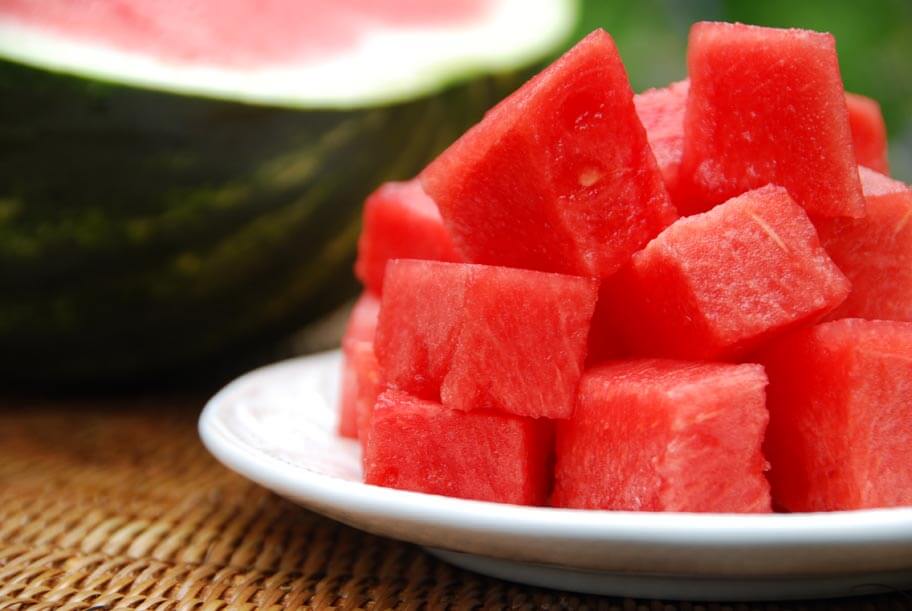
chopped up watermelon
As the weeks went by, we saw many of the plants thrive, except the watermelon which seemed to take an awful long time to  grow. Then one day the editors from Babble asked me for a custom recipe. By then, I was eagerly thinking about what would make the sweet, watery crunch from that soon to grow watermelon shine the most.

This is what I came up with.

tomatillos
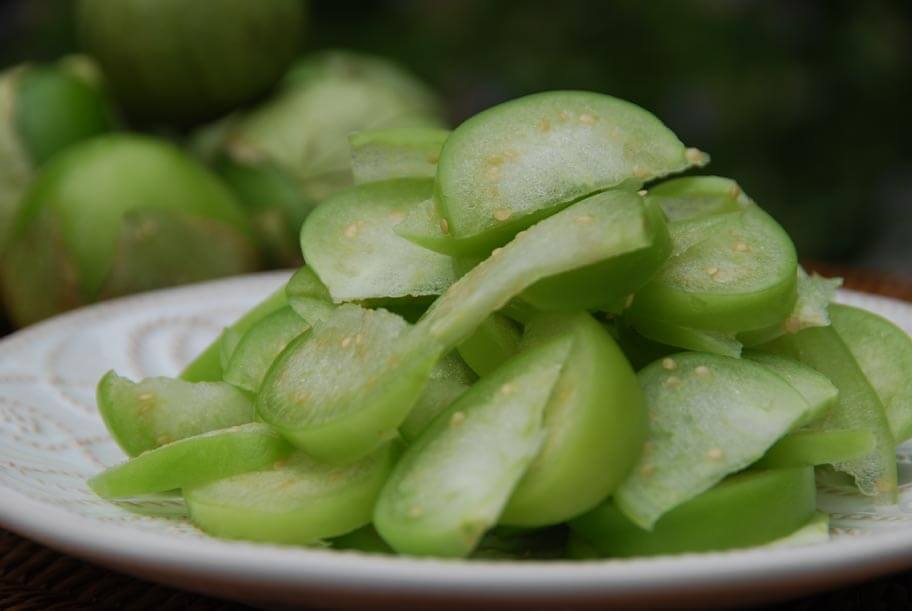
Thinly sliced, raw, punchy and tart tomatillos. Much firmer than the watermelon, and just look at the color contrast. Not to say about the flavor combination.

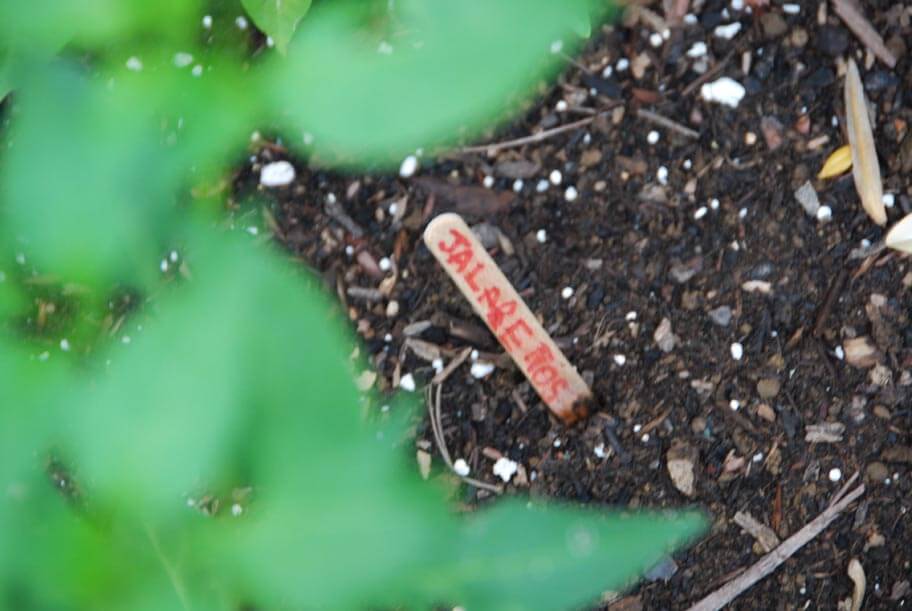
To coat this unconventional pairing, I wanted a vinaigrette with some some gentle heat. I got it from the jalapeños, which you will never have trouble finding in our backyard as Juju made markers for each plant… I am proud to say, the boy knows his Ñ’s.

jalapenos in the garden
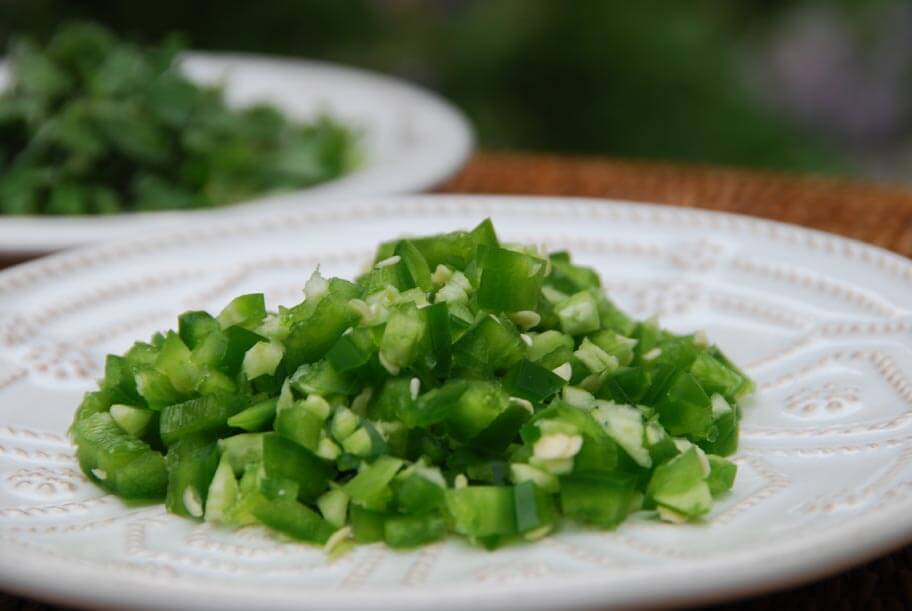
I coarsely chopped the chiles, as I like to feel their friendly bite. But you can give them a finer chop and even remove the seeds.

jalapeno

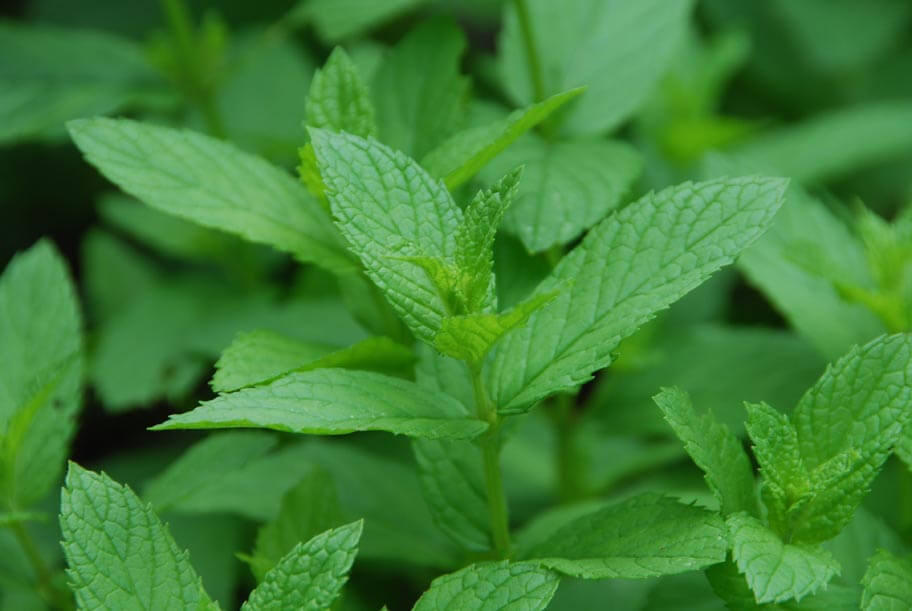
With the already unusual watermelon and tomatillo pairing, I went unusual again and added some chopped fresh mint.

Mint  has been growing wild here, as all mint tends to. Although we planted ours in the ground while still in their protective pots, to keep them in check. It doesn’t seem to give a hoot. Its wild.

mint
Soaked the jalapeño and the mint with fresh squeezed lime juice, a bit of straight forward white distilled vinegar which makes everything it coats more crisp, the oils and salt… Gave it a bit of time, 5 to 10 minutes, to sit and get acquainted.

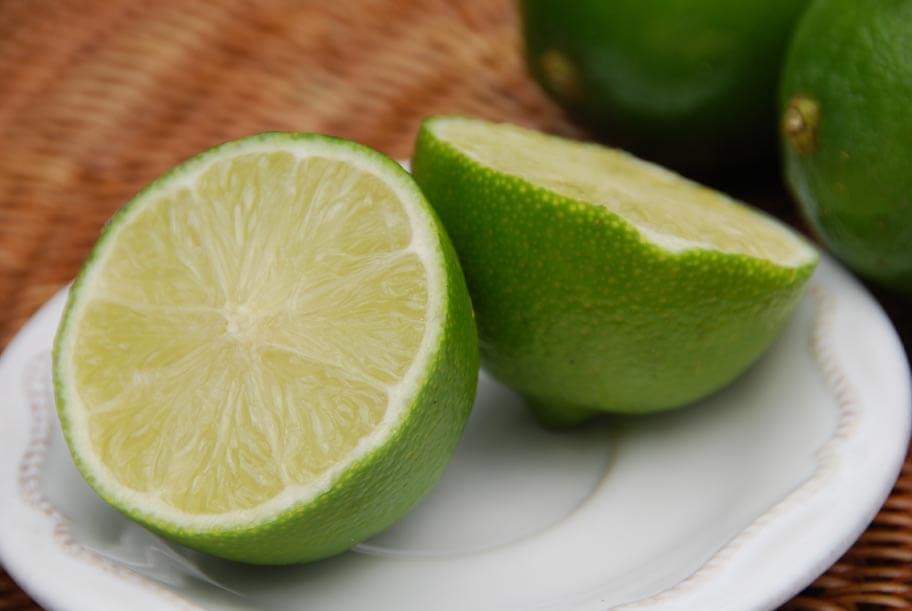
limes
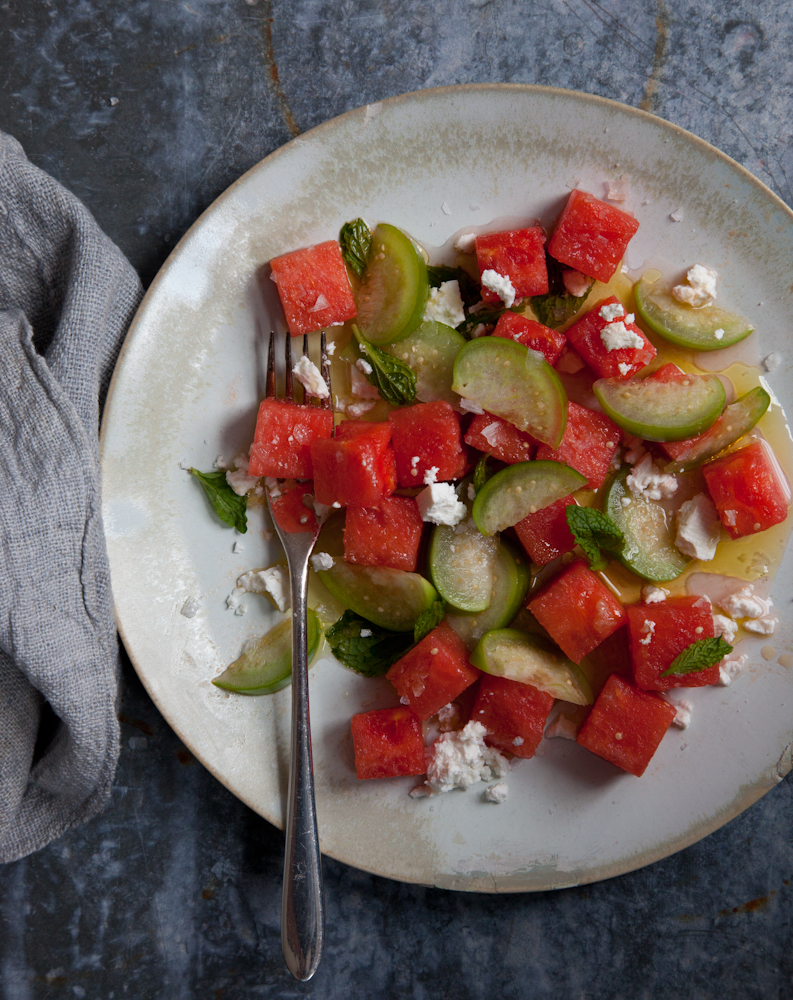
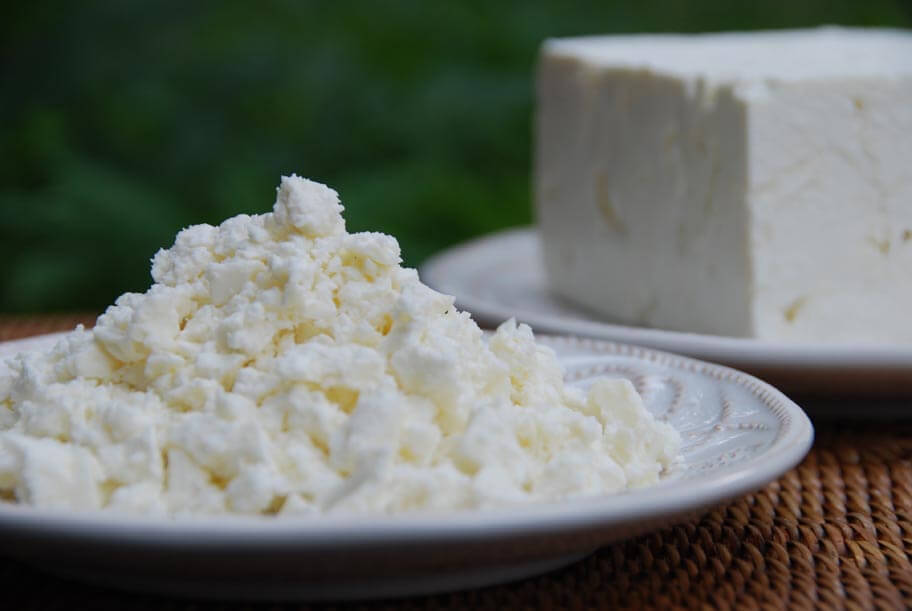
Poured the vinaigrette over the red and green. Yet not only was the salad screaming for some white (partly to round the colors of the Mexican flag, for one thing…) but also for some salty taste with some heartiness to it. Hence the Feta Cheese. Now you can go for anything tangy, salty and crumbly: queso fresco or farmers’ cheese works well too.

feta cheese
While we had the chance to harvest and eat the jalapeño, mint and tomatillos from our backyard, that watermelon never came to be, some bunnies got to it before we did.

But just day dreaming about it made me come up with one of my favorite recipes. It is so bright, so alive, so peppy and so summery!

Luckily there are plenty of amazing watermelons at the stores. We will have to give it another go next summer to harvest our own.

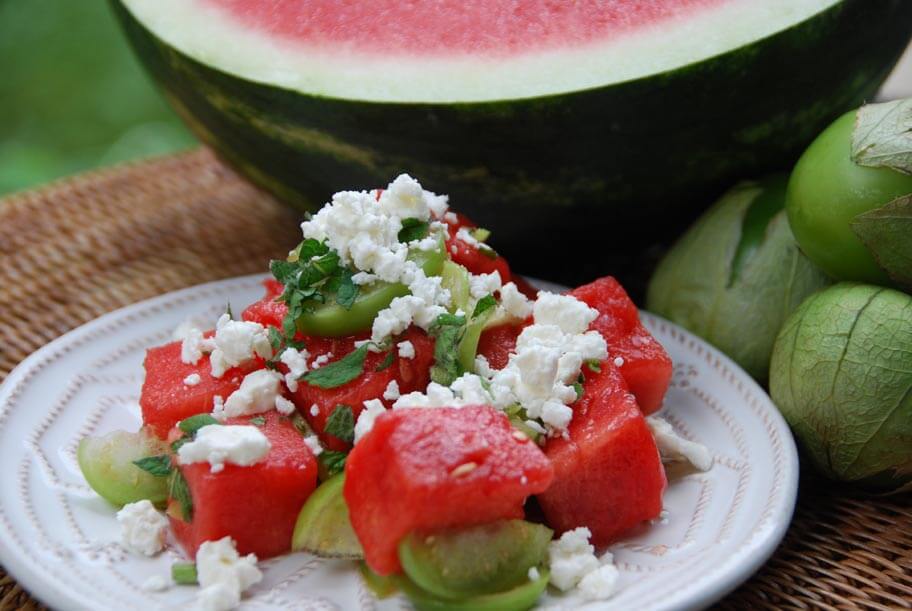
watermelon and tomatillo salad
Meanwhile I can’t help but repeat this salad that hits all the taste buds!  Sweet from the watermelon, salty from the cheese, spicy from the chile, tart from the lime and tomatillos and refreshing from the mint. Oh, you just have to give it a try.

watermelon and tomatillo salad with feta cheese
Print Recipe
4.34 from 6 votes

Summertime Watermelon & Tomatillo Salad

I can’t help but repeat this salad that hits all the taste buds!  Sweet from the watermelon, salty from the cheese, spicy from the chile, tart from the lime and tomatillos and refreshing from the mint. Oh, you just have to give it a try…
Prep Time15 minutes
Cook Time5 minutes
Course: Salad
Cuisine: Mexican
Keyword: feta, jalapeno, lime, mint, pati's mexican table, queso fresco, tomatillos, vinaigrette, vinegar, watermelon
Servings: 4 servings
Author: Pati Jinich

Ingredients

For the salad:

  • 4 cups watermelon cut into bite size chunks or cubes
  • 2 cups, about 1/2 pound tomatillos husks removed, thoroughly rinsed, quartered and thinly sliced
  • 2/3 cup, about 3 ounces mild feta or queso fresco crumbled or cut into small dice

For the vinaigrette:

  • 1 tablespoon fresh mint leaves about 5 to 6, chopped
  • 1 tablespoon jalapeño or serrano chile or to taste (seeding optional)
  • 2 tablespoons fresh squeezed lime juice
  • 1 teaspoon white distilled vinegar
  • 1 teaspoon salt
  • 2 tablespoons olive oil
  • 2 tablespoons vegetable oil

Instructions

  • Place the watermelon cubes and tomatillo slices in a large bowl.
  • In a small bowl, add the chopped mint and jalapeno. Squeeze the fresh lime juice on top, stir in the vinegar, sprinkle the salt and mix. Pour the olive oil and vegetable oil, and mix with a whisk or fork until well emulsified.
  • Pour the vinaigrette on top of the watermelon and tomatillos, toss well and sprinkle the cheese on top.

Notes

Ensalada de Sandía y Tomate Verde

Go Wild, Munch On Your Crazy Corn!

The Mexican way to wildly dress simply cooked corn drives me wild.

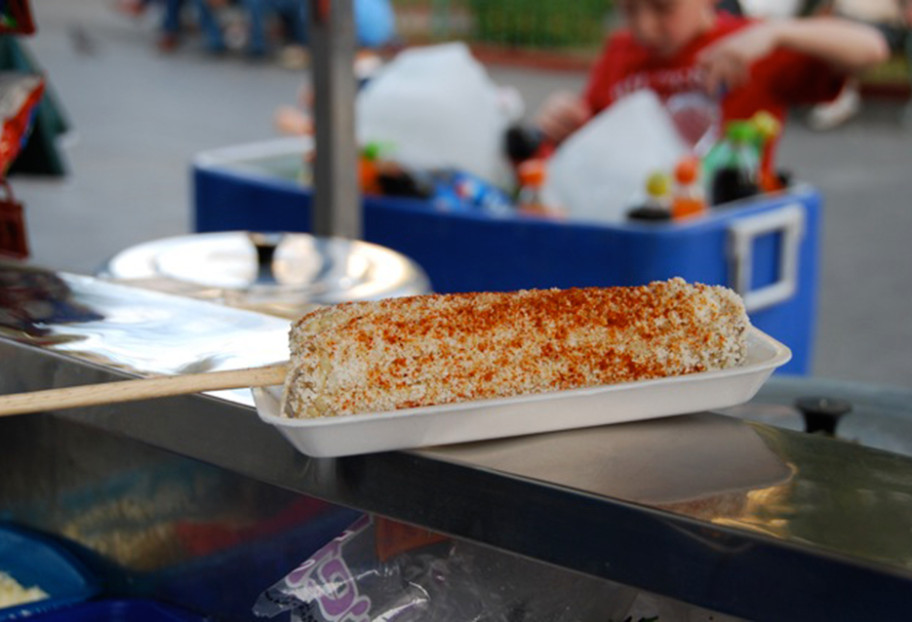
Crunchy sweet corn on a stick, brushed with butter and mayo, coated in tangy and salty crumbled queso fresco, sprinkled with chile powder, typically chile piquí­n, coarse salt and a liberal squeeze of lime juice.

It doesn’t matter if I am hungry. The mere site of a street food corn stand makes me stop dead in my tracks and zoom over for one. Like a wild woman. I need one. Well, the truth is one is not enough, ever.

In Mexico you find corn stands all over, in little towns and big cities. Locals know what day of the week and at what times they show up. If you are not from there, it takes a while to figure it out.

Crazy Corn 1
Last time we went to Chihuahua, after asking around for a while, we found the 3 Hermanos cart with Mauro in charge.

And does that man know how to dress that corn! He spoiled me and added an extra squeeze of lime juice.

Crazy Corn 2
Corn can be simmered in water, many times with fresh epazote. Or it can be grilled on a griddle or comal. If the kernels are shaved off, then the dish is called Esquites. But the traditional trimmings are the same for all.

Yet, some people can get even wilder, you won’t believe this! When Mauro was dressing our corn, a pregnant lady asked for her Esquites with all the trimmings to be poured inside a bag of Doritos. Yes she did. But if you ask me, about to have a baby, she was entitled to whatever kind of craving she felt like.

Crazy Corn 3

Last week, thinking of the many things to do with summer corn for an appearance on the Today Show, I included Crazy Corn. But I opted for the grilled take, because as the corn chars, its natural sugar comes out and caramelizes, giving it an extra layer of rustic and sweet flavor.

Crazy Corn 4
Thanks to the most professional, talented and fabulous food prep styling team, that of the Today Show, the Mexican street style corn that Mexicans love so much, looked so beautiful on the set.

Crazy Corn 5
They had all the trimmings with alternatives and options. Different kinds of dried ground chiles: Ancho, Chipotle and a smoky mix. They also had the queso fresco and its seamless substitutes: queso Cotija and its Mediterranean cousin, the Mild Feta.

Crazy Corn 6
Crazy Corn is Mexican street food at its best, and it happens to be perfect for summer barbecues.

Crazy Corn 7
Here goes one for you! Messy goodness, conveniently placed on a stick ready for you to munch on.

Print Recipe
3.67 from 3 votes

Crazy Corn

The Mexican way to wildly dress simply cooked corn drives me wild: Crunchy sweet corn on a stick, brushed with butter and mayo, coated in tangy and salty crumbled queso fresco, sprinkled with chile powder, typically chile piquí­n, coarse salt and a liberal squeeze of lime juice…
Prep Time1 minute
Cook Time9 minutes
Course: Antojos, Side Dish
Cuisine: Mexican
Keyword: Antojo, chile piquín, Corn, cotija, elotes, lime, mayonnaise, queso fresco, Recipe
Servings: 6 servings
Author: Pati Jinich

Ingredients

  • 6 ears of fresh corn husked and rinsed
  • 1 tablespoon vegetable oil
  • unsalted butter
  • mayonnaise
  • 1 cup crumbled cotija or queso fresco farmers cheese or a mild Feta
  • 3 limes halved to squeeze on top
  • Salt to taste
  • Dried ground chile piquin or a Mexican mix or to taste

Instructions

  • Brush the ears of corn with a bit of oil. Place over a grill or grill pan, set over medium heat, and let the corn cook and char slightly, turning them every 3 minutes or until the corn is down, anywhere from 9 to 12 minutes. Remove from the heat. Alternatively, you can simmer the corn in water until tender.
  • Let everyone decide what they want on their crazy corn. You can stick the corn on corn holders or a wooden stick.
  • The traditional way is to spread butter and a layer of mayonnaise. Then the corn is thoroughly "breaded" with the crumbled cheese, sprinkled with salt and ground chile and finally, drizzled with freshly squeezed lime juice.

Notes

Elotes

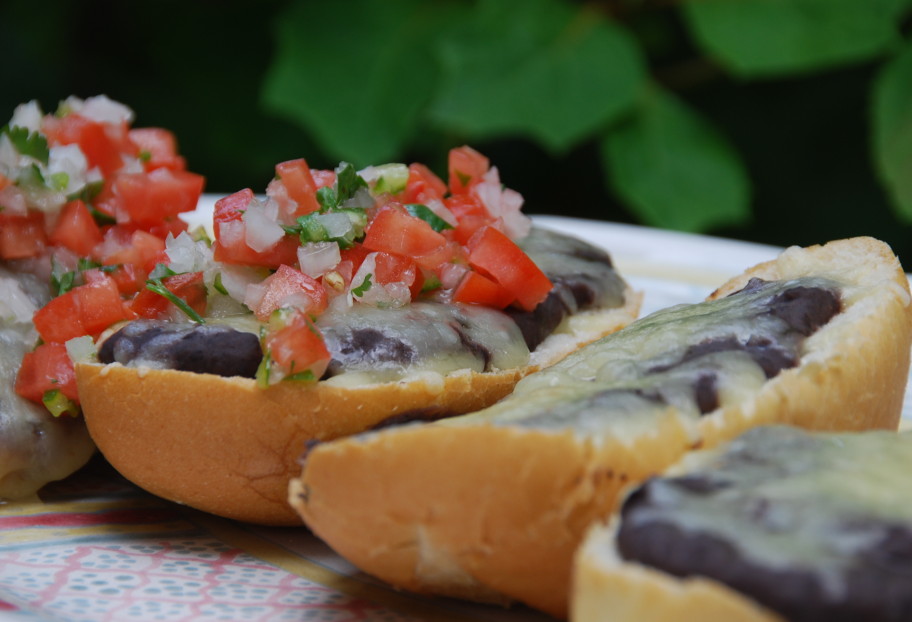
Molletes with Pico: No Way not to Fall in Love

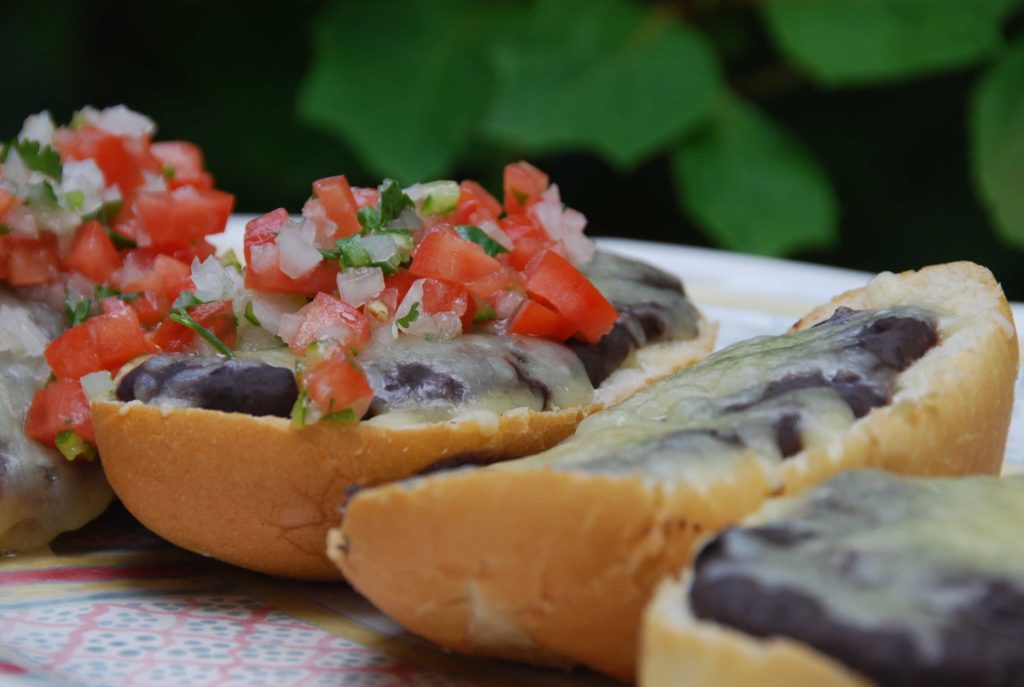
It takes three ingredients, plus any extra topping that you fancy, 8 minutes in the toaster or oven and you get one of the most comforting foods I have eaten since I can remember: Molletes.

One of the most popular Mexican anytime antojitos or cravings, Molletes can be eaten for breakfast, brunch, lunch, a hearty afternoon snack or dinner.  It used to be a standard option for breakfast or dinner at my house growing up in Mexico City, just as quesadillas were. But I also used to crave Molletes from my school cafeteria.

So yes, even if I had some at home in the morning, I would have more for lunch at school.

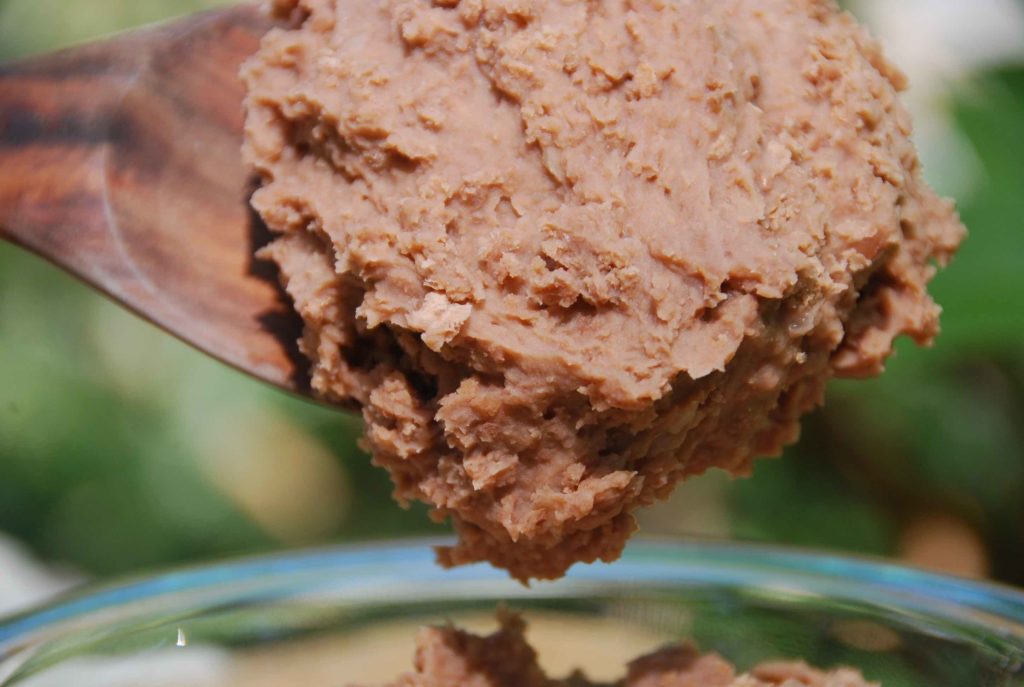
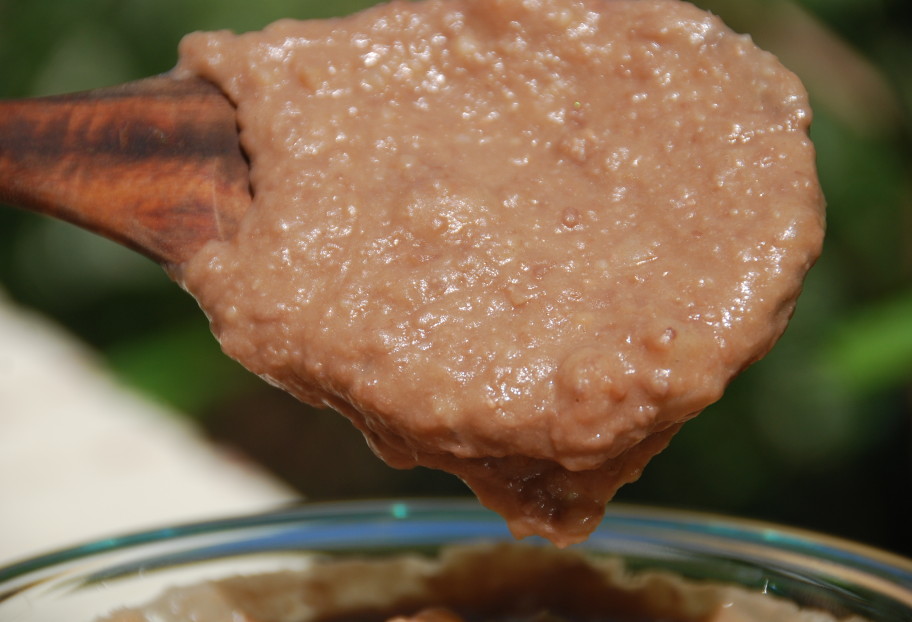
First, you need the earthy and filling refried beans. You can make your own at home -I make a weekly double batch of beans and use it all week long- or buy ready made at the store. I usually go for Pintos, from photo below, or Black beans.

molletes 1

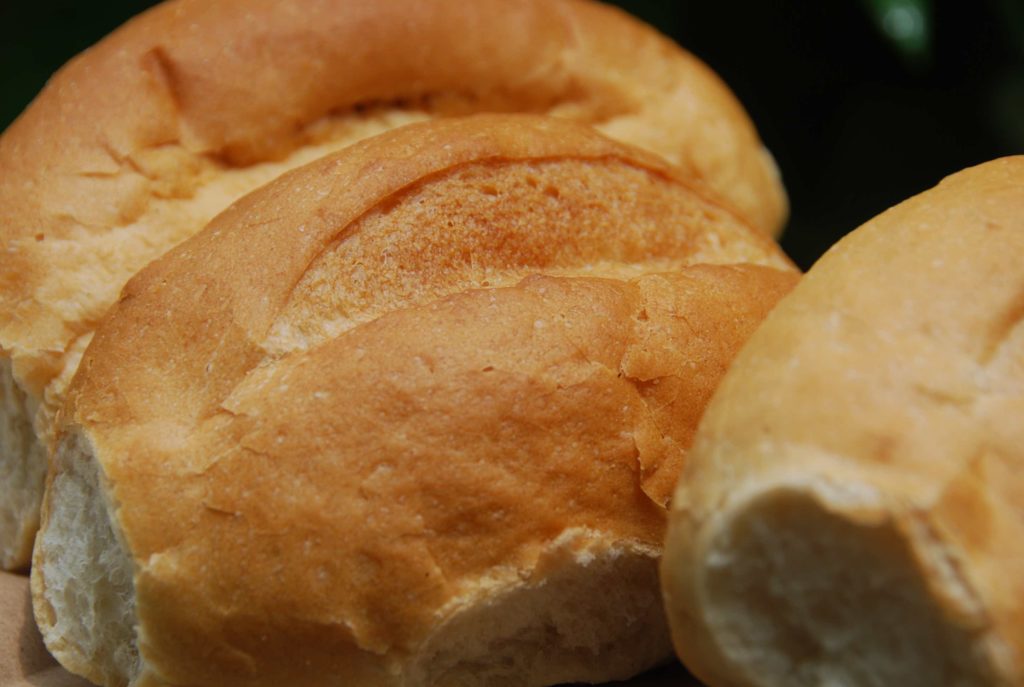
Secondly, you need crispy bread. In Mexico it is always a bolillo or telera, the Mexican adaptation of the baguette (since times of Maximilian in the 1860’s). But you can use petite baguettes or cut individual portions from a large baguette. Portuguese buns are similar too.

Slice the breads in half lengthwise and slather 2 to 4 tablespoons of refried beans on each half.

Molletes 2

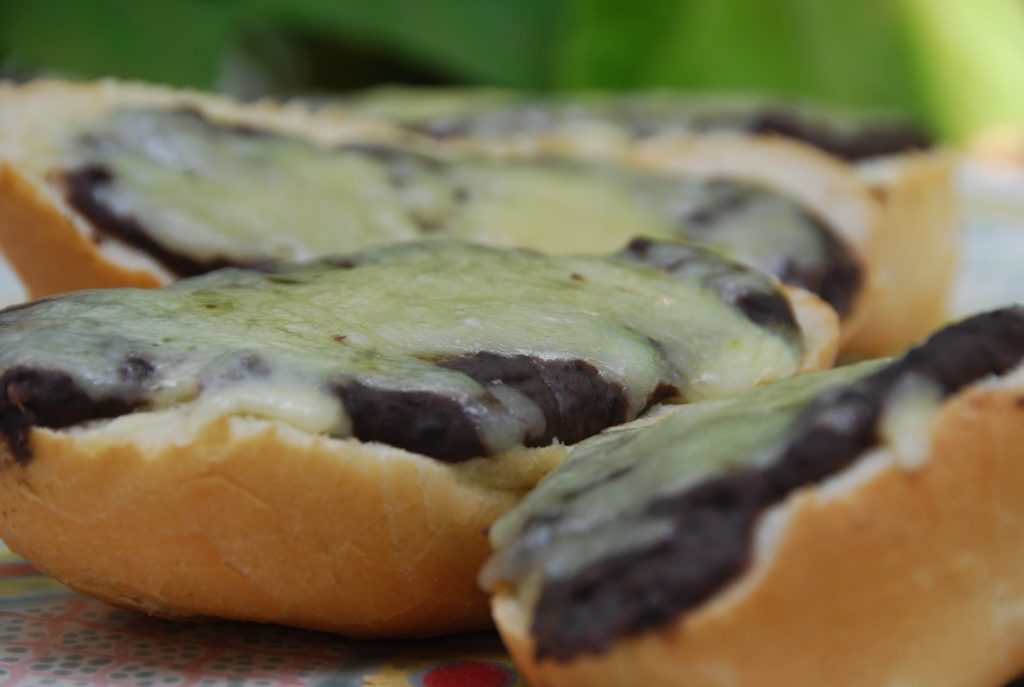
Lastly, add a generous amount of shredded, melting cheese. Something flavorful, but not too overpowering, like Oaxaca, Mozzarella (but not the fresh wet one), Monterey Jack, Light Cheddar or Muenster. In Mexico I would also go for the Chihuahua or Mexican Manchego, but those are hard to come by in the US.

Then in the toaster or oven they go, for about 8 minutes. Until the bread crisps on the outside even more, the earthy beans have heated up and the cheese is oozing on top of it all.

Molletes 3
As with most antojitos, they can be messed around with. You can add extra toppings like crumbled bacon, chorizo, turkey or ham.

My boys love to have those choices! It makes them feel empowered in the kitchen, different from one another and like they are fully enforcing their free will on my territory. Which honestly, is more and more theirs, as the years go by. And I just love that, I can’t begin to tell you how much.

In restaurants and coffee shops Molletes are usually served with a side of Pico de Gallo.

Molletes 4

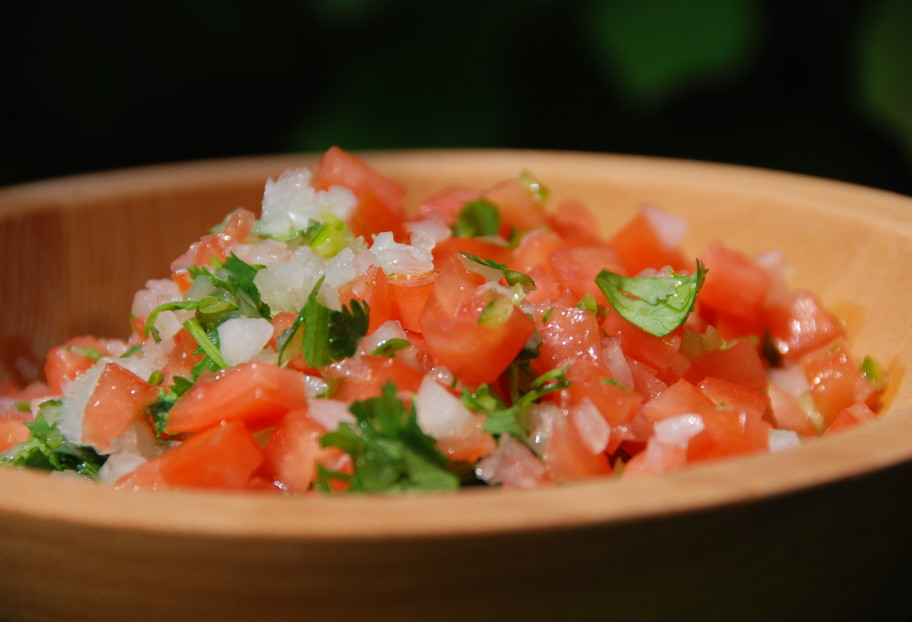
Talk about a way to make them even more wholesome and colorful. A healthy mix of ripe tomatoes, a bit of onion, cilantro and fresh chile, all mixed with fresh squeezed lime juice. But sometimes I will serve them along a Salsa Verde or Chipotles in Adobo. Delicious as well.

There is no way not to fall in love with this quick, fun and tasty meal. There’s just… none.

Enjoy!

Print Recipe
5 from 4 votes

Grilled Bean and Cheese Heros

It takes three ingredients, plus any extra topping that you fancy, 8 minutes in the toaster or oven and you get one of the most comforting foods I have eaten since I can remember: Molletes.
Prep Time5 minutes
Cook Time8 minutes
Course: Antojos
Cuisine: Mexican
Keyword: Antojo, beans, Monterrey Jack cheese, mozzarella, Oaxaca cheese, pati's mexican table, Pico de Gallo, Recipe, refried beans, telera
Servings: 4 to 6 servings
Author: Pati Jinich

Ingredients

  • 4 teleras bolillos, petite baguettes or large baguettes cut into 6" portions
  • 2 cups refried beans homemade or store bought
  • 2 cups Oaxaca cheese mozzarella or Monterrey jack, grated (any melting cheese of your liking will do)
  • Serve with pico de gallo salsa or another salsa of your choice

Instructions

  • Preheat the oven to 350 degrees.
  • Slice the bread in half lengthwise to have 8 pieces. Spread each piece with 3 to 4 tablespoons of refried beans and add 3 to 4 tablespoons of grated cheese on top. Arrange Molletes on a baking sheet as you make them. If you want, add additional toppings like ham, turkey, bacon or chorizo. Sprinkle them on top of the cheese. When they are all assembled, place the baking sheet into the oven.
  • Bake for 8 to 10 minutes, or until the cheese has melted and the bread has a nice toasted crust around the edges. Serve with Pico de Gallo salsa, or a salsa of your choice, on the side or on top.

Notes

Molletes

A National Public Television Series and an Avocado Chop Chop Salad: Take a Peek!

I’ve been wanting to write this post for days. Every time I try, it feels like hundreds of flowers bloom in my head, clouding my thoughts. My tongue gets tied too. Which is not common. I usually don’t hesitate to express my thoughts.

So, pushing aside the flowers and the thing with the tongue…

Dearest friends, here’s the news: if you like Mexican food, if you like Public Television, if you like my approach to cooking, then… I hope you’ll like to hear that Pati’s Mexican Table is premiering on National Public Television, this spring.

I can tell you so many things about how the series came together and why I am so passionate about it. It’s been a fascinating journey: radically switching careers, launching the Culinary Program at the Institute, starting the blog, and now, embarking on the TV series.

What a wild zigzag. But with each turn I’ve confirmed that I want to keep on sharing and exploring Mexican food and all that surrounds it for as long as I can.

Avocado Chop Chop Salad 1

It pleases me to no end to watch my students devour the food at the Institute’s events, and more so when they write to say they’ve made the recipes at home. I love the stories you’ve shared in the blog’s comments and your requests for different cravings. I try to give you the most reliable recipe for that special cookie, dish, soup, or drink that brings you good memories or that you’ve been dying to try. Your filled and happy tummies, stories and requests, fuel my appetite to cook and share more.

See… there is a side of Mexican cuisine that is yet to be fully savored and appreciated: home-style Mexican food.  And for that, thankfully, many preconceptions become broken.

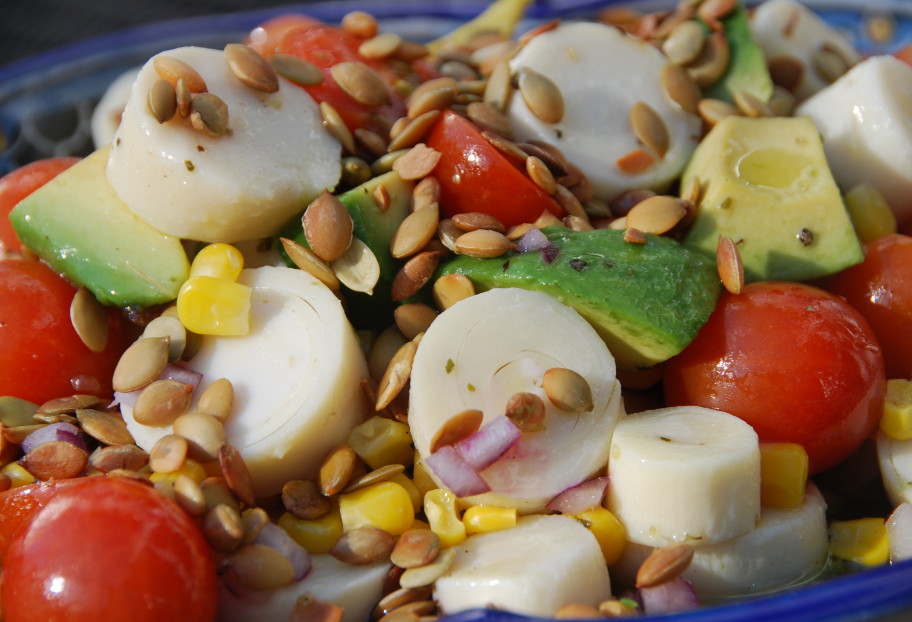
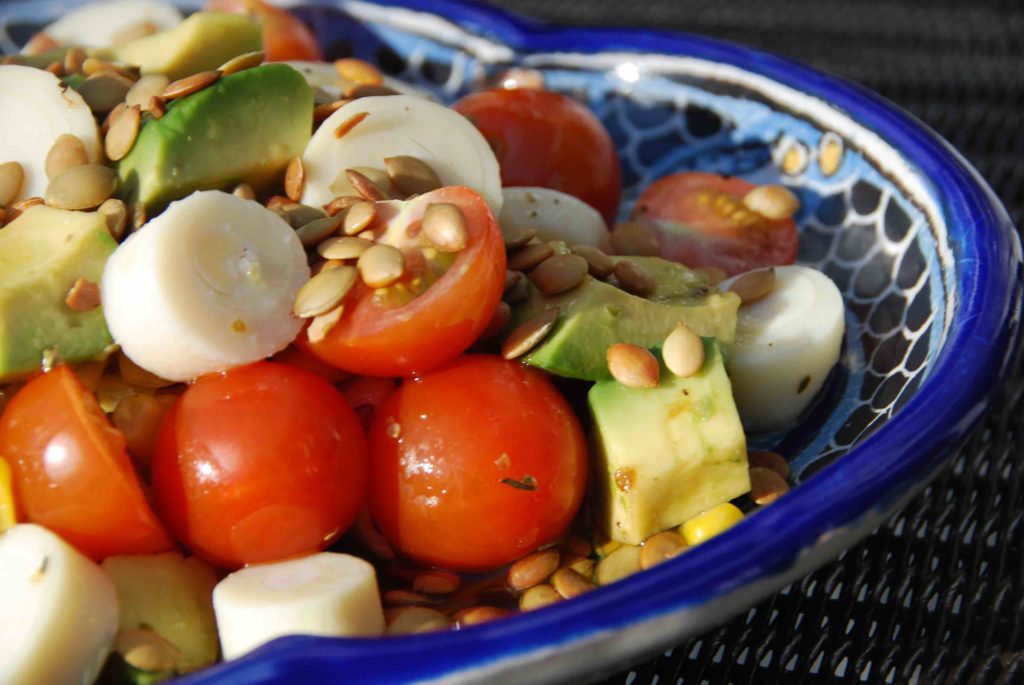
Take this Avocado, Tomato, Corn and Hearts of Palm Chop Chop Salad. One of the first recipes I thought of including in the series.

Avocado Chop Chop Salad 2

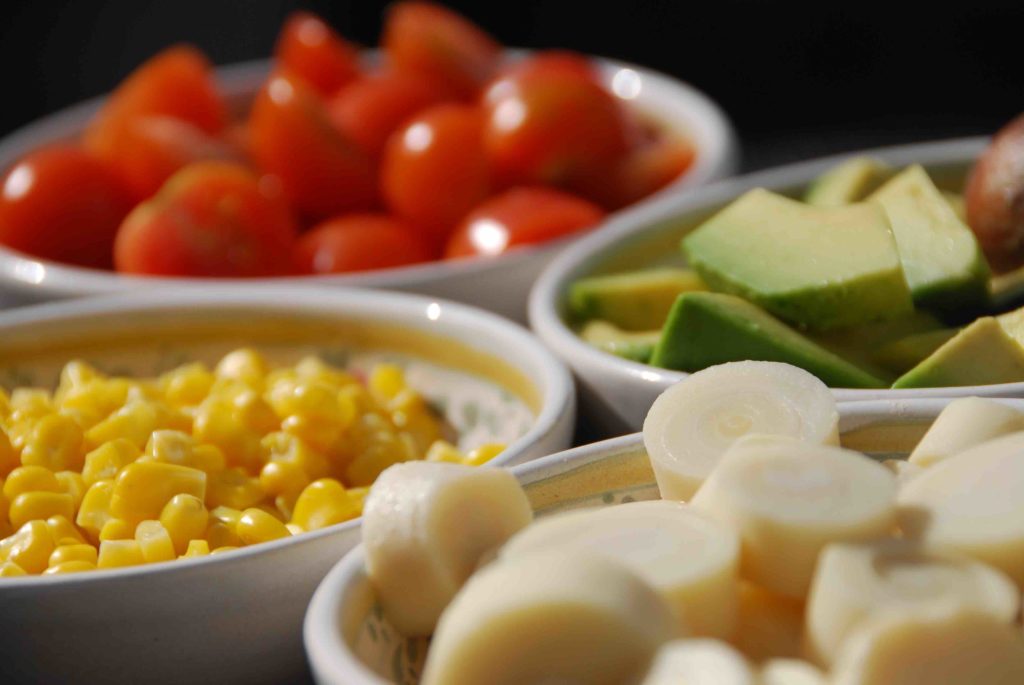
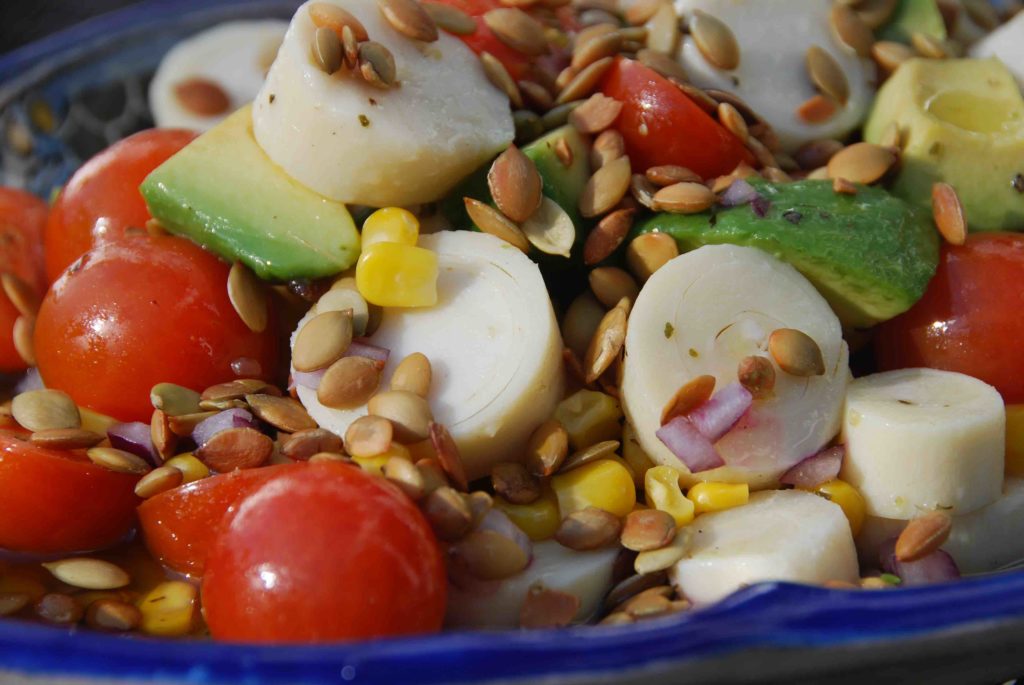
The buttery and luxurious Mexican avocados, the plump and fresh tomatoes, the sweet and crunchy corn, are all native Mexican ingredients. The hearts of palm are not, but its an ingredient that has been popular in Mexican kitchens for ages. Called palmitos, or little palm trees, when I was growing up in Mexico city, my grandmother and mother used to pair Palmitos and avocado for special occasions, just like many restaurants do.

See the mix! It is colorful, it is fresh, it is wholesome. Not many adjectives given to Mexican food outside of Mexico.

This salad is not laborious, as many consider good Mexican food to be. Ingredients here have to be simply, roughly chopped. Just like that!

Avocado Chop Chop Salad 3

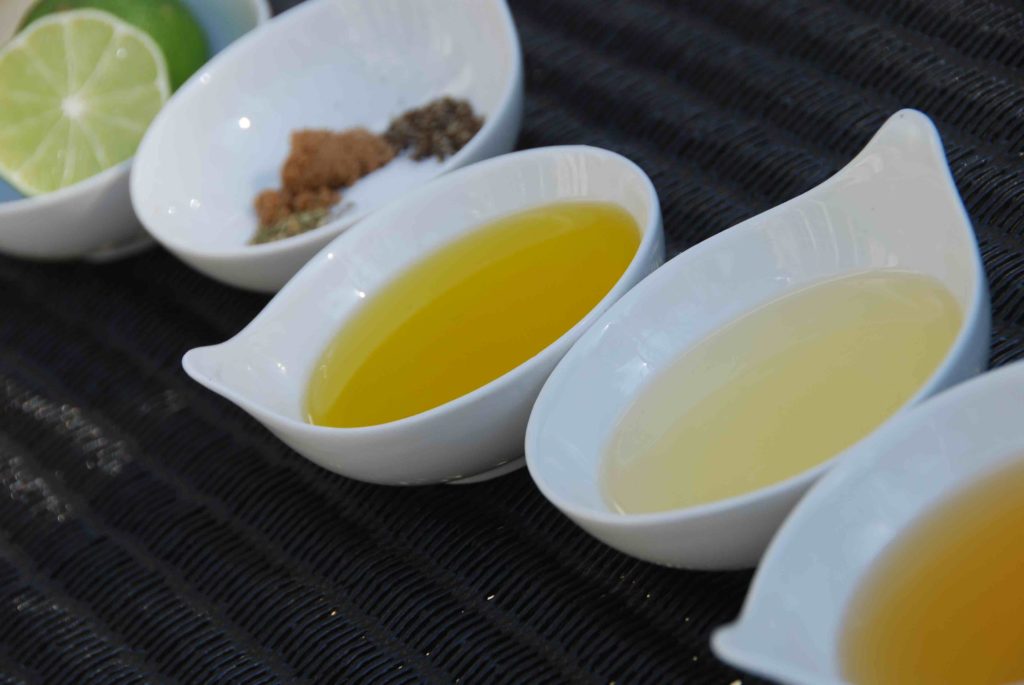
The vinaigrette has crisp and clear ingredients: olive and safflower oils, the always straight forward apple cider vinegar, the lively fresh squeezed lime juice, salt, pepper, oregano (commonly used to season Mexican food, though not that well known) and brown sugar to help all of those flavors shine.

Simple, but layered flavors that feel so smooth when you take a bite.

And no. This salad isn’t spicy. Though I am wild about fresh and dried chiles, like most Mexicans (we need them! we do! there is sooo much one can do with each different kind!), and they are a staple in Mexican cooking (you will see some of my favorite ones in the series…) not all Mexican food is spicy nor has chiles.

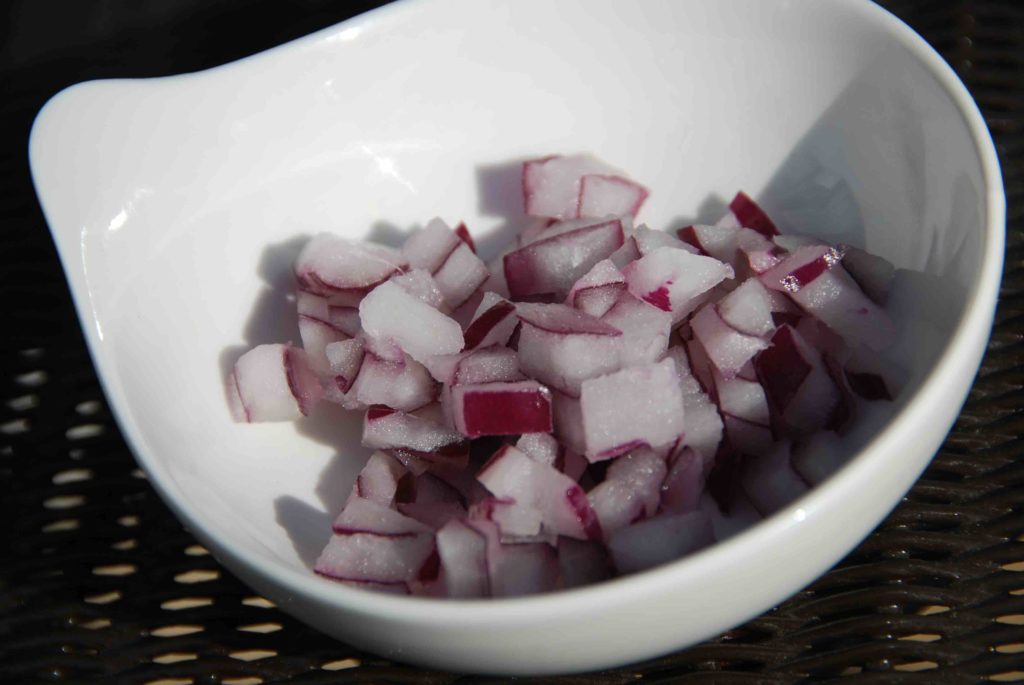
What gives this salad a bit of pungency is a bit of chopped red onion.

Avocado Chop Chop Salad 4

There is nothing here battered or fried. Nor is this salad stuffed inside a giant tortilla with a gazillion other ingredients (OK, my boys do like U.S.-style burritos and I have come to appreciate them, but we also love Mexican-style ones… which I share in one of the show’s episodes).

Avocado Chop Chop Salad 5

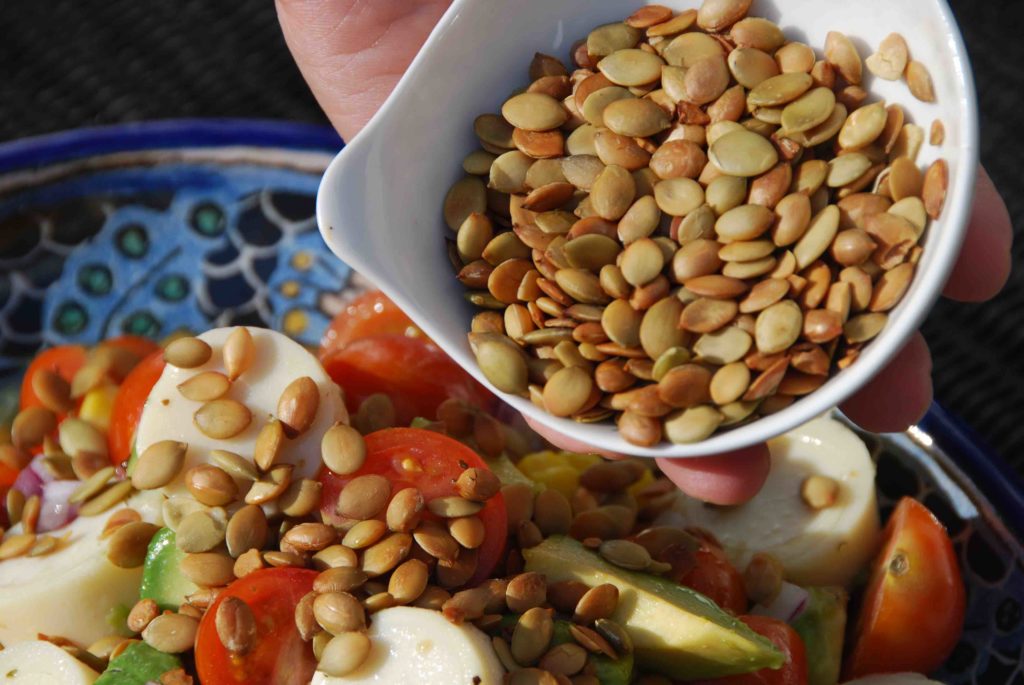
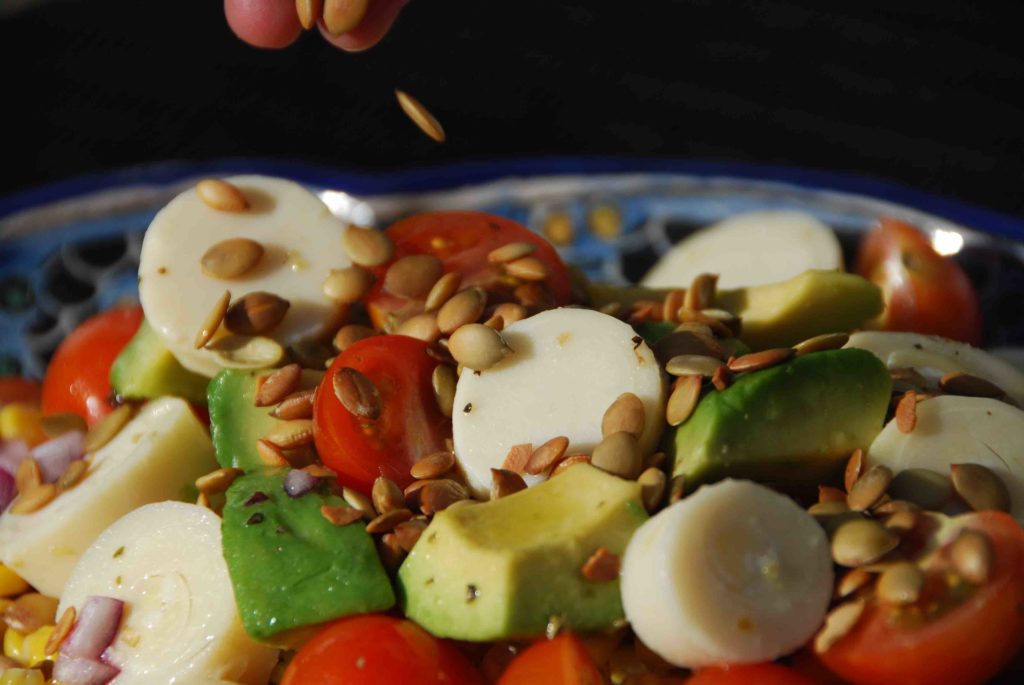
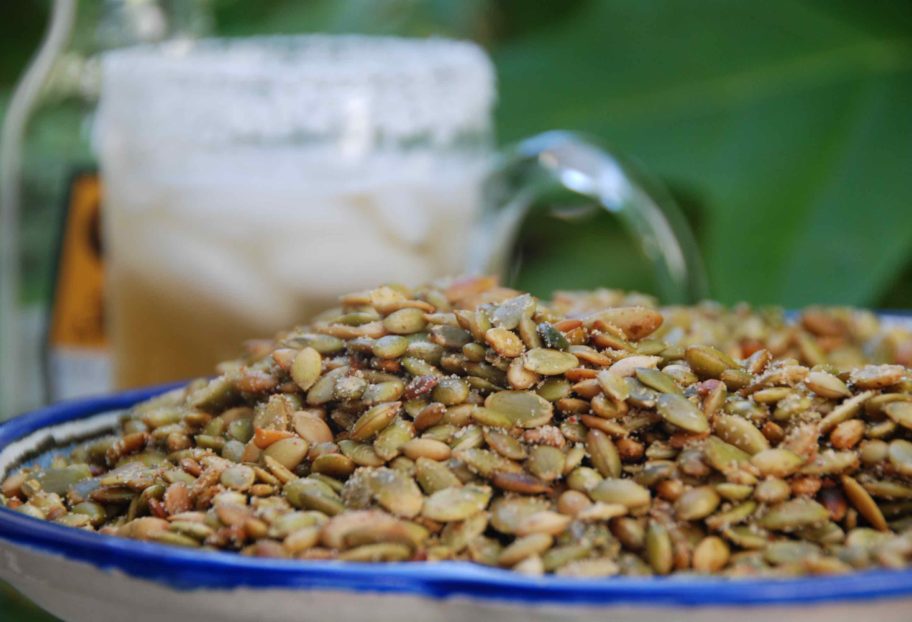
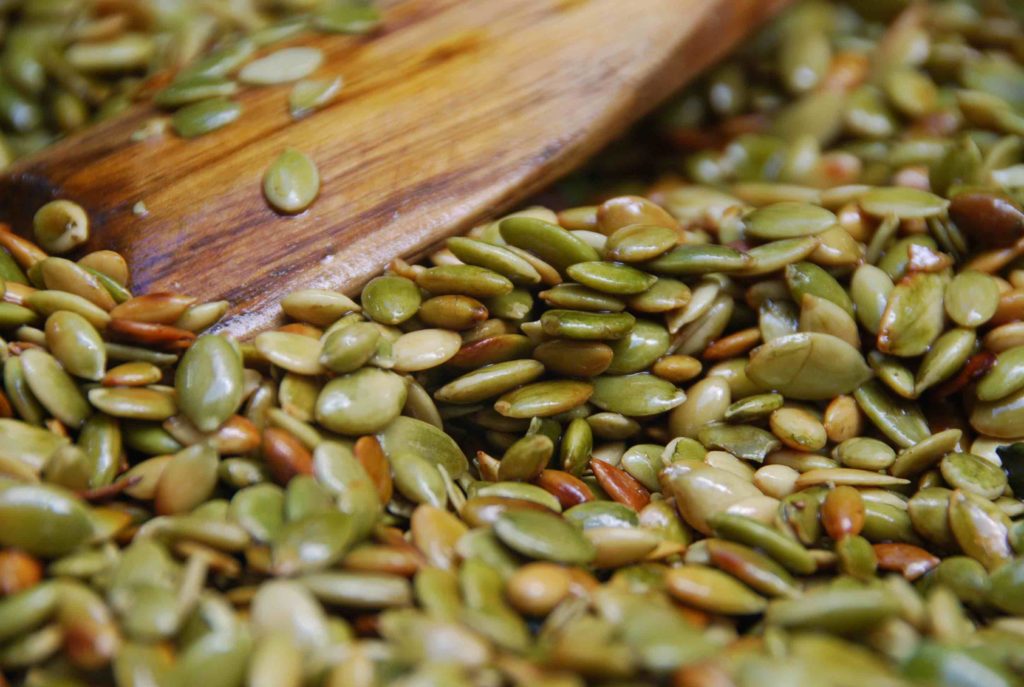
What tops the salad, and gives it a healthy, crunchy and lightly nutty flavored bite are the toasted pumpkin seeds. An ingredient that since long before the time of the Aztecs, has been the base of moles, stews, sauces and pastes. They are used for all that, and for this too.

Avocado Chop Chop Salad 6

So of course I will share traditional dishes that have been passed down in families for generations, the pepitos, the soups, the tacos, the stews, the salsas, the practical moles, the flans and the panes dulces. But I will also share some of the modern spins made within the genuine boundaries of Mexican cooking: so you can explore along with me, a cuisine that keeps on evolving, inside and outside of Mexico.

Avocado Chop Chop Salad 7

So tune in!! And please, keep on sharing what you like and what you don’t, and mostly: send me your requests, I will try to keep on honoring them all.

p.s. The series premieres on WETA TV 26 Saturday April 2nd at 11:30 am in DC/MD/VA. Check your local public television station for their schedule this Spring!

Print Recipe
5 from 4 votes

Avocado and Hearts of Palm Chop Chop Salad

The buttery and luxurious Mexican avocados, the plump and fresh tomatoes, the sweet and crunchy corn, are all native Mexican ingredients. The hearts of palm are not, but its an ingredient that has been popular in Mexican kitchens for ages. Called palmitos, or little palm trees, when I was growing up in Mexico city, my grandmother and mother used to pair Palmitos and avocado for special occasions, just like many restaurants do.
Prep Time10 minutes
Cook Time5 minutes
Course: Salad
Cuisine: Mexican
Keyword: apple cider vinegar, Avocado, Corn, hearts of palm, lime, pumpkin seeds, Recipe, red onion, salad, Tomatoes, Vegetarian, vinaigrette
Servings: 4 to 6 servings
Author: Pati Jinich

Ingredients

For the salad:

  • 3 ripe Mexican avocados about 2 pounds, pulp cut into large chunks
  • 14 ounces hearts of palm drained, rinsed and thickly sliced, about 1 1/3 cups
  • 1 cup corn kernels from freshly cooked ears of corn or thawed and cooked from frozen
  • 1 tablespoon red onion chopped
  • 6 ounces cherry tomatoes or about 1 cup, whole or halved according to your preference
  • 3 tablespoons pumpkin seeds toasted

For the vinaigrette:

  • 2 teaspoons apple cider vinegar
  • 1 tablespoon lime juice
  • 1/4 teaspoon oregano
  • 3/4 teaspoon sea salt
  • 1/4 teaspoon brown sugar
  • 1/4 teaspoon black pepper
  • 2 tablespoons olive oil
  • 2 tablespoons safflower oil

Instructions

To make the vinaigrette:

  • Pour the vinegar and lime juice in a small bowl. Add oregano, salt sugar and black pepper. Pour the oils in a slow stream, whisking with a whisk or fork to emulsify. The vinaigrette can be made a day ahead of time, just emulsify before using.

To toast the pumpkin seeds:

  • Place the pumpkin seeds in an already hot small saute pan, set over medium heat. Stir often, being careful not to burn them, until you start to hear popping sounds (similar to pop corn), and they begin to acquire a nice tanned color, about 4 to 5 minutes later. Remove from heat and place in a bowl.

To make the salad:

  • In a separate bowl, gently mix the avocado chunks, hearts of palm slices, corn kernels, cherry tomatoes and red onion with the vinaigrette. Sprinkle with the toasted pumpkin seeds and serve.
  • This salad can be served as a main salad with a side of toast or pita bread, or it can be served as a side salad to grilled chicken, fish or meat.

Notes

Ensalada de Aguacate y Palmitos

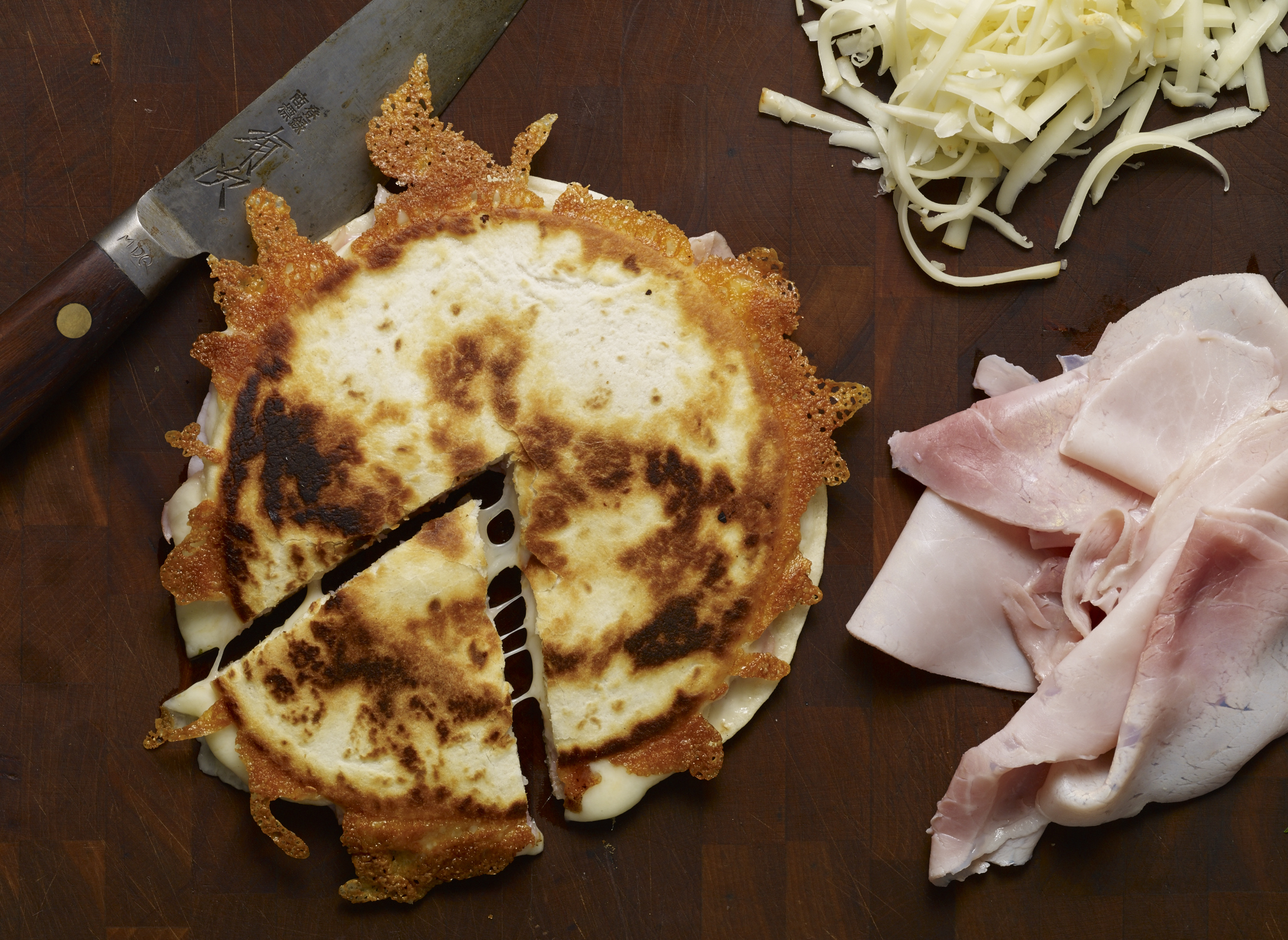
Ham and Cheese Quesadillas

Ham and Cheese Sincronizadas with Flour Tortillas
Print Recipe
4 from 7 votes

Ham and Cheese Quesadillas

Ham and Cheese Quesadillas recipe from Pati's Mexican Table Season 1, Episode 1 “Quesadillas”
Prep Time5 minutes
Cook Time10 minutes
Total Time15 minutes
Course: Antojos, Main Course
Cuisine: Mexican
Keyword: Avocado, Chihuahua cheese, flour tortillas, ham, Monterrey Jack cheese, Muenster cheese, Oaxaca cheese, pati's mexican table, Quesadilla, turkey
Servings: 6 sincronizadas
Author: Pati Jinich

Ingredients

  • 12 flour tortillas
  • Safflower or corn oil optional
  • 8 ounces Chihuahua, Oaxaca, Monterey Jack, Muenster or melty cheese of your choice
  • 6 to 12 thin slices ham or turkey
  • Mexican avocado slices optional
  • Salsa of your choice

Instructions

  • Heat a non-stick sauté pan or a comal over medium heat. Place a couple flour tortillas, many as will fit in the pan or comal, top with a generous amount of shredded cheese and one or two slices of ham or turkey. Cover with a second flour tortilla.
  • Heat until the flour tortillas in the bottom become lightly toasted and cheese starts melting. With the help of a spatula, flip them to the other side and let it heat and crisp a bit. I like to wait until the cheese oozes out, browns and crisps a little! Transfer to a plate and slice in half or quarters.
  • Serve with a salsa of your choice and slices of ripe avocado on the side.

Notes

Sincronizadas de Jamón con Queso

Crazy for Tepache

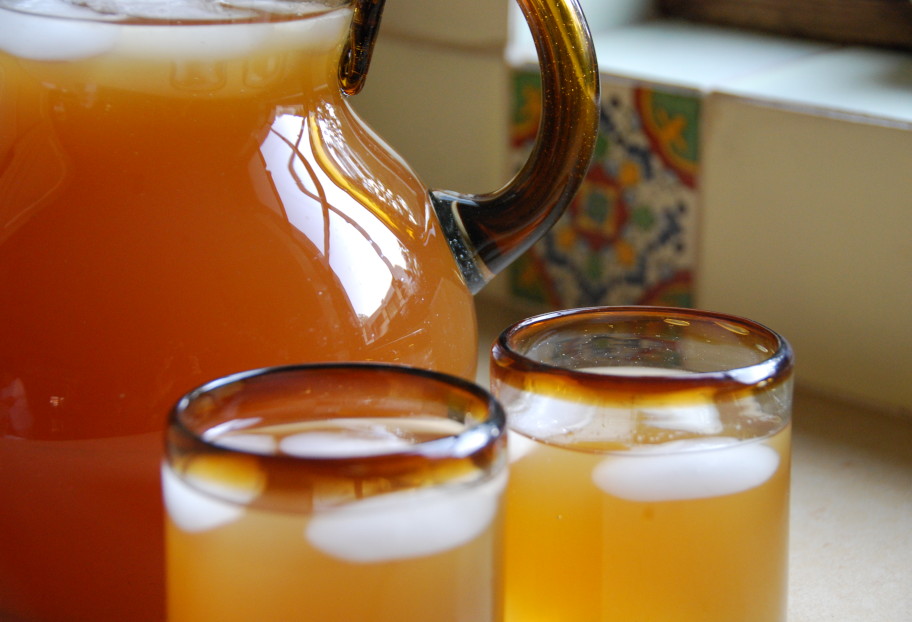
I am crazy for Tepache. Gently sweet, with an innocent hint of home brewed alcohol, a deep freshness and a gorgeous amber color.

Tepache: A home made fermented drink that comes from the state of Jalisco – also breeding ground of other Mexican symbols like Tequila, Charros and Mariachis. Tepache has a base of fresh pineapple, true cinnamon, piloncillo and water and has been drank in Mexico since Pre-Colonial times.

I have made it many times throughout my life.

First, when Daniel and I moved to Texas, to celebrate our finding piloncillo at a U.S. grocery store. Later, when we moved to DC, to soothe the heat of that first long summer and to make our new home, feel like home. A couple years ago, I brewed liters to share with a large crowd for a class I taught on foods from Jalisco.

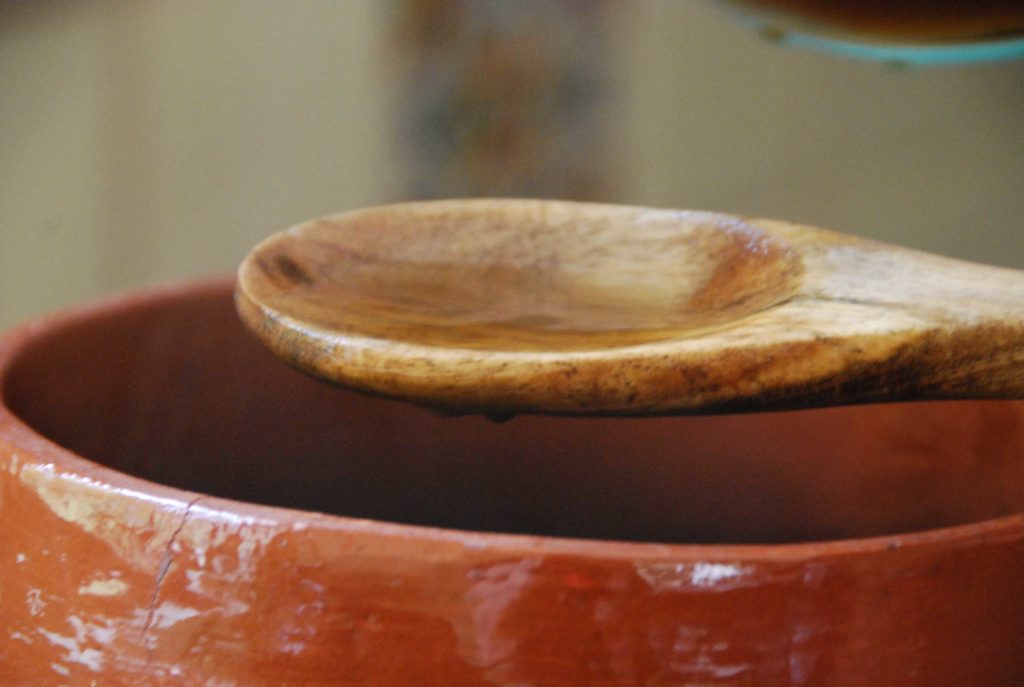
Then, I forgot about it. Until this summer, when we moved, the heat started pumping up and I unpacked my old clay pot from Tlaquepaque, Jalisco. A pot that is perfect for brewing Tepache, which is so simple to make. That is, if you can keep an eye on it.

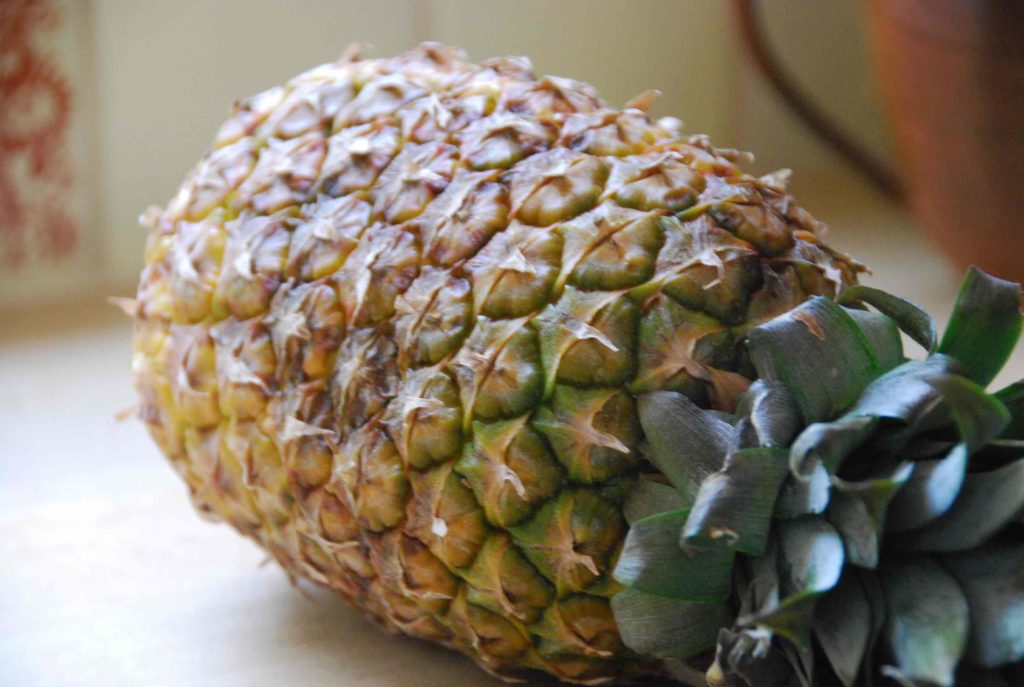
You need to find a ripe pineapple. Almost entirely yellow and soft to the touch.

Tepache 1

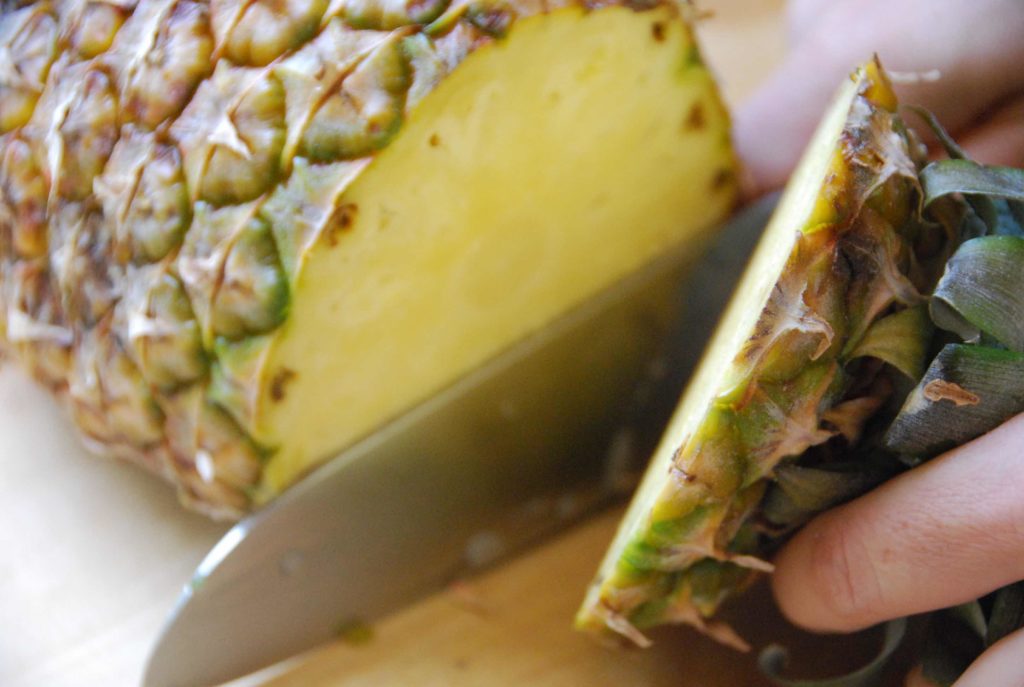
After you rinse it, remove the top.

Tepache 2
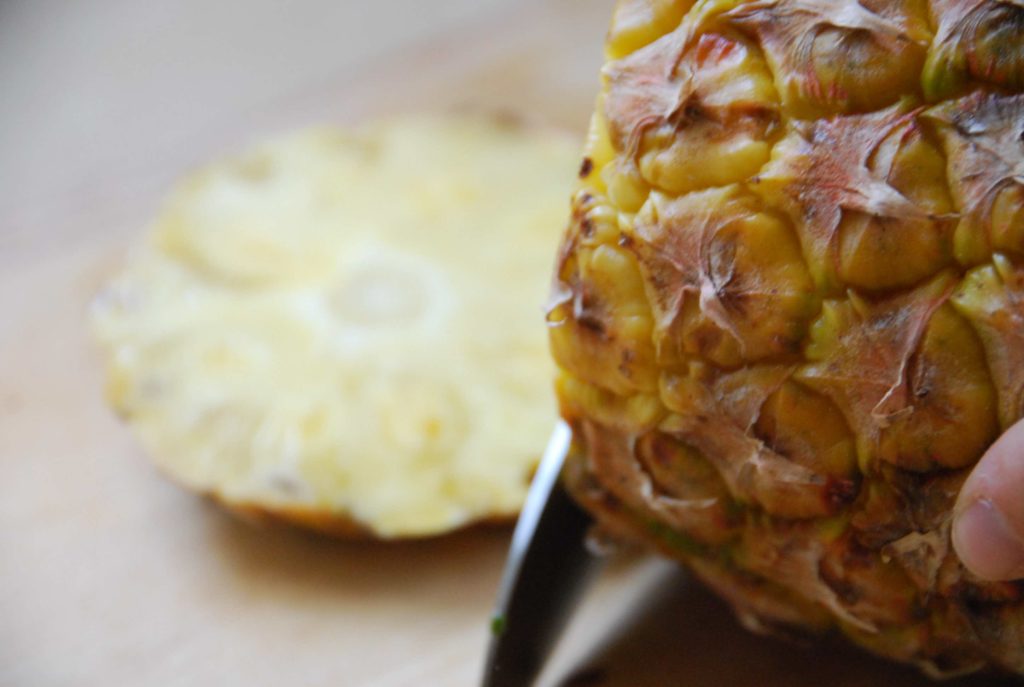
Do away with the bottom too.

Tepache 3

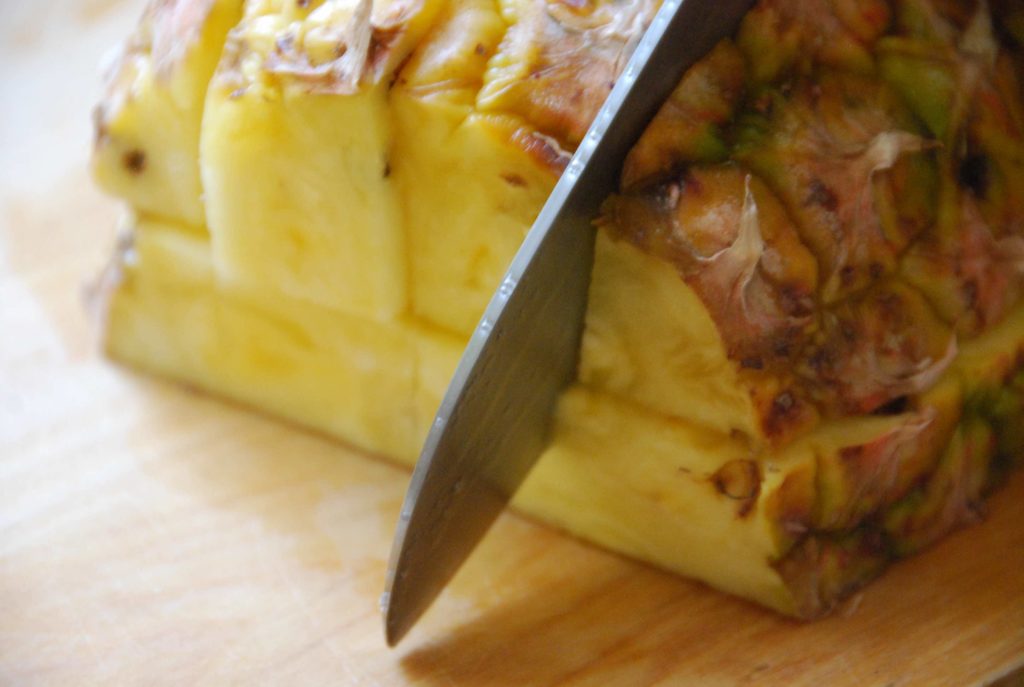
Cut into thick slices, whichever way you want, horizontal or vertical, including the peel. The peel will help the drink ferment and give it an interesting depth of flavor.

Tepache 4

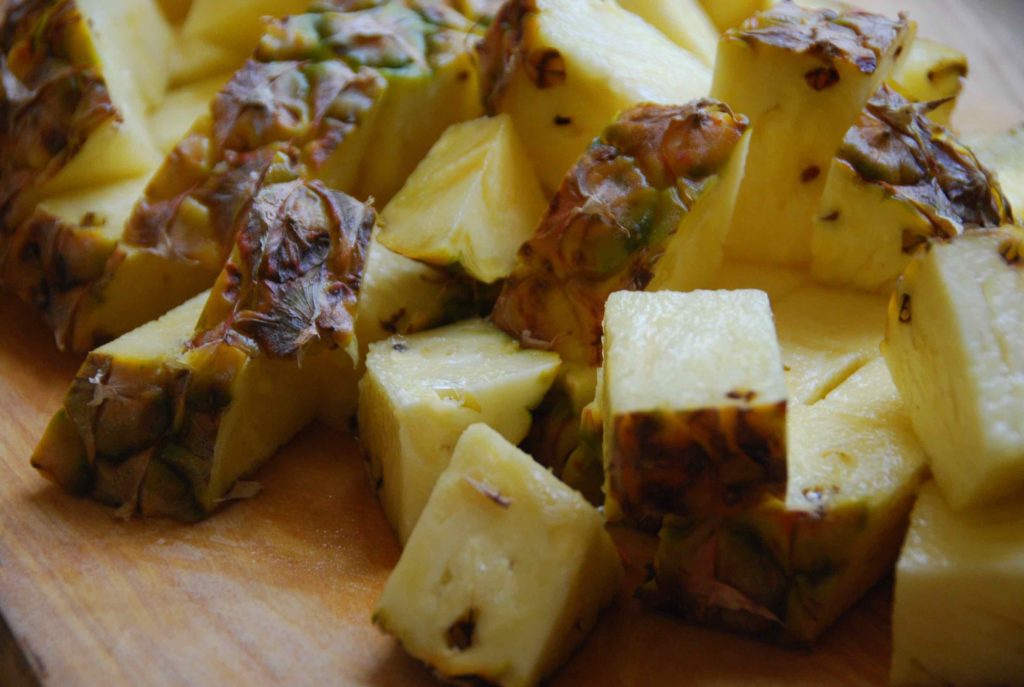
Cut the slices into thick chunks (yeah, I do love my knife…)

Tepache 5
There you go, the gorgeous work of a fine, loyal knife (I so, so, so, love my knife)

Tepache 6
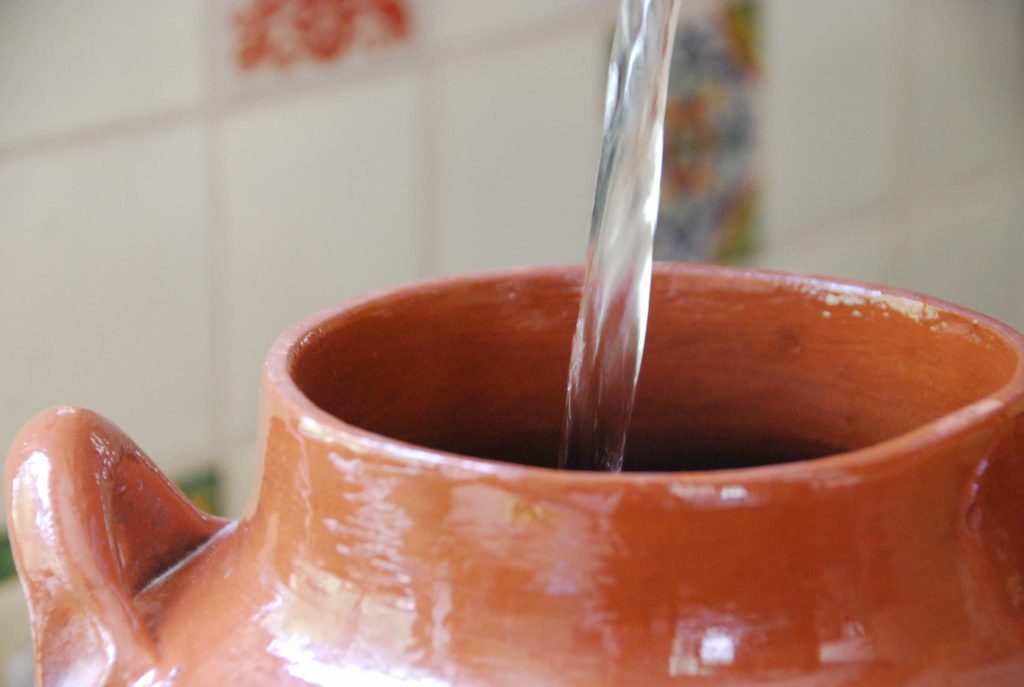
Pour water into the pot. If you don’t have a clay pot, use any kind of large pot.

Tepache 7
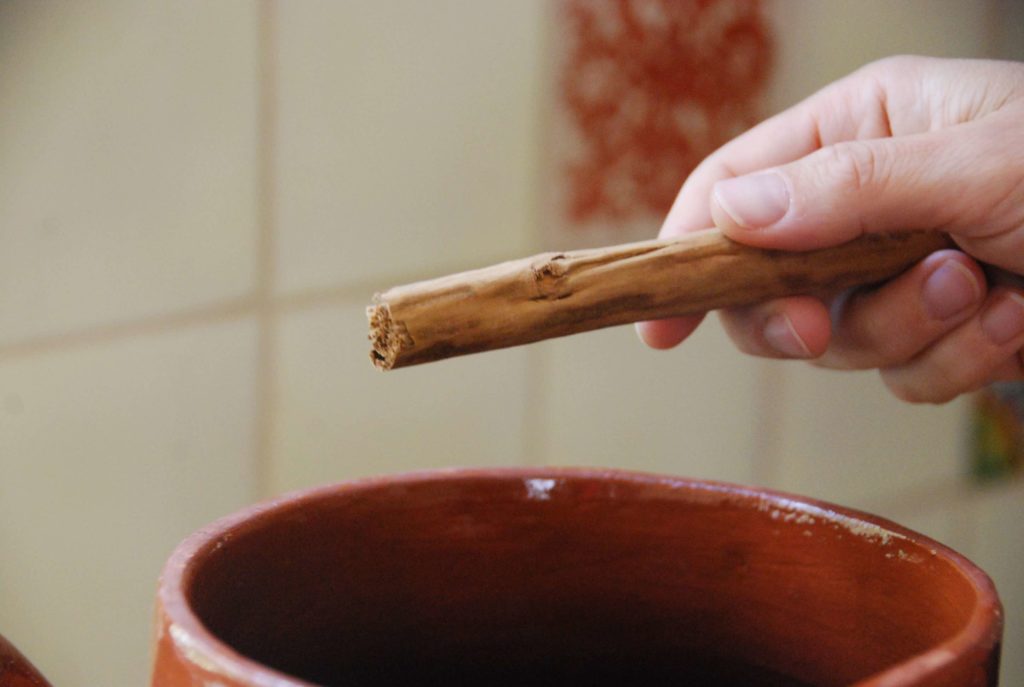
Drop in a cinnamon stick, preferably true cinnamon, if handy.

Tepache 8

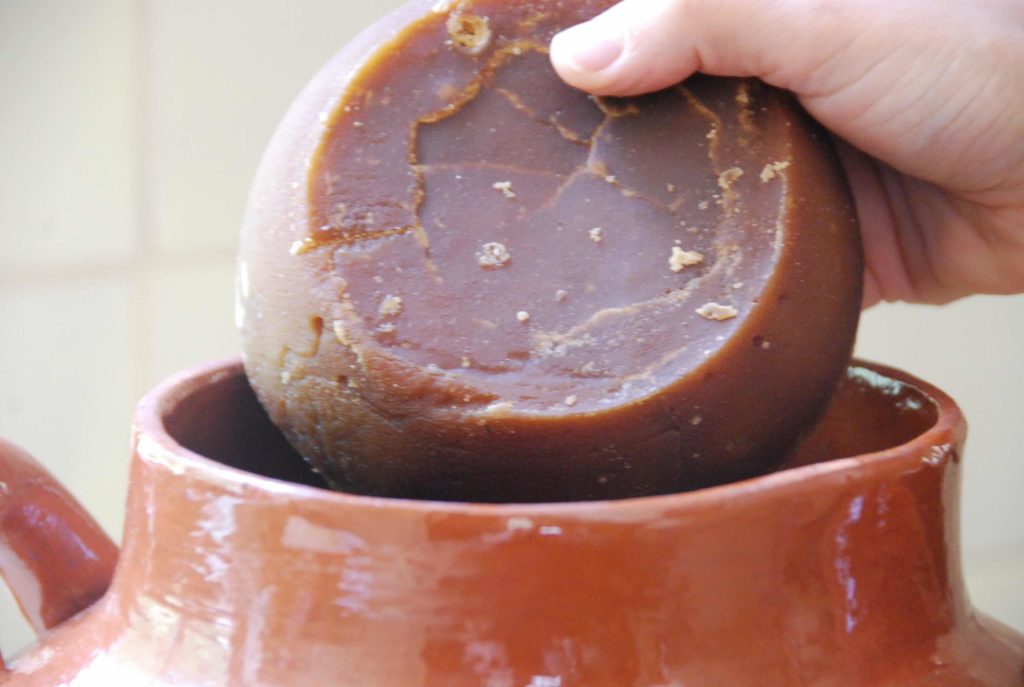
Drop in the piloncillo, which gives anything it touches that rustic small Pueblo flavor. Just throw it all in there. No need to chop. No need to shred. It will dilute in the water as you bring it to a simmer.

Tepache 9
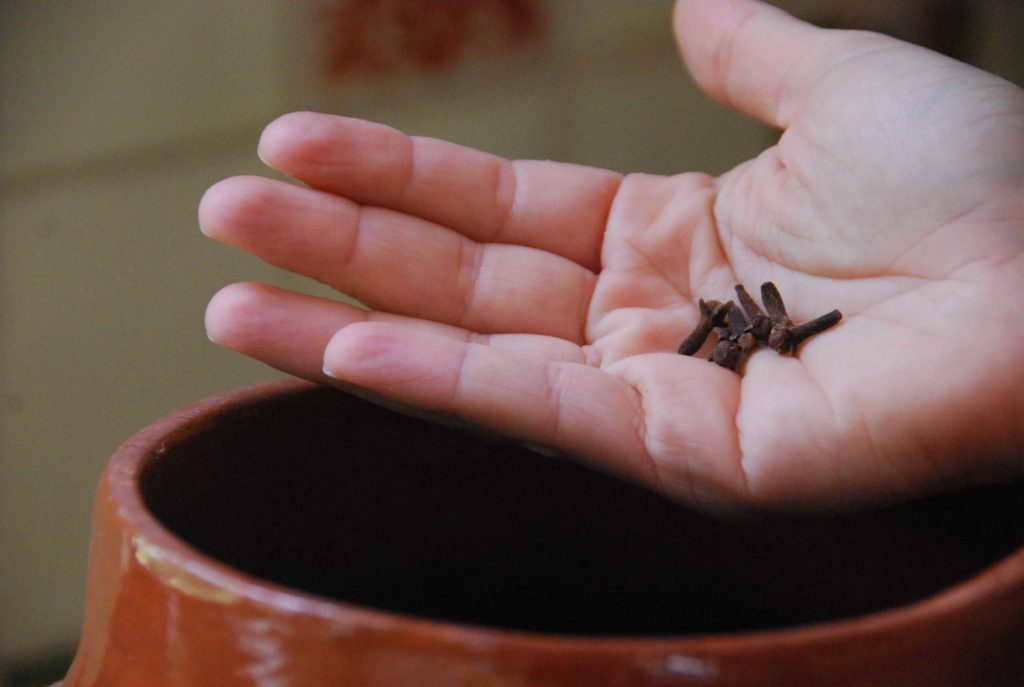
Oh, and five or six whole cloves, for that touch of spice.

Tepache 10
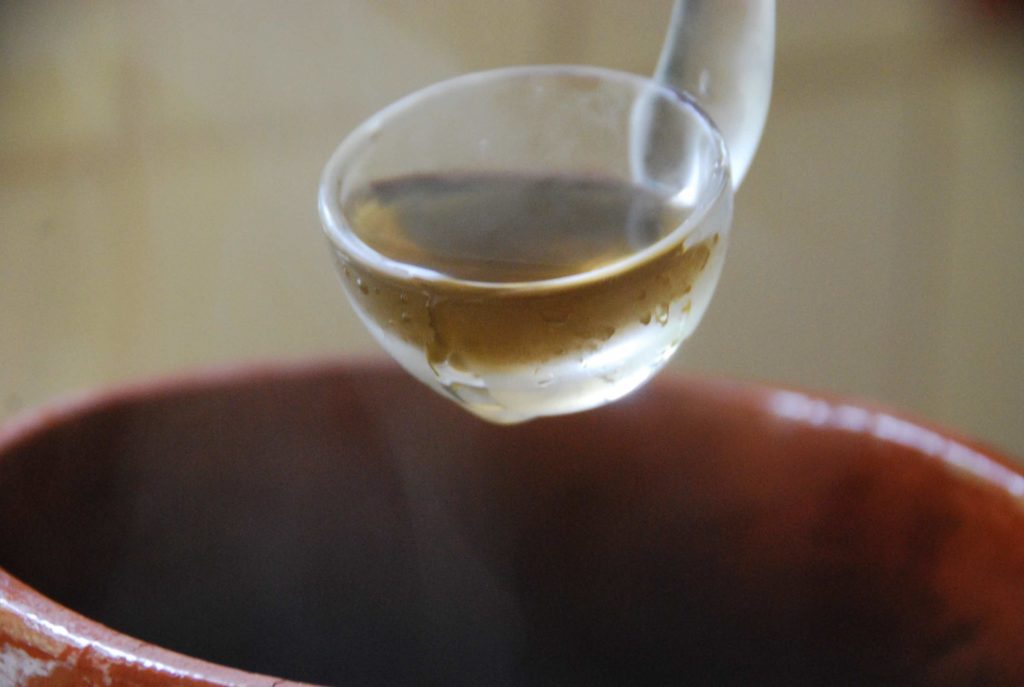
Bring it to a boil and simmer for about 10 minutes. You know the liquid is ready when the piloncillo has diluted and you get this lovely light brown color.

Tepache 11
Light amber.

Here, you can see the color of the liquid better with my grandmother’s glass spoon. Light amber.

Gorgeous amber.

And it gets even better after you add the pineapple.

Tepache 12

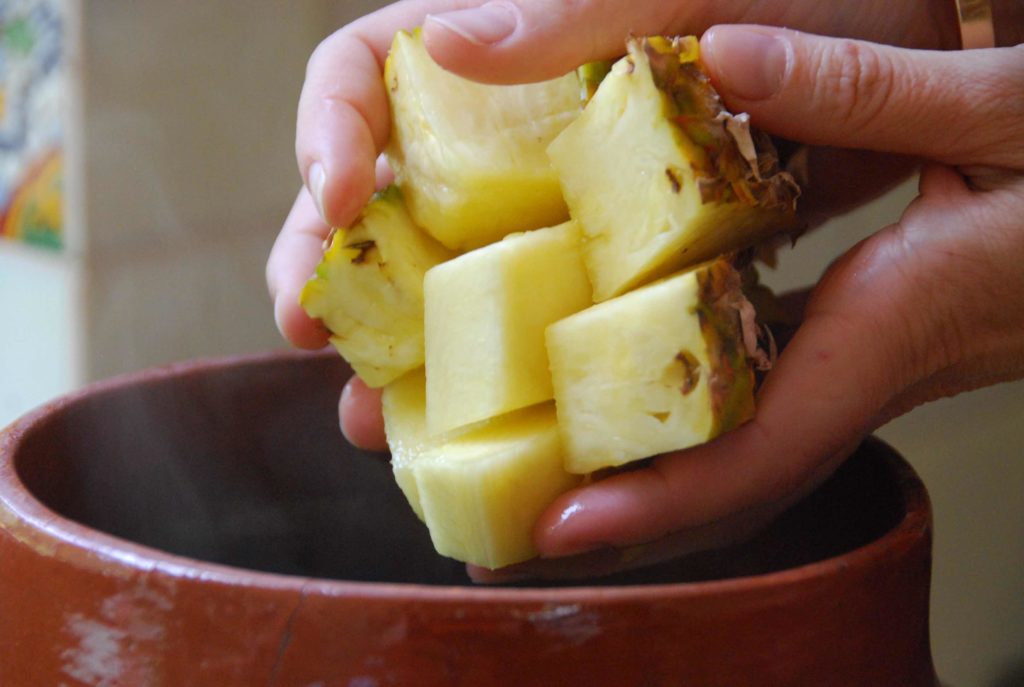
Turn off the heat, and add the pineapple chunks.

Tepache 13
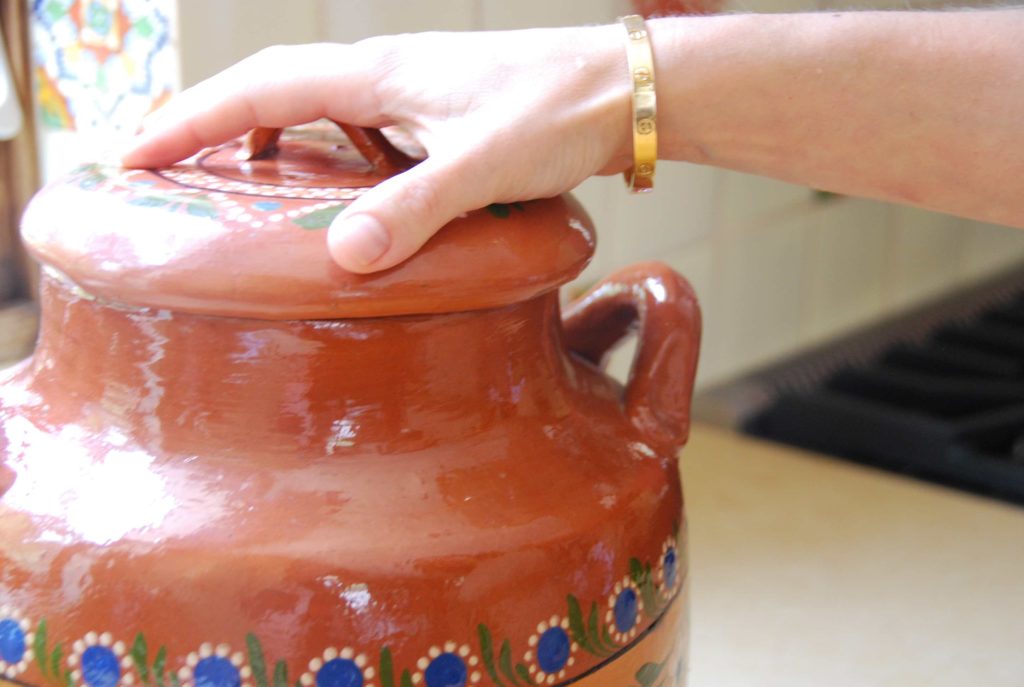
Cover the pot and let the mixture sit and rest, and begin to ferment, for two days, or about 48 hours. Any area of your kitchen is fine, preferably the warmest area, where you won’t have to move the pot around for that period of time.

Tepache 14
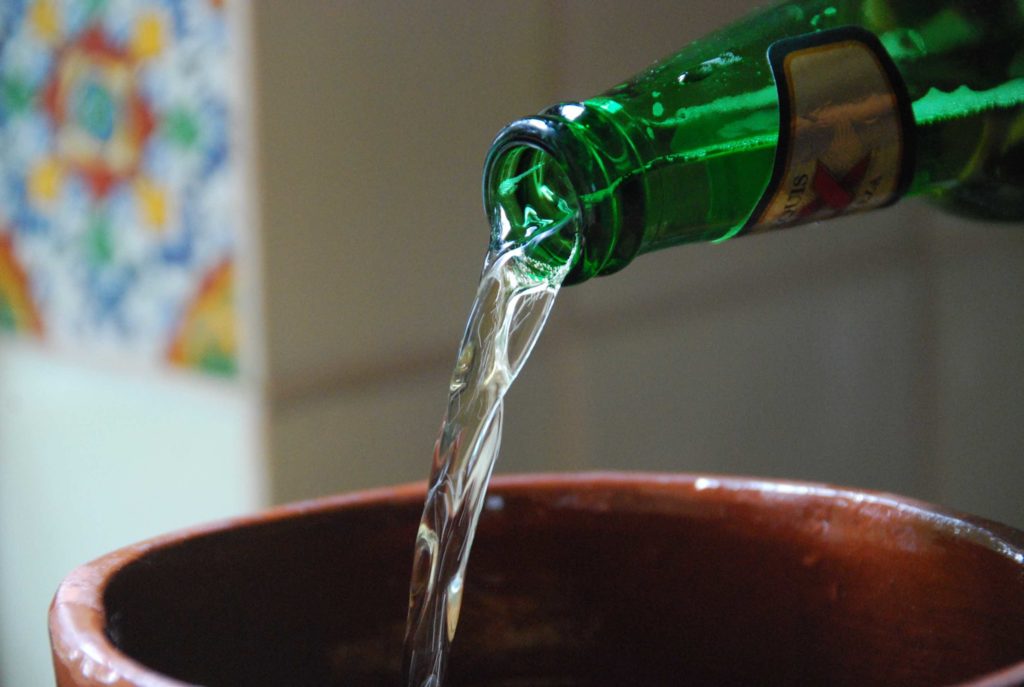
After two days, the liquid will begin to show some bubbles. That’s when its ready for you to pour in the beer to speed up the fermentation process. You can go the old fashioned way, and not add any beer and let it sit for another week, or more.

Tepache 15
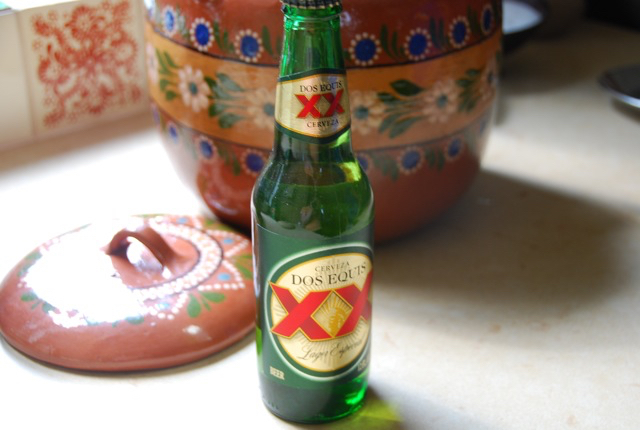
Any lager that you like. Dos Equis works for me.

Tepache 16
Cover the mix, and let it sit for about 12 to 15 hours more.

Now, remember I just said Tepache is so simple to make, if you can keep an eye on it. Well, right after I poured the beer in this step above, I had to leave for New York. My husband was left in charge of keeping an eye on the Tepache, but he was too busy keeping an eye on our three monsters.

So the Tepache ended up tasting like vinegar.

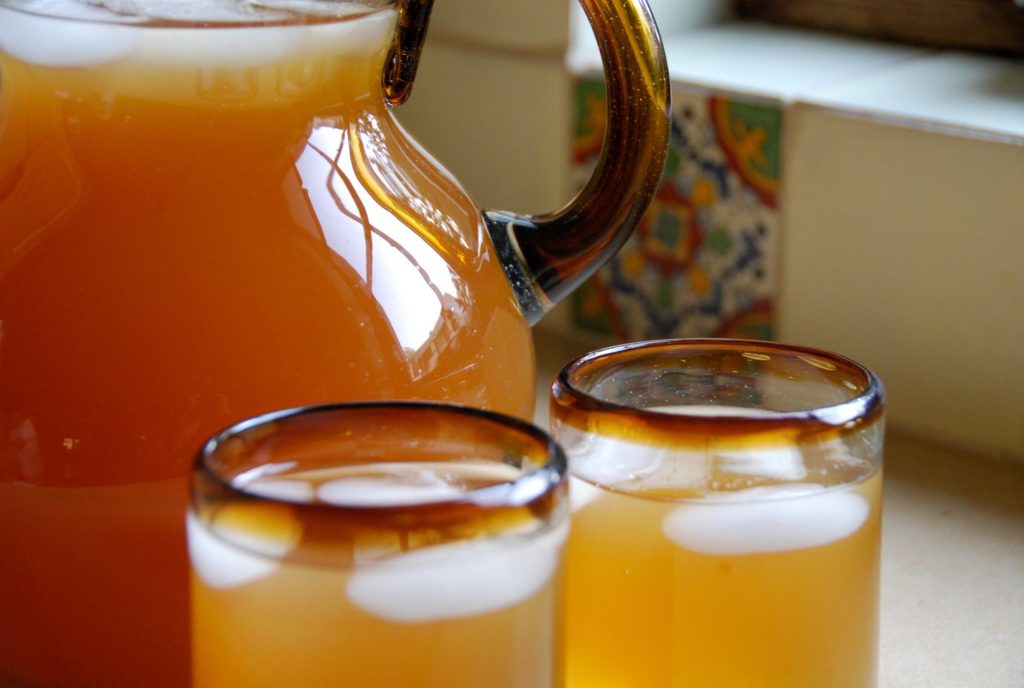
The trick is, right after you pour the beer, don’t let it sit for more than 12 to 15 hours. After that time, strain it and either drink it or place it in a big pitcher in the refrigerator.

Tepache 17
So there I went again… and this time, we were all keeping an eye on the Tepache. It went so fast!

Now we are at it again, once more. But my lesson learned: you have to watch your own Tepache.

Print Recipe
4.41 from 5 votes

Tepache

Tepache: A home made fermented drink that comes from the state of Jalisco – also breeding ground of other Mexican symbols like Tequila, Charros and Mariachis. Tepache has a base of fresh pineapple, true cinnamon, piloncillo and water and has been drank in Mexico since Pre-Colonial times.
Prep Time5 minutes
Cook Time2 days 12 hours
Course: Drinks
Cuisine: Mexican
Keyword: beer, cinnamon, cloves, cocktail, piloncillo, pineapple, Recipe
Servings: 8 to 10 servings
Author: Pati Jinich

Ingredients

  • 1 ripe pineapple or about 3 cups
  • 4 liters water or 16 cups
  • 1 pound piloncillo or dark brown sugar
  • 1 cinnamon stick
  • 5 whole cloves
  • 1 cup lager beer

Instructions

  • Using the traditional big eathenware jug (or a large pot), bring to a boil the 16 cups water along with the piloncillo, cinnamon stick, and whole cloves. Simmer, stirring once in a while, for about 10 minutes or until the piloncillo has dissolved.
  • While the water is simmering, wash the pineapple thoroughly, and remove the stem and bottom. Cut it into 2 inch cubes, without taking off its rind.
  • Once the flavored water is ready, add in the pineapple chunks and cover. Let rest for 2 days, or 48 hours, in a warm area of you kitchen. The mixture will begin to ferment and bubble on the surface. Add a cup of lager beer, stir well, and let it sit for up to 12 hours more. Don't let it ferment much longer, or you may end up with vinegar instead!
  • Strain tepache through a fine strainer or cheesecloth, and serve very cold. You can either refrigerate it or serve over ice cubes.

Tequila, Mexican Cream and Chipotle Shrimp

Shrimp tend to be perceived as a treat. That fancy item on a menu.

Think about what happens at a shrimp station on a Sunday buffet. It gets crowded. Even if you didn’t feel like eating shrimp, if there’s a shrimp station, chances are you will eat them. Your mom, your dad, your husband or friends will look at your shrimp-less plate and push some shrimp onto your plate.

Growing up in Mexico City, family Sunday lunches with the dozens and dozens members of our immediate family included giant shrimp from the Mercado de la Viga.  There was so much anticipation as to when they would majestically appear on that huge platter carried by my grandmother. Before they got to the table, people started sneaking away some. So my grandmother decided to set a pre-lunch agreement on the number of shrimp per head, to avoid childish grown up wording snaps like “YOU always get the extra shrimp” or sudden door slams.

So when I was asked to develop a Mexican menu for the 2010 RAMMYS Awards I just had to include shrimp. I paired them with some signature Mexican ingredients: smoky and hot Chipotle Chiles in Adobo, tangy and salty Mexican Cream and the iconic Tequila Reposado.

And so, they were served to the 1600 attendees.

Tequila Shrimp 1
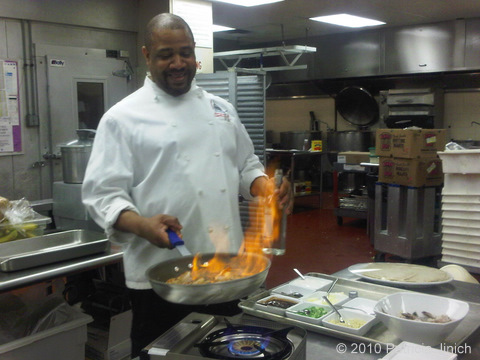
But before that day, the cooking staff under the expert guidance of the Marriott Wardman Park Hotel Executive Chef Horst Lummert, had to test the recipe.

That day of testing and tasting was incredibly fun. Here we were, as we watched how the tequila drunken shrimp were ignited…

Tequila Shrimp 2
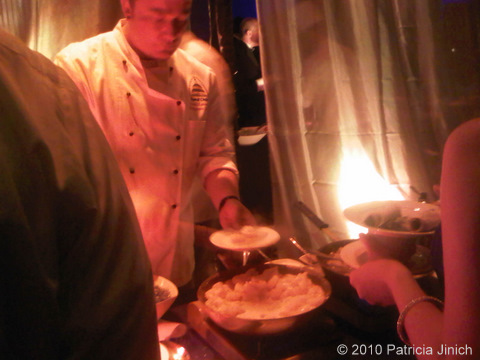
And here we were, watching a crowded shrimp station serve hundreds of plates.

Tequila Shrimp 3
And here is how you can get a taste of those shrimp, right at home. Along with some igniting which is such a thrill.

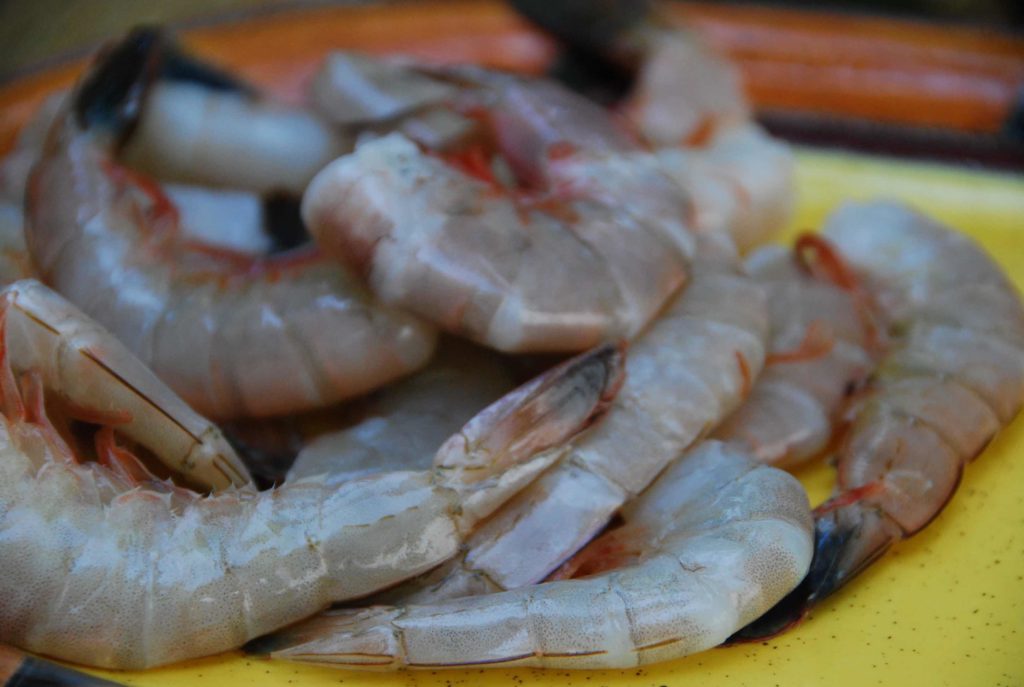
First of all. Get some good shrimp. Though it is always  better to use fresh ingredients, truth is, it is hard to get fresh shrimp. Although sold thawed, they tend to traveled frozen. A wonderful thing about shrimp though, different from fresh fish, is that shrimp freeze well and can survive the thawing process in great shape, keeping their crispness and flavor.

Here is a suggestion: If you are using them today, buy them thawed, but ask your fishmonger how long they have been sitting there. It should be 1 or 2 days tops. They shouldn’t seem limp or sad and should have a light saltwater smell. Get them with the shrimp and tail on.

If you are using them tomorrow or further on, buy them frozen. Then you are on top of how long they have been thawed.To thaw, have them in the refrigerator a day before using and rinse them under cold running water.

Don’t thaw them at room temperature or in a microwave, or you will end up with shrimp ready for a Halloween party.

Tequila Shrimp 4
Once thawed, peel and season them with Kosher or sea salt and freshly ground pepper.

Tequila Shrimp 3

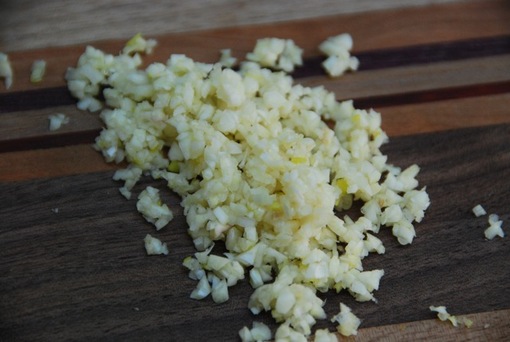
Heat a large pan over medium high heat, once your butter is sizzling, toss in some fresh minced garlic. Let it become fragrant, 10 seconds or so… and add the shrimp.

Cook the shrimp just 1 or 2 minutes per side, so they will be soft, crispy and sweet instead of chewy, rubbery and boring.

Then pour your Tequila and watch it. Once you add the Tequila, slightly tilt the pan to the flames of your burners as you lightly step back. It will ignite fast and furiously, but only for less than half a minute. Igniting the Tequila gets rid of the alcohol presence and retains the bold flavors from the Tequila.

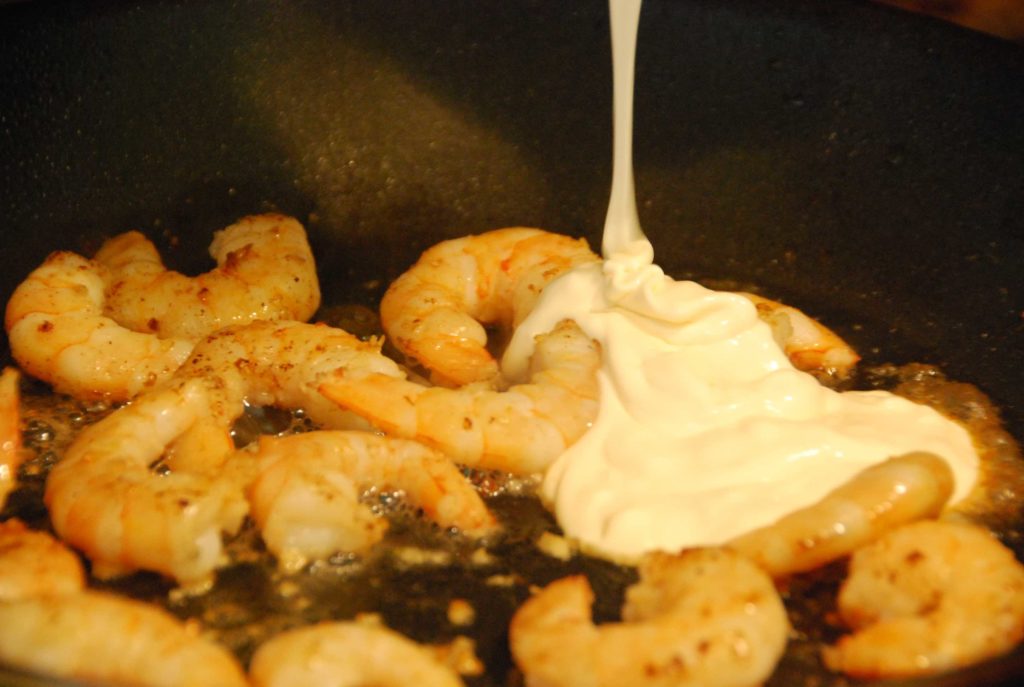
Continue to cook the shrimp until the flames disappear and add the Mexican cream

Tequila Shrimp 7
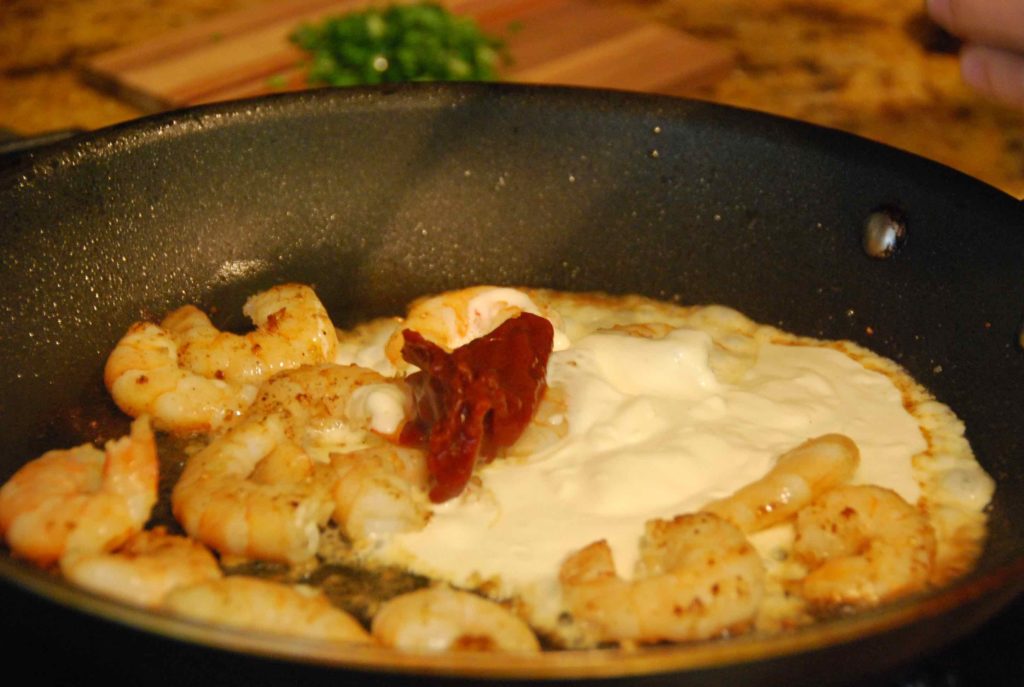
…and the Chipotle Chile in Adobo sauce. If you feel like it, drop in a Chile too.

Tequila Shrimp 8
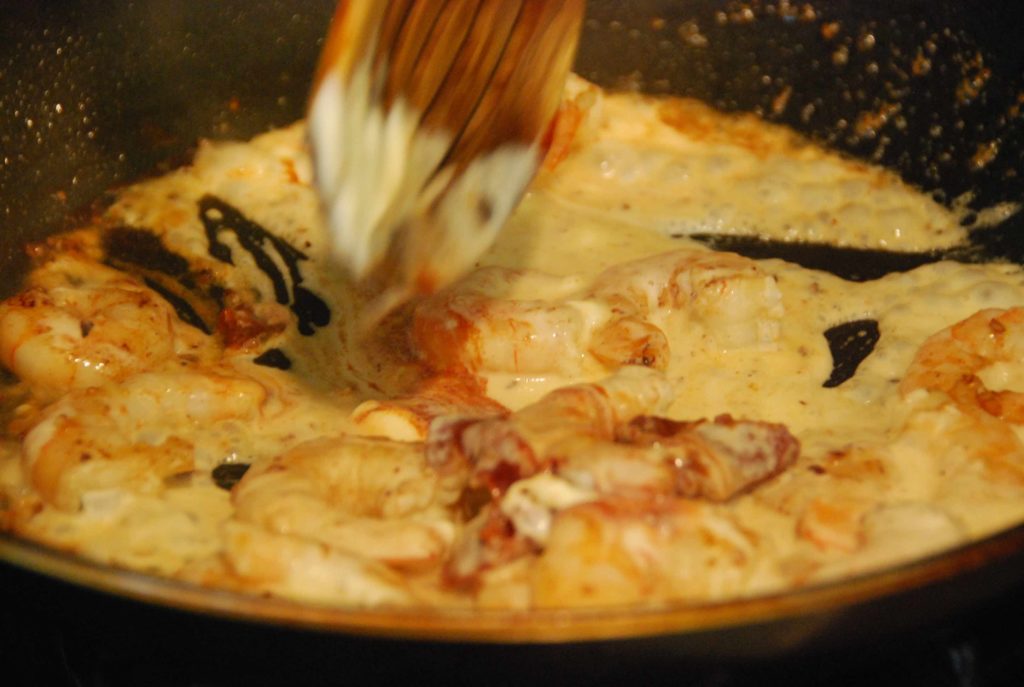
Stir it and turn off the heat.

Tequila Shrimp 9
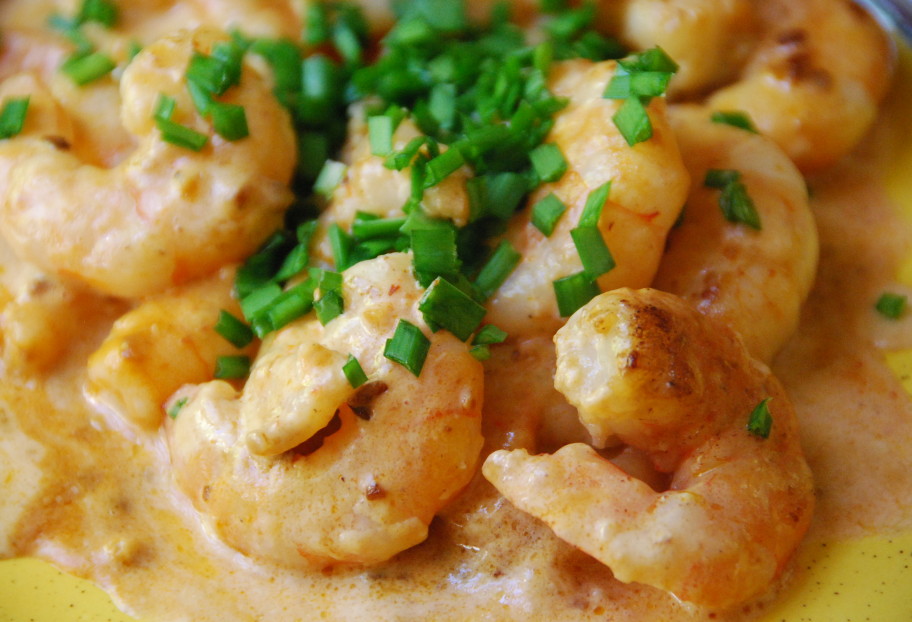
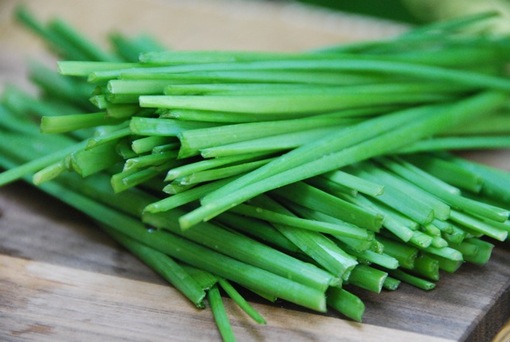
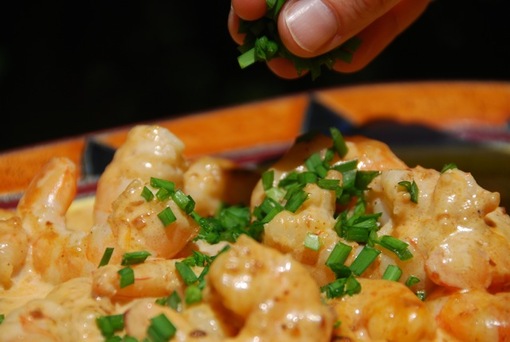
Plate the shrimp covered in the sauce, just like that, while they are hot, hot, hot! And toss some fresh chopped chives right on top.

Tequila Shrimp 10
The chives not only add a fresh flavor and color, but add a vibrant contrast to the creamy sauce.

Tequila Shrimp 11
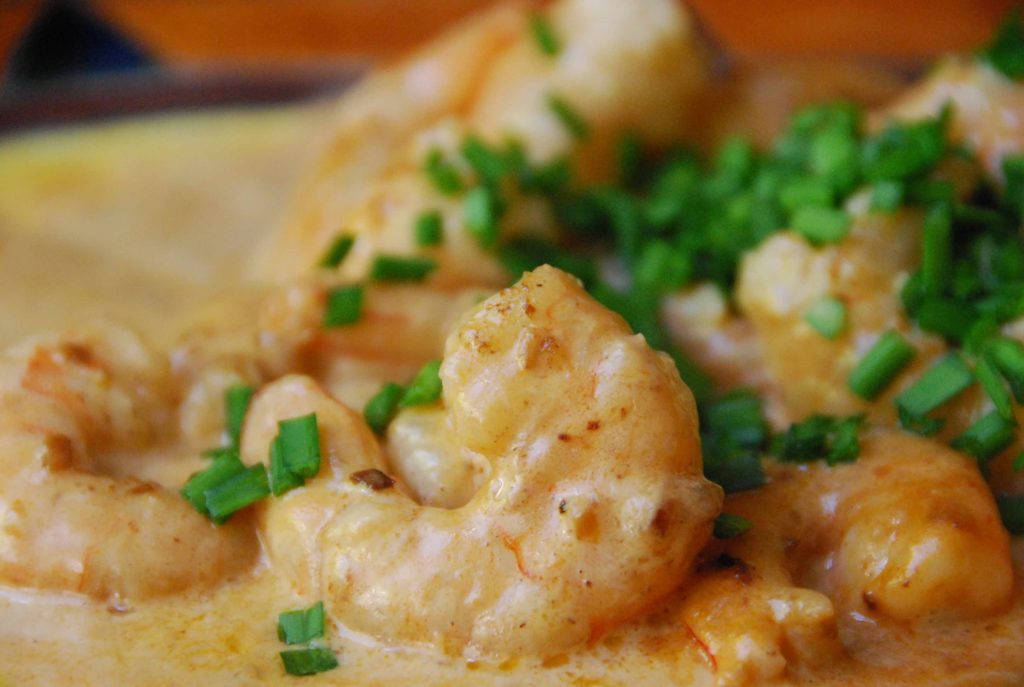
Here is a close up of for you.

Tequila Shrimp 12
Crispy and sweet, smoky and tangy, and oh so bold with the presence of the Tequila. Plus they are, sooooooo much fun to prepare! Go on and impress someone.

Print Recipe
4.41 from 5 votes

Tequila, Mexican Cream and Chipotle Shrimp

So when I was asked to develop a Mexican menu for the 2010 RAMMYS Awards I just had to include shrimp. I paired them with some signature Mexican ingredients: smoky and hot Chipotle Chiles in Adobo, tangy and salty Mexican Cream and the iconic Tequila Reposado. And so, they were served to the 1600 attendees.
Prep Time5 minutes
Cook Time6 minutes
Course: Antojos, Main Course
Cuisine: Mexican
Keyword: chipotles in adobo, mexican crema, pati's mexican table, Recipe, seafood, Shrimp, tequila
Servings: 12 appetizer portions
Author: Pati Jinich

Ingredients

  • 1 pound large shrimp in shell thawed, peeled and deveined (about 25 shrimp)
  • 1/2 teaspoon kosher or sea salt or more to taste
  • 1/4 teaspoon freshly ground black pepper
  • 2 tablespoons unsalted butter
  • 1 garlic clove finely minced
  • 1/4 cup Tequila Reposado
  • 1/4 cup Mexican style cream such as Rio Grande
  • 1 teaspoon Chipotles in adobo sauce or add more to taste
  • 1 bunch chives chopped

Instructions

  • Peel and devein the shrimp. Place in a bowl and sprinkle with salt and pepper. In a large and heavy saute pan set over medium-high heat, let the butter melt. Once it starts to sizzle, add the garlic. Stir and cook for 10 to 15 seconds, until the garlic becomes fragrant. Incorporate the shrimp, making sure that the pan is not over crowded, and let them brown on one side and then the other, just for about 1 to 2 minutes per side. Don't let them over cook, they should brown on the outside, but barely cooked through.
  • Add the tequila, and slightly tilt the pan over the flame to ignite the tequila. Let it cook until the flames disappear. Stir in the cream and the chipotle sauce and turn off the heat. Serve immediately sprinkled with the chives on top.
Notes

Camarones al Tequila

Running to Catch the Fresh Fruit Cart!

Every year, just as summer peeks its warm face in Washington DC, I begin to crave fresh fruits and vegetables Mexican street cart style. One of the times when I have enjoyed it the most was in April around 15 years ago.  We were traveling through the Copper Canyon route, on a week long trip, from Chihuahua to Sinaloa. We had been waiting at the station in the town of Creel to catch the Chepe train to go to the next town.

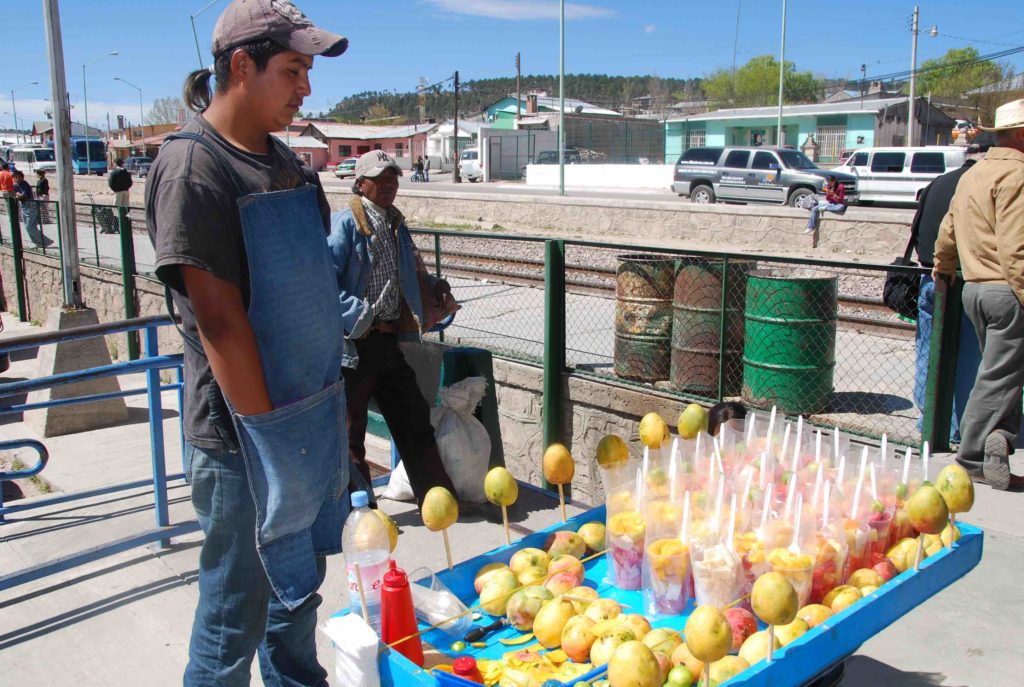
As the station officer let out a scream that the train was approaching, out of the corner of my eye, I saw the fruit and vegetable cart. It was hot, we were tired and thirsty, and I saw Mr. Fruit Cart Man peeling some ripe and juicy mangoes. I grew weak in my knees.

Just that second, I saw Daniel’s face panic. He knew I was going to make a run for it.  Along with his camera.

Fresh Fruit Cart 1

Although I could hear him scream: “NO PATI!!! You are going to be left behind!” I ran for it.

Fresh Fruit Cart 2
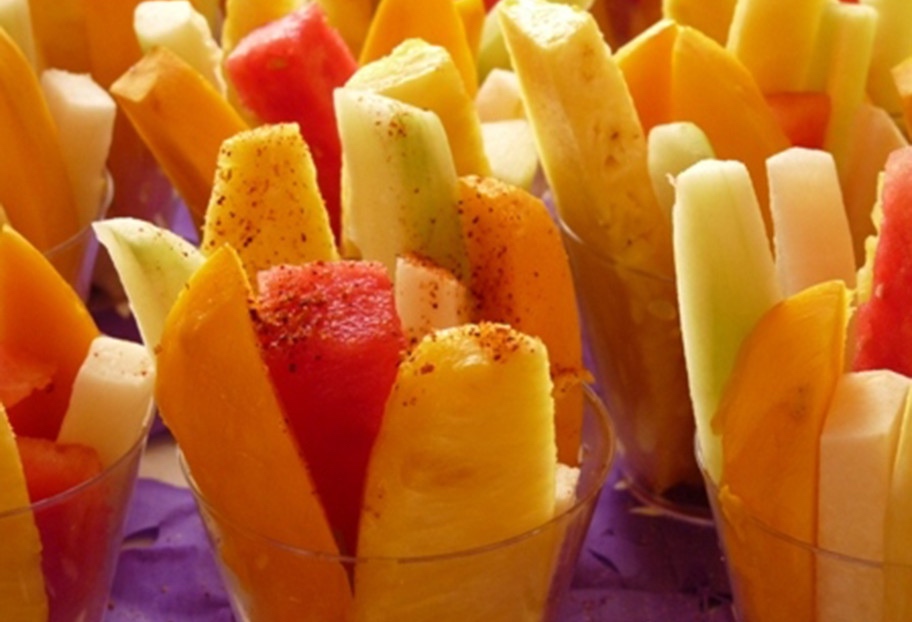
The fruit cups had watermelon, jí­cama, cantaloupe and mangoes. Since Mr. Fruit Cart Man watched me run, he politely suggested I take one fruit cup just like that. But I was dying for one of those mangoes. Plus…, please! If you have tried a Mexican cart style fruit or vegetable, you must know, that without the salt, ground chile and freshly squeezed lime juice, there is no reason to run for it.

I filmed Mr. Fruit Cart Man with the FLIP (sorry friends, took me a year to learn how to upload it, and hopefully my videos will get better too) so you can see how beautifully he cuts and shapes the mango. As he was almost done, we heard the train come.

There are many ground chiles you can use. They all add that something that makes the flavor of the fruit come out and pop. There is the typical chile piquí­n. There are also some liquid chile sauces you can use, and are found in many Fruit Carts, such as La Valentina, Bufalo, or Cholula. These days, it is incredible, but one can find all of these chile mixes and sauces throughout the US.

That day Mr Fruit Cart Man added a ton of the chile, a bit of the salt and a giant squeeze of the fresh lime juice. By the time he was done, all the travelers had hopped on.

Fresh Fruit Cart 3

I am so lucky, because my monsters waited for me. It was a close call, but we made it.

See, Juju is licking his fingers from that last piece of mango.

Fresh Fruit Cart 4

And we did make it to our next stop.

Fresh Fruit Cart 5

Now that the summer is pumping up, you can make some too.

You will have made a wonder to run home for.

Fresh Fruit Cart main
Print Recipe
5 from 1 vote

Fresh Fruits and Vegetables from the Cart

Every year, just as summer peeks its warm face in Washington DC, I begin to crave fresh fruits and vegetables Mexican street cart style. One of the times when I have enjoyed it the most was last April.  We were traveling through the Copper Canyon route, on a week long trip, from Chihuahua to Sinaloa. We had been waiting at the station in the town of Creel to catch the Chepe train to go to the next town.
Prep Time10 minutes
Cook Time1 minute
Course: Antojos
Cuisine: Mexican
Keyword: Antojo, carrots, Chiles, cucumber, Dessert, Jicama, lime, mango, pineapple, Recipe, tajin, Vegetable, Vegetarian, watermelon
Author: Pati Jinich

Ingredients

  • Any fruits or vegetables that you are craving!
  • Pineapple watermelon, mango, jicama, cucumber, carrots or any of your choice, peeled and sliced or diced
  • Salt to sprinkle throughout
  • Ground spiced up chile such as Tajín, or a sauce like Valentina, Buffalo or Cholula
  • Fresh squeezed lime juice

Instructions

  • Peel and slice the fruits and vegetables. Sprinkle salt and chile to taste. Bathe with fresh squeezed lime juice. Eat up!

Notes

Frutas y Verduras de Carrito

Chef Solis’s Mexican Crab Cakes with Jalapeño Aioli

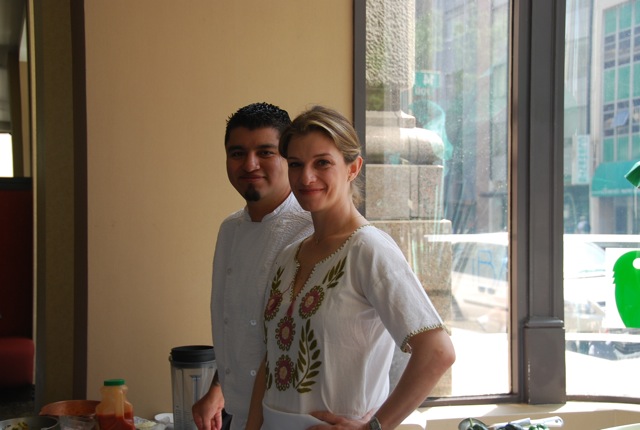
I was invited to design a Cinco de Mayo menu for Ceiba Restaurant along with their Chef de Cuisine, Alfredo Solis. The invitation included teaching a class covering that menu. As always, I was eager to teach whatever I know. But as always, I learn much more as I go. This time, I also learned, that you never know what foods you are going to like the best.

Solis and I were thrilled with the class menu. He was going to feature a tasty Shrimp Ceviche and some succulent Shredded Beef Tacos. I was going for a Red Snapper with a simple yet stylish Almond and Chipotle sauce, with a side of the ever exuberant Poblano Green Rice and a fresh Radish Salsita. I was also covering dessert: a textured and sweet coconut flan paired with fresh mangoes. And whipped cream. With a hint of Rum.

The whole experience was fun, from beginning to end. From meeting Solis for the first time -who shared his to die for mussels in a spicy tomato broth with chorizo, along with fascinating bits and pieces of his life story as he went from being a dishwasher to Chef de Cusine-  to designing the menu, to tasting and testing it a week before class for a full dinner run, to prepping for class and lunch the day of. Day which, with the excuse of needing sweetened condensed milk for the coconut flan, I kept splashing some in their good coffee and sipping it all along.

And there we were, laughing it out, as we set up the demo stations, before we even started the class.

DSC_0436.jpg
And there we were, ready and steady, a couple minutes before the guests were seated.

DSC_0493

But when all was said and done and the guests were gone -hopefully happy and with a full belly- I looked at Solis and said what my friends know me for: what are WE eating now?

Solis responded: Anything you want to try from our menu!

Having eyed the already shaped crab cakes in the refrigerator that morning, I asked him what was in their mix.  Just with the word Habaneros, I knew I was going for those.

So yes, I loved the menu we designed. And yes, I think it was a fun and yummy class. But I can tell you, those crab cakes are a pair of Rock Stars.

If you are not near DC or can’t go to Ceiba anytime soon, Solis graciously shared the recipe for you to sample at home. I just did as I posted those for you.

To make them, here we go: Lump crab meat, chopped Habanero -yes with seeds for me please-, cilantro, just a bit of bread crumbs and mayonnaise to bind the meat together, as well as the egg I am cracking there.

Crabcake 1-thumb-510x342-1041
Then I am adding the juice of that shinny and juicy lime, some salt and fresh ground pepper.

Crabcake 6-thumb-510x342-1051
That’s all that goes into the crab cakes.  Shape them up and you can keep them in the refrigerator for a couple of days, covered, until you are ready to cook them up.

When ready, prepare Solis’s tangy and light Jalapeño aioli, to drizzle over them.  Just place the ingredients into a blender or food processor: mayonnaise, lime juice, Jalapeños, cilantro, salt and pepper.

Crabcake Crabcake 10-thumb-510x342-1059
And there you go, Mexican style crab cakes fit for Emperor Montezuma. I bet you he would have liked them.

DSC_0606-thumb-510x342-1033
Just as I did.

Print Recipe
4.60 from 5 votes

Mexican Crab Cakes with Jalapeño Aioli

Having eyed the already shaped crab cakes in the refrigerator that morning, I asked him what was in their mix.  Just with the word Habaneros, I knew I was going for those. So yes, I loved the menu we designed. And yes, I think it was a fun and yummy class. But I can tell you, those crab cakes are a pair of Rock Stars. If you are not near DC or can’t go to Ceiba anytime soon, Solis graciously shared the recipe for you to sample at home. I just did as I posted those for you.
Prep Time15 minutes
Cook Time6 minutes
Course: Antojos, Main Course
Cuisine: Mexican
Keyword: aioli, cilantro, crab, habanero, jalapeno, lime, mayonnaise, pati's mexican table
Servings: 4 to 6 servings
Author: Pati Jinich

Ingredients

For the crab cakes:

  • 1 pound jumbo lump crab meat
  • 1 habanero chile seeded (optional), chopped
  • 2 teaspoons fresh squeezed lime juice
  • 2 teaspoons fresh cilantro chopped
  • 3 teaspoons bread crumbs
  • 1 egg
  • 2 teaspoons mayonnaise
  • 1/2 teaspoon kosher or sea salt more or less to taste
  • 1/4 teaspoon ground black pepper more or less to taste
  • 1 tablespoon butter
  • 1 tablespoon olive oil

For the jalapeño aioli:

  • 1 or 2 jalapeño chiles seeded if desired
  • 2 tablespoons fresh squeezed lime juice
  • 2 cups mayonnaise
  • 1/4 cup cilantro leaves
  • 1/4 teaspoon kosher or sea salt more or less to taste
  • 1/4 teaspoon black pepper ground

Instructions

  • Combine the crab meat, habanero chile, cilantro, breadcrumbs, mayonnaise, egg and lime juice in a large bowl. Season with salt and pepper. Form 4 to 6 crab cakes, depending on how chubby and big you want them. You can prepare them in advance and keep them refrigerated for up to 2 days.
  • Heat a large skillets set over medium-high heat, melt 1 tablespoon of butter into 1 tablespoon of oil. Once it starts to sizzle, add as many crab cakes as will fit without being crowded. Cook anywhere from 2 to 3 minutes per side.
  • To prepare the aioli, place all the ingredients in the blender and process until smooth. Drizzle over the crab cakes and if you want, sprinkle the top with freshly chopped cilantro.

Notes

Croquetas de Cangrejo con Aioli de Jalapeño, Adapted from Ceiba's Chef Alfredo Solis

Enfrijoladas

We came back home exhausted, after being away for a couple weeks in Canada for a big family reunion. Though we had delicious meals, trying all sorts of Canadian fare, as soon as we walked in I was ready to make some comforting, home tasting food.

Few things taste more like home to me, than beans. In Mexico there is always, always, a simmering pot of beans cooking at some point during the week in any kitchen. As beans need to be cooked for a long time, they infuse the kitchen with a moist, earthy and cozy aroma, that remains even after the beans are ready.

Of course one can make more than a thousand things with a batch of Frijoles de Olla, or Beans from the Pot. But one of the things that are the most simple, yet comforting, asides from scooping them with corn tortillas, are Enfrijoladas.

Filling and tasty, Enfrijoladas wrap some of the main flavors and textures from Mexico’s cuisine in their fold.

The soft corn tortillas, that you can make or buy ready made at the stores (if you buy them, go for the unrefrigerated ones). The rich, straightforward and creamy seasoned bean puree, which also goes by frijoles colados, in which they are dipped in and smothered everywhere.

dipping corn tortilla in bean puree
The thick, tangy and fresh taste of the Crema Fresca, or Mexican cream, that you drizzle on them after you fold them on a plate.

mexican crema
The salty, crumbly, Ranchero take of the Queso Fresco (Remember I was going to tell you many things that you can make with Queso Fresco?).

queso fresco
And of course, to top that off, you can slice some ripe luscious Mexican avocado on top. And if you feel like it, have a serving of any salsa, or Chipotles in Adobo on the side to drizzle along.
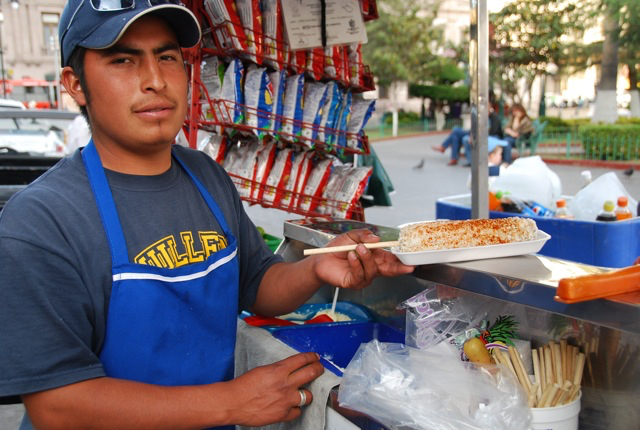
enfrijoladas
Enfrijoladas, as are most Mexican antojos or cravings, are truly versatile.  They can be eaten for breakfast, lunch or dinner and can be a main dish or a yummy side to grilled chicken or meat.

They are so, so, comforting, that when I was once asked what I would serve the Mexican President in times of distress if I had the opportunity, I said: It has to be Enfrijoladas.

enfrijoladas
Print Recipe
4.20 from 5 votes

Enfrijoladas

Few things taste more like home to me, than beans. In Mexico there is always, always, a simmering pot of beans cooking at some point during the week in any kitchen.O f course one can make more than a thousand things with a batch of Frijoles de Olla, or Beans from the Pot. But one of the things that are the most simple, yet comforting, asides from scooping them with corn tortillas, are Enfrijoladas.
Prep Time5 minutes
Cook Time10 minutes
Course: Main Course
Cuisine: Mexican
Keyword: Avocado, chipotles in adobo, corn tortillas, mexican crema, queso fresco, refried beans
Servings: 8 servings
Author: Pati Jinich

Ingredients

  • 4 cups frijoles colados or seasoned and pureed beans
  • 16 corn tortillas
  • 1 cup Mexican cream or heavy cream
  • 1 cup queso fresco or fresh cheese, or farmers cheese, or a mild feta
  • Mexican avocado slices optional
  • Chipotles in adobo sauce optional

Instructions

  • Heat a comal or dry skillet over medium heat.
  • Heat the pureed beans in a medium cooking pot to a gentle simmer.
  • Taking one tortilla at a time, heat on the comal or skillet for about 30 seconds per side. Take the tortilla with a pair of tongs and immerse it in the bean puree. Place it on a plate, fold it as if it were a quesadilla or a turnover. Drizzle on as much cream and sprinkle on as much cheese as you like.
  • You can also top it with some avocado slices and a bit of chipotles in adobo sauce.

Frijoles Colados or Strained Beans

The Frijoles Colados or Strained Beans, are what the Yucatecans call Frijoles de Olla that have been pureed and then seasoned by being cooked in sauteed onion. They are cooked just for a couple minutes as they season. So its like a gently seasoned and lightly thickened Bean Puree.

They are like a dish made in between the Bean Puree and the Refried Beans. If you continue to cook the Frijoles Colados, you get to a consistency of a smooth version of Refried Beans.

strained beans or frijoles colados
Print Recipe
5 from 2 votes

Strained Beans

The Frijoles Colados or Strained Beans, are what the Yucatecans call Frijoles de Olla that have been pureed and then seasoned by being cooked in sauteed onion. They are cooked just for a couple minutes as they season. So its like a gently seasoned and lightly thickened Bean Puree.
Prep Time1 minute
Cook Time7 minutes
Course: Side Dish
Cuisine: Mexican
Keyword: beans, beans from the pot, onion, pati's mexican table, pinto beans
Servings: 4 cups
Author: Pati Jinich

Ingredients

  • 1 portion basic bean puree (see basic pureed beans post)
  • 1/2 white onion chopped
  • 3 tablespoons safflower or corn oil
  • Kosher or sea salt to taste

Instructions

  • In a large saute pan over medium heat, pour the oil and heat until hot but not smoking, about 1 to 2 minutes. Add the onions and let them saute for 3 to 4 minutes, until they have softened, become translucent, and have started to slightly brown along the edges.
  • Add a cupful of the basic bean puree at a time, over the sauteed onion, and let them season for 3 to 4 minutes.

Notes

Frijoles Colados

Queso Fresco: Tri-Color Salad with a Lime-Honey Vinaigrette

Yesterday, right after my blog turned 1 year old, I added a new category under Ingredients: Cheese.

This site is a continuous work in progress. As my husband notes, it is very time consuming, but as I always respond, it is immensely rewarding. Truth is, I can’t wait to keep on adding more. One of the things I have loved the most has been getting your requests, so please, keep them coming! Which brings me back to Mexican cheese, a topic I have gotten many requests for.

The first kind I added is the widely available Queso Fresco.  A deeply white, mild, fresh, light, barely salty, gently tangy and versatile cheese that crumbles right in your mouth the moment you take a bite. Yet, it also holds its shape beautifully if you dice it or cut it into sticks. So it lets you play with it in many ways.

Tri-Color Salad 1

Aside from crumbling Queso Fresco directly on plenty of antojos like tacos, tostadas and enchiladas, one of my favorite ways to use it is on top of salads. I know, Mexican salads are not that well known. That said, I have never, in my life, seen a taco salad on Mexican grounds. There is a universe of wholesome and delicious Mexican salads to be found in Restaurants, but mostly, in people’s homes.

Every Mexican household has a secret vinaigrette that is both regularly used and waiting to be screamed out. But you can rarely get the exact recipe, because they are typically made “al tanteo“, an expression that I love, which means by feel, as you go.

Rather than placing the ingredients in a mixing bowl and emulsifying with a whisk as the French might do, in Mexico ingredients are commonly added in a Tupperware and shaken up until well blended.

Here is the secret vinaigrette from our home, which I measured, so you can make it if you please. You can substitute the honey with brown sugar, the main point being, that you need a bit of sweet to make the rest of the ingredients shine through. I added Boston lettuce, tomato and Mexican avocado here, but you can play with more ingredients that you may have at home: asparagus, scallions, jí­cama, to name some…

Tri-Color Salad 2

Aside from making the salad more hearty and filling, the Queso Fresco adds a nice contrast to the vinaigrette with its subtle salty and tangy notes. I will give you more ideas for using Queso Fresco in upcoming posts, so when you see it in the store, bring some home!

Tri-Color Salad main
Print Recipe
4.25 from 4 votes

Tri-Color Salad with Fresh Cheese and Lime-Honey Vinaigrette

Here is the secret vinaigrette from our home, which I measured, so you can make it if you please. You can substitute the honey with brown sugar, the main point being, that you need a bit of sweet to make the rest of the ingredients shine through. I added Boston lettuce, tomato and Mexican avocado here, but you can play with more ingredients that you may have at home: asparagus, scallions, jí­cama, to name some…
Prep Time5 minutes
Cook Time5 minutes
Course: Salad
Cuisine: Mexican
Keyword: Avocado, boston lettuce, brown sugar, honey, lime, mustard, queso fresco, Recipe, salad, Tomatoes, vinaigrette
Servings: 6 to 8 servings
Author: Pati Jinich

Ingredients

For the salad:

  • 2 heads boston lettuce rinsed and drained
  • 1 pound tomatoes about 2, quartered, seeded and sliced
  • 1 large Mexican avocado halved, pitted, meat scooped out and sliced
  • 8 ounces queso fresco fresh cheese, may substitute with farmers cheese or feta cheese

For the vinaigrette:

  • 2 tablespoons fresh squeezed lime juice
  • 2 tablespoons white distilled vinegar
  • 1/2 teaspoon honey or brown sugar
  • 1 1/2 teaspoons dijon mustard
  • 1 1/2 teaspoons kosher or sea salt
  • 1/2 teaspoons black pepper freshly ground
  • 5 tablespoons vegetable oil
  • 5 tablespoons olive oil

Instructions

To make the vinaigrette:

  • Place lime juice, vinegar, mustard, honey, salt and pepper in a mixing bowl and thoroughly mix with a fork. Slowly pour safflower or vegetable oil and olive oil as you mix with a fork or whisk, emulsifying the ingredients so that they are well combined. You can also place all the ingredients in a tupperware or jar and shake until well mixed.
  • You may make the vinaigrette ahead of time, but be sure to cover and refrigerate. Whisk it again or shake it in a closed container so that it is emulsified before you add it to the salad.

To make the salad:

  • Place the lettuce leaves and tomatoes in a salad bowl. Add some of the vinaigrette and gently toss, so that the salad is moist but not soaked. Place the avocados and crumbled cheese on top. Drizzle some more vinaigrette on top and serve.
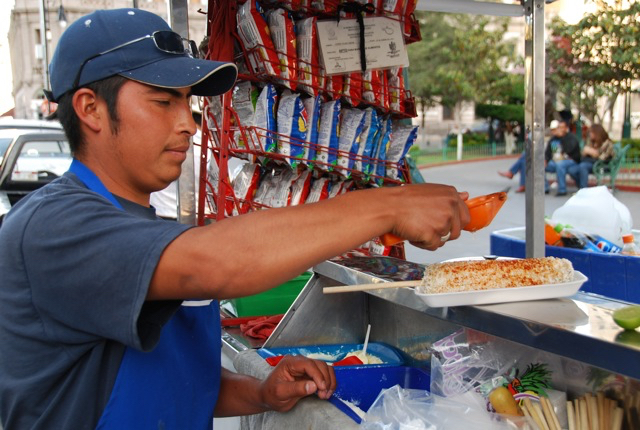
Notes

Ensalada Tri Color con Queso Fresco y Vinagreta de Limón y Miel

Basic Pureed Beans

Pureed beans are made with Frijoles de la Olla that are placed in a blender or food processor and pureed until smooth. They serve many purposes such as bases for soups and enfrijoladas. But also, they can be seasoned and turned into what the Yucatecan people call Frijoles Colados or Strained Beans.

Frijoles Colados are pureed beans that are seasoned by being cooked and thickened a bit over sauteed onion. If you keep on cooking the Frijoles Colados about 15 minutes more, you get to to have a smooth version of the Refried Beans.

basic pureed beans
Print Recipe
4.17 from 6 votes

Basic Pureed Beans

Pureed beans are made with Frijoles de la Olla that are placed in a blender or food processor and pureed until smooth. They serve many purposes such as bases for soups and enfrijoladas. But also, they can be seasoned and turned into what the Yucatecan people call Frijoles Colados or Strained Beans.
Cook Time5 minutes
Course: Side Dish
Cuisine: Mexican
Keyword: beans, beans from the pot, pati's mexican table, pinto beans, refried beans
Servings: 5 cups
Author: Pati Jinich

Ingredients

  • 1 portion Beans from the Pot or 5 cups precooked beans and 2 cups of cooking liquid (including their liquid and enough water to make 2 cups)

Instructions

  • In batches, place beans and their cooking liquid in the blender or food processor and puree until smooth.

Ancient Ways for Comfort on Cold Days: Mexican Hot Chocolate

Story goes that for centuries, a woman could find a mate in many Mexican regions if she was able to make a good and considerable amount of foam when making hot chocolate. Otherwise, suitors would not turn their heads to her direction regardless of any other virtue. What’s more, it was the mother of the groom to be, who judged how good the foam was.

Thankfully, my mother in law (who loves to dip Conchas into hot chocolate) didn’t abide by that tradition or I wouldn’t have gotten married. When I met my husband, the best I could whip up were some decent scrambled eggs and an extremely sweet limeade. Forget about a worthy, frothy, delicate, silky foam to top a rich tasting chocolate.

But it turns out that producing an admirable chocolate foam may be a sign of things to come; it may show how hardworking, dedicated, focused, energetic and skilled a person can be. Not only do you have to break a sweat, but also develop an effective technique and then there is also the matter of style.

No easy feat. Think cappuccino foam, with no machine. Using an ancient tool passed down through generations just for this purpose always helped, and does to this day.

molinillo

The molinillo is made from a single piece of wood, with moving rings, shapes and indentations carved into its different parts, a sturdy bottom base to rest on a pot, a soft round handle for an easy rubbing of the hands, plus gorgeous decorations. All with the aim of being able to make the best quality, and most amount of foam.

A whisk is not the same. But if you don’t have a molinillo, you can substitute. Just use it as you would a molinillo, with a vertical tilt and rub it between your hands as if you were trying to warm them up. Photos are sometimes better than words.

frothing Mexican hot chocolate
You have to beat like mad.

Crazy, really.

frothing Mexican hot chocolate

Leaving the foam aside, what matters most is the flavor of Mexican chocolate. Which I want to get to fast, because it is about to snow again, it is cold, and there are few things that are as comforting, filling and soothing as a Mexican hot chocolate.

Mexican style chocolate bars are made with toasted cacao beans ground with white sugar, almonds, cinnamon, and sometimes vanilla. There are other variations, but I think this is the basic one. In Mexico, there are molinos, or mills, that are dedicated to doing only this and they smell like chocolaty heaven.

If you find Mexican chocolate bars already prepared, like the authentic Oaxacan chocolate of El Mayordomo (though there is an increasing number of new makers) or more easily available  and tasty ones like Chocolate Abuelita or Ibarra, you only need to add it to milk or water, heat it, mix it, and if you want some foam, work out a little.

Mexican hot chocolate disc

If you can’t find them, here is how you can get the same rich result.

Grab a couple ounces bittersweet chocolate of good quality, a small piece of true cinnamon, white sugar and almond meal.

Mexican hot chocolate ingredients

Almond meal is the already finely ground almonds. But you can also finely grind your own. Trader Joe’s has an excellent one, which as the label says, its good for baking & breading and I guess they can also add For Mexican Style Hot Chocolate too.

almond meal for Mexican hot chocolate
Place those ingredients in a sauce pan and add milk, which is my preference, or water or a combination of both, and some vanilla extract.

milk and vanilla for Mexican hot chocolate

Set the pan over medium heat, and once the chocolate dissolves remove from the heat. Beat the chocolate with a molinillo or a whisk, I really recommend that part.

In Mexico there are tall pots made specially for beating the chocolate, called chocolateros, but any sauce pan will do.

frothing Mexican hot chocolate

Forget about being worthy of a mate, the satisfaction of drinking that hot, thick, creamy and tasty chocolate, at the same time as the frothy, cloudy and delicate foam touches your lips, is worth the while.

finished cup of Mexican hot chocolate

Mexican hot chocolate
Print Recipe
5 from 5 votes

Mexican Hot Chocolate

Story goes, that for centuries, a woman could find a mate in many Mexican regions if she was able to make a good and considerable amount of foam when making hot chocolate. Otherwise, suitors would not turn their heads to her direction regardless of any other virtue. What’s more, it was the mother of the groom to be, who judged how good the foam was.
Cook Time5 minutes
Course: Drinks
Cuisine: Mexican
Keyword: almond, ceylon, cinnamon, cocktail, Dessert, mexican chocolate, milk, Recipe, vanilla
Servings: 2 cups
Author: Pati Jinich

Ingredients

  • 2 cups milk and/or water
  • 2 ounces Mexican style chocolate such as Abuelita, Ibarra, Mayordomo

If you can’t find Mexican chocolate substitute for:

  • 4 ounces bittersweet chocolate of good quality
  • 1 true cinnamon stick of about 2 inches
  • 1 teaspoon vanilla extract
  • 4 tablespoons almond meal or finely ground almonds
  • 4 tablespoons sugar more or less to taste

Instructions

  • In a saucepan add the milk or water with the Mexican chocolate or the substituting ingredients.  Set over medium heat until the chocolate has completely dissolved and the liquid is simmering. 
  • Remove the pan from heat, and if you so are inclined, beat with a whisk or molinillo, until the hot chocolate has a thick layer of foam on top. Serve while very hot. 
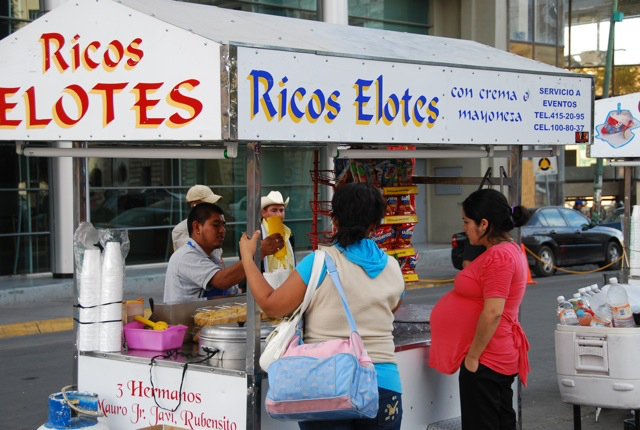
Notes

Chocolate Caliente

Romancing The Avocado

Avocados are, to me, amongst the most sensuous, luscious and luxurious of ingredients. Add how delicious, soft and subtly flavored they are, and you get a clear winner for Valentine’s Day. Despite the many pounds of avocados we go through at home each week, regardless of the infinite number of cases I use for events at Washington, DC’s Mexican Cultural Institute, and  notwithstanding that my sisters and I used them for hair and face treatments as we were growing up (all those nurturing natural oils and vitamins), I still find avocados to be wow-inducing.

If there’s an avocado dish on a restaurant menu, it lands on my table. If I am planning a menu, especially with a hint of romance, avocados will be there.

I am not unique thinking that avocados are something special. To the Aztecs, who ate avocados in Mexico for centuries before the Spaniards arrived, they were revered fruit considered to have strong fertility and aphrodisiac powers. Indeed, the Spanish word aguacate comes from the Nahuatl ahuacatl, or “testicles,” presumbly in reference to their shape. The avocado was warmly welcomed in the countries where it was introduced. And thanks in part to its accomodating nature – its meat can be smashed, diced, pureed, stuffed or sliced, or it can be part of a filling or a centerpiece – it has been creatively adopted in many cuisines.

It is true that many people think of guacamole when they hear “avocado.” And there must be more than a thousand reasons to love guacamole. Fast and easy to make, and so fun to eat, it screams out fiesta with each bite. My favorite way to make guacamole is to mix diced avocado with chopped onion and cilantro, squeeze fresh lime juice on top, sprinkle with sea salt and top it off with chopped chipotle chilis in adobo.

Guacamole, though, is just the tip of the avocado iceberg, both inside and outside Mexican cuisine.

Think about eel-and-avocado sushi, a French salad with layers of avocado sprinkled with Roquefort cheese, or an Italian salad with layers of ripe avocado and ash-coated goat cheese, olive oil, coarse salt and basil leaves. It’s hard to imagine a vegetarian sandwich without avocados.

I have tried eight varieties of avocados, and though I like most of them, the one I prefer is the Hass variety.  It is available year round and it is creamy and rich rather than fibrous like other kinds, such as El Fuerte.

Avocados are a fruit that ripens off the tree, so they are often sold unripe. If you are in a hurry to use an avocado, you can hasten the ripening process by wrapping it in newspapers or keeping it in a paper bag in a warm area of the kitchen. If you can wait, it will ripen at a nice pace uncovered in the kitchen.

When ripe, the Hass, with the pebbly skin completely blackened, will give a bit with a gentle squeeze of your hand. If it doesn’t, then it needs a bit more time to mature. You can keep a ripe avocado in the refrigerator for up to a week. It is apparently a myth that keeping the seed in a cut avocado keeps it from darkening. What does seem to help is to squeeze fresh lime juice on top.Here are four of my favorite takes on avocado: an elegant-looking appetizer, a retro mousse, an exotic-sounding soup and a hearty sandwich. Regardless of which way you use it, including avocado in your romantic dinner – as long as it’s not in a hair or skin treatment –  will show your Valentine that you really care.

Article written for and published by National Public Radio’s Kitchen Window.
stuffed avocados
Print Recipe
5 from 3 votes

Stuffed Avocados with Hearts of Palm and Artichoke Salad

When I was growing up, my mother often served stuffed avocados for an elegant dinner. They were such a statement of a well-planned menu. There were many variations: stuffed with sauteed shrimp with chilies, crab salad or red snapper ceviche (a seafood cocktail "cooked" in citrus juice and other spices). The version I make most often, though, mixes artichoke hearts and hearts of palm. I think these ingredients just love to be together and make a smashing combination with the smooth avocado.
Prep Time20 minutes
Cook Time0 minutes
Total Time20 minutes
Course: Appetizer
Cuisine: Mexican
Keyword: agucate, Alcachofa, artichoke, Avocado, hearts of palm, Palmitos, rellenos, stuffed
Servings: 6 servings
Author: Pati Jinich

Ingredients

  • 14 ounces (1 1/3 cups) hearts of palm drained, rinsed and sliced
  • 14 ounces (1 1/2 cups) artichoke hearts drained, rinsed and sliced
  • 2 tablespoons chopped red onion
  • 4 tablespoons chopped red bell pepper
  • 2 tablespoons chopped parsley
  • 1 tablespoon tarragon vinegar
  • 3/4 teaspoon kosher or sea salt or more to taste
  • 1/4 teaspoon sugar or more to taste
  • 1/4 teaspoon ground black pepper or more to taste
  • 2 tablespoons olive oil
  • 2 tablespoons safflower or vegetable oil
  • 3 ripe Mexican avocados halved and seeded just before stuffing

Instructions

  • In a bowl, mix the hearts of palm, artichoke hearts, red onion, red bell pepper and parsley.
  • To prepare the vinaigrette, pour the tarragon vinegar in a small bowl and mix it with the salt, sugar and black pepper. Pour the oils in a slow stream, whisking with a whisk or fork to emulsify. Pour it over the vegetables. Toss well to cover.
  • You may prepare the hearts of palm and artichoke salad ahead of time, cover and refrigerate for up to 2 days.
  • When ready to eat, halve and seed the avocados. Scoop the hearts of palm and artichoke salad on top and serve.

Notes

Aguacates Rellenos de Palmitos y Corazón de Alcachofa
stuffed avocados
Print Recipe
5 from 1 vote

Avocado, Pistachio and Watercress Mousse

As I was describing this dish to a dear friend, she explained that the word I was looking for to describe it was "retro." Though I have tasted many avocado mousses, this one seems to be whimsical and addicting. Make this mousse ahead of time for a party or brunch and serve it with pieces of toast, crackers, smoked salmon or shrimp, and you will have an ongoing conversation piece as it disappears.
Prep Time30 minutes
Chilling Time3 hours
Total Time3 hours 30 minutes
Course: Appetizer, Dip, Spread
Cuisine: Mexican
Keyword: aguacate, Avocado, Berros, gelatin, Pistache, pistachios, watercress
Servings: 14 servings
Author: Pati Jinich

Ingredients

  • 3 (about 2 1/4 pounds) ripe Mexican avocados halved and seeded
  • 2 tablespoons freshly squeezed lime juice
  • 8 ounces cream cheese
  • 1 bunch (about 1 cup) watercress leaves and top parts of stems chopped
  • 2 tablespoons (about 6) sliced scallions white and light green parts only
  • 1 8-ounce can (2/3 cup) water chestnuts drained and roughly chopped
  • 2/3 cup pistachios shelled and roughly chopped
  • 1/4 teaspoon cayenne pepper or more to taste
  • 1/4 teaspoon ground black pepper or more to taste
  • 1/2 teaspoon Worcestershire sauce
  • 1 1/4 teaspoons kosher or sea salt or more to taste
  • 2/3 cup cold water
  • 3 1/4 ounces (1 envelope) unflavored gelatin
  • 1/3 cup boiling water
  • Olive oil to grease the mold
  • Toasted bread or crackers optional
  • Smoked salmon optional

Instructions

  • Scoop out meat from avocados and mash it in a bowl with a fork. Pour in lime juice and combine well with a spatula. Incorporate the cream cheese, mixing it thoroughly with the avocados. Add the watercress, scallions, water chestnuts, pistachios, cayenne, black pepper, Worcestershire sauce and salt. Mix well.
  • Measure 2/3 cup cold water in a cup. Stir in the gelatin, mix and let it rehydrate for a minute or two. Add 1/3 cup boiling water and stir until it dissolves. Pour gelatin into the avocado mix, incorporating it with a spatula.
  • Lightly grease a ring mold with olive oil. Pour the avocado mix into the mold. Shake the mold softly a couple of times to level the mix. Cover it well and place it in the refrigerator until it is set, for at least 3 hours. You can leave it overnight or until you are ready to unmold. The avocado mousse will last beautifully in the refrigerator for 2 days. When ready to unmold, remove from the refrigerator, run the tip of a knife along the edges and flip onto a plate. You may need to shake the mold a couple of times, holding onto the plate as you do so.
  • You may serve it on a platter, retro style, with some watercress leaves in the center of the ring or on top. Or serve it already sliced with a side of smoked salmon and pieces of toast.
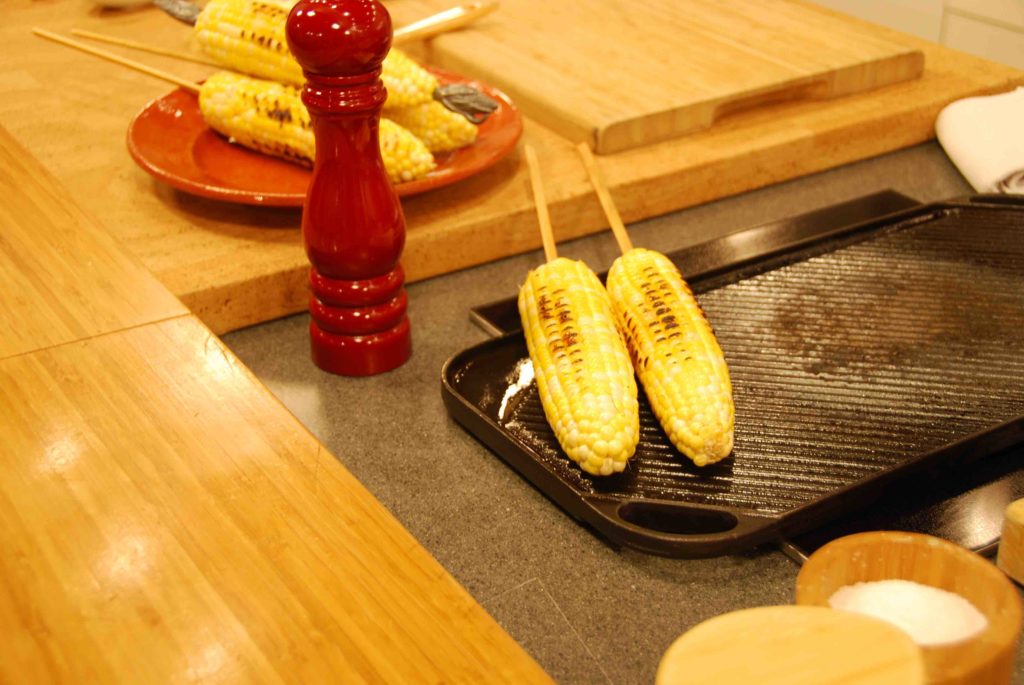
Notes

Mousse de Aguacate, Pistache y Berros
Print Recipe
4 from 5 votes

Avocado Soup

Though there are many kinds of avocado soups, this is my favorite. I tried it at the Mexican Ambassador’s residence a couple months ago. As Doña Rosita, the cook,  heard me mmm, and mmm, and mmmmmmm all over again, she came out of the kitchen with a pen and a piece of paper ready to dictate her recipe. What a surprise for such a tasty soup: just a handful of ingredients! Seems that what matters, again, is how you use them.
Prep Time5 minutes
Cook Time15 minutes
Course: Soup
Cuisine: Mexican
Keyword: Avocado, chicken broth, cilantro, feta, jalapeno, lime, onion, queso fresco, tortilla chips
Servings: 4 to 6 servings
Author: Pati Jinich

Ingredients

  • 1 tablespoon corn or safflower oil
  • 1 tablespoon unsalted butter
  • 1 1/2 cup white onion roughly chopped
  • 1 cup cilantro leaves rinsed and loosely packed
  • 1 jalapeno chile sliced in half, seeding optional if less heat is desired
  • 3 large ripe Mexican avocados cut in half, seed removed, flesh spooned out, about 3 cups ripe avocado flesh
  • 6 cups chicken broth can substitute vegetable broth
  • 1 tablespoon fresh lime juice
  • 3/4 teaspoon kosher or sea salt more or less to taste
  • 1 1/2 cups tortilla crisps
  • 1 cup queso fresco crumbled, may substitute farmers cheese or a mild feta

Instructions

  • In a medium skillet, set over medium-low heat and add the butter and oil. Once the butter dissolves, stir in the onion and jalapeno. Let them cook, stirring occasionally, until the onion has softened. Its color will become translucent and the edges will begin to turn light brown, about 12 to 15 minutes. Incorporate the cilantro leaves and mix them in with the onions and jalapeno. Once the cilantro has wilted, 30 seconds to a minute later, turn off the heat.
  • Place the peeled and seeded avocados in the blender or food processor along with the cooked onion, jalapeno, cilantro, chicken broth, lime or lima juice and salt. Puree until smooth, taste for salt and add more if need be.
  • You may serve bowls garnished with tortilla crisps and cheese, or let your guests garnish to their liking.

Notes

Sopa de Aguacate
stuffed avocados
Print Recipe
4.60 from 5 votes

Tortilla Crisps

How to make homemade tortilla crisps, either by frying or baking.
Prep Time5 minutes
Cook Time20 minutes
Total Time25 minutes
Course: Garnish
Cuisine: Mexican
Keyword: Baked, corn tortillas, crisps, crunchy, fried, tortilla chips, traditional
Author: Pati Jinich

Ingredients

  • 5 corn tortillas (5- to 6-inches wide)
  • Safflower or corn oil
  • 1/2 teaspoon salt more or less to taste

Instructions

  • On a chopping board, slice tortillas in half and then vertically in half again. Then slice across in strips of 1/4 to 1/2 inch, depending on how thick you like them.

Traditional (fried):

  • In a medium skillet, add 1/4 inch oil and place over medium-high heat. Once it is hot, anywhere from 4 to 6 minutes, add tortilla pieces. When you add a tortilla to the oil, it should immediately start to bubble. Fry, stirring and flipping occasionally, until they achieve a golden tan and slightly brown color and are hard and crispy. Remove with a slotted spoon and place on a plate covered with paper towel. Sprinkle with salt to taste.

Baked:

  • Preheat oven to 350°F. Spray or gently brush a baking sheet with corn or safflower oil. Place tortilla pieces on top and spray or gently brush a light layer of oil. Judiciously sprinkle with salt to taste. Place in oven and bake for about 20 minutes, stirring and flipping once or twice until they achieve a golden tan and slightly brown color and appear hard and crisp.Remove from oven, let them cool and place in a bowl or container.

Notes

Tiritas de Tortilla
stuffed avocados
Print Recipe
5 from 1 vote

Chopped Egg and Avocado Sandwich

My grandmother, who came from Poland but was raised in Mexico, used to make chopped egg salad and chopped seasoned avocados as table starters for special occasions. Then one day she decided to mix up the two, altered the spices a bit, and created a family hit. I have adapted her recipe by adding the Dijon and dill, and scooping a ton of it into a sandwich. The cheese is a caprice that I couldn't help adding, and I love how it tastes, but feel free to try it without it.
Prep Time20 minutes
Cook Time0 minutes
Course: Antojos, Main Course
Cuisine: Mexican
Keyword: aguacate, Avocado, egg salad, Eggs, huevo, Recipe, salad, Sandwich
Servings: 3 to 4 servings
Author: Pati Jinich

Ingredients

  • 3 large hard-boiled eggs peeled and chopped
  • 3 tablespoons chopped white onion
  • 2 tablespoons chopped parsley leaves
  • 1 teaspoon chopped fresh dill or 1/4 teaspoon dry dill
  • 1/2 teaspoon dijon mustard
  • 2 teaspoons mayonnaise
  • 1 (about 3/4 pound) large ripe Mexican avocado halved, seeded, meat scooped out and diced
  • 1/4 teaspoon kosher or coarse salt or to taste
  • Ground black pepper to taste
  • 6 to 8 slices brioche or challah or any bread of your choice, lightly toasted
  • 4 slices Muenster Mexican manchego, or chihuahua, or Monetery Jack cheese (optional)

Instructions

  • In a bowl, mix the eggs, onion, parsley, dill, Dijon and mayonnaise together. Toss in the avocado, sprinkle with salt and pepper and gently mix well.
  • Lightly toast the bread slices. Scoop a generous amount of the chopped egg and avocado on a slice of bread, add a slice of cheese and top with another slice of bread.

Notes

Sandwich de Huevo y Aguacate

Chipotle Guacamole for any Party (or Disaster)

I am not one to prepare for disasters.

People can tell me a thousand times that severe thunderstorms are approaching, that a dry spell is forecasted or that a shortage of something essential like water (or coffee) will happen, and no, I will not be among the first to run for shelter nor stock up on provisions. I don’t know if it is my continuous belief that despite humps and downs eventually things turn out OK or if I am lacking an alarm button, I just don’t panic.

When I took it as a serious matter to go to the grocery store in the middle of my work day, at a rather inconvenient time, it wasn’t because there is a strong snowstorm coming (though my boys did give me an absurdly long grocery list to prepare for it), it was because we ran out of Mexican avocados.

The grocery store was wild; an insane crowd was moving around the isles, lines like I have never seen at the cashiers and empty shelves throughout. But oh! There they were… some beautiful ripe Mexican Hass avocados waiting for me to bring them home.

Although we use avocados at home for an infinity of things, we also love guacamole. It just never gets old around here, nor I think, anywhere. Yet, one of the versions I like the most uses Chipotle Chiles in Adobo instead of fresh Jalapeños or Serranos.

Chipotle Guacamole 1

The creamy, silky and mild nature of the avocados takes a jump into the sky when paired with the smoky, spicy, rich and complexly flavored Chipotles in Adobo.

It may be that avocados work so well with chiles, because avocados are one of their natural soothing counterpart; the spicy element in chiles called capsaicin which is an oily substance, dissolves best in other oily elements, alcohol or milk products. Avocados, being oily in such a wholesome way are the remedy to the heat in the same bowl. This being said, if you feel like pumping up the heat and flavor by adding more chipotle chiles, you may want to pair this guacamole with a nice cold beer. And while you are at it, why not scoop some Mexican style cream or sour cream on top of the guacamole too. YUM.

Needless to say, this recipe takes less than 5 minutes to prepare. But most importantly given the date, this is my loved contribution for your Super Bowl gathering, whether it turns out to be a disaster or a party (!).

Make extra portions as it flies as soon as you mix it all up. And since no guacamole is complete without corn tortilla totopos or chips, here is a link to help you make some at home.

Print Recipe
5 from 1 vote

Chipotle Guacamole

Although we use avocados at home for an infinity of things… we also love guacamole. It just never gets old around here, nor I think, anywhere. Yet, one of the versions I like the most uses Chipotle Chilies in Adobo instead of fresh Jalapeños or Serranos.
Prep Time5 minutes
Course: Antojos, Side Dish
Cuisine: Mexican
Keyword: Antojo, Avocado, chile, chipotles in adobo, cilantro, guacamole, lime, onion, Recipe, Salsa, tortilla chips, Vegetarian
Servings: 6 servings
Author: Pati Jinich

Ingredients

  • 2 large ripe Mexican avocados about 1 1/2 lb, halved, seeded, meat scooped out and diced
  • 1/3 cup white onion chopped
  • 1/3 cup roughly chopped cilantro
  • 2 tablespoons lime juice freshly squeezed
  • 1 teaspoon kosher or sea salt
  • 2 tablespoons Chipotles in adobo sauce seeded and chopped, more if desired
  • Tortilla chips toast squares, pita chips, crackers or vegetable sticks, optional

Instructions

  • Gently mix ingredients in a bowl and serve.
  • Guacamole can be prepared up to 12 hours in advance if covered and stored in the refrigerator. Eat on its own, as a side, as a topping, or scooped with tortilla chips, toast squares, pita chips, crackers or vegetable sticks.

Notes

Guacamole al Chipotle

Do You Dare? Habanero Salsa!

This salsa does hurt.

But just a little.

Yet it goes oh-so-well with the Pollo Pibil, which together with red pickled onions makes for a delicious Yucatecan meal. A bowl of this Habanero salsa is standard on just about every table in Yucatán. Around there, people drizzle some spoonfuls, or drops, on just about everything.

I recently found this salsa is heavenly combined with Louisiana style Bar-b-que and some baked beans (!). While it can make people very unhappy if not given a warning of how spicy it is, for the Yucatan class we had in December, the 20 batches made were gone before the middle of the meal. We did give our guests a warning… While my cooking team kept saying I was making too much, we made some bets, and much to my surprise, I won. I have learned now, that the American and international palate is much more open, than say a decade ago, for spicy foods.

Market pics-thumb-510x342-403
So Habaneros have become wildly popular throughout the world. Aside from their cute, happy and beautiful appearance, they are one incredible source of heat and are used to make many hot sauces that heat aficionados, like my uncle, crave for.

The photo above shows some Habaneros my husband shot at the market in Mérida, Yucatán. The photo below, are Habaneros I found here in the DC area.

Habanero2.JPG
This wickeldy hot sauce is really easy to make at home. Just char the chiles and garlic cloves either in a broiler, a dry skillet or a hot comal (as I did below for the 20 batches of salsa for the Yucatán cooking class and dinner).

Habanero4.JPG
Then, please seed the chiles.

Believe me.

You must!

While I have gotten many requests for very spicy hot sauces from some of you, dear friends… please seed the Habaneros. If not, instead of wickedly-spicy salsa, you will have a somebody-please-help-me-or-I shall-die-from-this-heat salsa.

Once charred and soft, place the seeded chiles and peeled garlic cloves in the blender or your molcajete, and puree or mash away with some salt and either bitter orange or its substitute (1/4 orange juice, 1/4 grapefruit juice, 1/4 lime juice and 1/4 vinegar).

Habanero7.JPG
One of the nice things about using a molcajete, aside of exercising your arm a bit, is that the molcajete stores oils, flavors and aromas of the ingredients previously used. The molcajete adds a hint of those flavors, and its stored memories, into future concoctions.

If you dare try this salsa (hey! come on, why not?), please let me know, after you get over the shock.

Print Recipe
4.50 from 6 votes

Habanero Salsa

This salsa does hurt. But just a little. Yet it goes oh-so-well with the Pollo Pibil, which together with red pickled onions makes for a delicious Yucatecan meal. A bowl of this Habanero salsa is standard on just about every table in Yucatán. Around there, people drizzle some spoonfuls, or drops, on just about everything.
Prep Time5 minutes
Cook Time5 minutes
Course: Sauce
Cuisine: Mexican
Keyword: bitter orange juice, chile, garlic, habanero, Recipe, Salsa, Vegetarian
Servings: 1 cup
Author: Pati Jinich

Ingredients

  • 4 habanero chilies charred (seeded if you want to try to reduce the heat)
  • 6 garlic cloves toasted or roasted and then peeled
  • 1 cup bitter orange juice or its substitute (1/4 cup grapefruit juice, 1/4 cup orange juice, 1/4 cup lime juice and 1/4 cup white distilled vinegar)
  • 2 teaspoons kosher or sea salt more or less to taste

Instructions

  • Char the habanero chiles and garlic cloves with their skin on either a comal or dry skillet over medium heat, on the grill or under the boiler. In either case, it will take anywhere from 4 to 9 minutes, flipping once or twice in between. You know they are ready when their skins are charred and toasted and they have softened, without having burnt the flesh.
  • For the traditional take, peel the garlic cloves and place, along with the chiles, in a molcajete or mortar. Smash until fairly smooth. Add the salt and the bitter orange, or its substitutes, and mix until well combined.
  • Alternatively, place the ingredients in the blender or food processor and puree until smooth.

Notes

Salsita de Chile Habanero Tumulada o Kut

Comfort me with Café de Olla (or Coffee from the Pot)

As we returned from our 10 day vacation to Mexico this December and walked out of the Dulles airport, I felt my bones freeze. Say what? I told my husband, I think I am turning around and catching the next flight back to Mexico.

Now we are home, with the heating so high it seems we moved to the Equator. And I admit that the cold and especially the snow, which I am watching right this minute through my kitchen window starting to magically fall from the night sky, is one of the things I love about living in the Eastern United States. We can experience the full change of seasons.

So instead of complaining, this is what I do: I take out my Piloncillo, or brown sugar, my bark of Ceylon or True cinnamon, some dark roasted coffee and make myself a Café de Olla.

The Café de Olla is one of the most comforting things I can think of. Not only for when its cold outside, it is also wonderful to soothe the end of a rich meal or to start a cold morning with some cookies or toast on the side, or rather, dipped inside the coffee.

It is called Café de Olla because for centuries it was prepared, and still is in some parts of Mexico and Mexican homes, in clay pots. Pot translates to Olla in Spanish, so that explains the funny translation to Coffee from the Pot. The clay pot imparts a peculiar earthy and deep flavor to the coffee. But if you don’t have a clay pot, that should not stop you from making it. The combination of coffee with piloncillo or dark brown sugar and cinnamon is extraordinary by itself as well.

As I am gearing up for an exciting 2010 with fascinating topics to research and recipes to try and test for the next series of classes at the Institute, there is one thing I realize never ever changes in each single menu we offer: there is always Café de Olla after the end of the meal for our guests. Our regulars demand it. And me and my cooking team can’t start the day without it.

Comfort Me with Cafe de Olla 2-thumb-510x342-661
With the spirit of continuing to welcome 2010, from my cooking team and myself -we have been so lucky to have been together for almost three years- we wish you a delicious 2010 filled with Café de Olla to warm your soul, your belly, your cold mornings and late nights.

cafe de olla 2
Here I am holding on to one, for dear life, while the winter lasts.

Print Recipe
4.60 from 5 votes

Café de Olla

The Café de Olla is one of the most comforting things I can think of. Not only for when its cold outside. It is also wonderful to soothe the end of a rich meal or to start a cold morning with some cookies or toast on the side, or rather, dipped inside the coffee.
Cook Time10 minutes
Course: Drinks
Cuisine: Mexican
Keyword: cinnamon, coffee, piloncillo, Recipe
Servings: 6 servings
Author: Pati Jinich

Ingredients

  • 9 cups water
  • 6 tablespoons coarsely ground dark roasted coffee
  • 4 ounces piloncillo or about 8 to 9 tablespoons grated (can substitute for dark brown sugar) and can add more or less to taste, depending on how sweet you like it
  • 1 cinnamon stick

Instructions

  • Heat water in a pot. When it comes to a rolling boil, lower the heat to low and add the coffee, piloncillo and cinnamon stick. Simmer for about 5 minutes, give it a couple stirs and turn off the heat. Let it sit covered for about 5 more minutes. Strain before serving with a fine strainer or cheesecloth. Or then again, pour into a french press, press down and serve.

My Three Little Piggies

Piggies can be found in many places under different names: marranitos, puerquitos, cerditos, cochinitos. All these words are used to describe a Piggie in endearing ways. In some places, they are given different animal shapes, but still called in one way or another “Piggy.” That may be because that was their original shape.

They really should be called Flying Piggies and have wings attached given how fast they fly away from my kitchen each time I make them.  Sometimes it is even hard to bake them, since my boys find the dough irresistible: its gooey, sticky, and deliciously sweet.

Piggies 1
Now, don’t think I didn’t see that little Piggie…

Piggies 2After they sneak away and find ways to eat some dough, they have a hard time waiting for it to harden in the refrigerator, so it can be easy to roll it out and give it fun shapes.

More often than not, the Piggies end up looking like fierce lions or magical dragons.

One of the reasons I love these cookies, is because my middle Piggy, my pickiest eater, loves them. He enjoys every part of the process to make them, except waiting for the dough to be ready.

Piggies 3
He takes brushing them with lightly beaten egg incredibly seriously.

Piggies 4
No easy task, you see?

And oops! There are some dinosaur shaped Piggies there too…

Piggies 5
He loves adding confectioners’ sugar. Especially after I have said, “I think that’s enough baby.”

Most of all, he loves eating them. Which makes me happy because I know all the good stuff that’s in them.

With firm and clean edges, Piggies are deceiving.  You can’t tell that their texture is so soft and almost bread-like until you take a bite. They also have a wholesome and small Pueblo flavor.  I think that’s because the main ingredient, Piloncillo is simply sugar cane juice, typically shaped into cones.  It’s easy to find, but you can also substitute it with brown sugar and get the same charming feeling.  Combine all the above characteristics and you get an incredibly comforting cookie.

Piggies 6
There goes my oldest Piggy, jumping in to get one, even before they have cooled down…

P.S. Piggies are perfect to accompany a hot cup of coffee or tea… Also, keep them covered, so they will remain soft and fluffy.

Print Recipe
4.80 from 5 votes

Piggies

Piggies can be found in many places under different names: marranitos, puerquitos, cerditos, cochinitos. All these words are used to describe a Piggie in endearing ways. In some places, they are given different animal shapes, but still called in one way or another “Piggie”. That may be because that was their original shape.
Cook Time7 minutes
Course: Dessert
Cuisine: Mexican
Keyword: ceylon, cinnamon, cookies, Dessert, honey, piloncillo, Recipe
Servings: 30 medium-sized cookies
Author: Pati Jinich

Ingredients

  • 12 ounces piloncillo chopped or grated, or substitute for 1 3/4 cup packed brown sugar
  • 3/4 cup water
  • 1 true or ceylon cinnamon stick about 2-inch to 3-inch length
  • 2 sticks or 1 cup unsalted butter at room temperature
  • 2 tablespoons honey
  • 4 1/4 cups all-purpose flour may need a bit more
  • 1 teaspoon baking powder
  • 1 teaspoon baking soda
  • 1/2 teaspoon salt
  • 2 eggs at room temperature lightly beaten
  • Butter to grease cookie/baking sheet
  • 2 to 3 tablespoons all-purpose flour to roll out the dough
  • 1 egg lightly beaten to be used as glaze
  • Confectioners' sugar to sprinkle on top optional

Instructions

  • In a saucepan, combine the grated piloncillo or dark brown sugar with the water and cinnamon. Heat over medium heat, once it simmers, adjust and lower heat to keep it at a low-medium simmer for about 15 minutes, or until it thickens to a light syrup consistency. Turn off the heat and remove the cinnamon stick. You should have now about 1 1/4 cups piloncillo liquid. Add the butter and the honey into the hot liquid, and stir until it dissolves.
  • In a mixing bowl, mix the flour, baking powder, baking soda and salt. Make a whole in the center and pour the piloncillo mixture. With a spatula mix it all together in a circular motion until it is well incorporated. Lightly beat 2 eggs and incorporate them into the dough. The dough will be sticky and gooey.
  • Place enough plastic wrap in the bottom of a mixing bowl to have wings on the sides. With a spatula, push the dough onto the plastic wrap, wrap the dough, and refrigerate anywhere from 3 hours to overnight.
  • When ready to make the cookies, preheat oven to 375℉ degrees. Grease a couple cookie/baking sheets with butter. If using one sheet you may need to do a couple batches.
  • Remove dough from the refrigerator. On a counter top, sprinkle a couple tablespoons of flour. Rub a bit of flour on the rolling pin as well. Roll dough until you have about 1/4" thickness. Using piggy cookie cutters (or other shapes, but then you may need to change the name!), press down on dough, moving a bit on the counter top, to make it easier to lift the shaped dough.
  • Place Piggies on the baking sheet as you shape them along. Gently brush cookie tops with the lightly beaten egg. Roll the extra already used dough, wrap with plastic wrap, and place in the freezer for at least 10 minutes before using again, or it will be too soft and sticky. Repeat to make remaining cookies.
  • Bake cookies in the middle rack of the oven anywhere from 7 to 9 minutes. Remove from the oven and place on a cooling rack. You may sprinkle confectioner's sugar on top. Keep them covered so they remain soft.
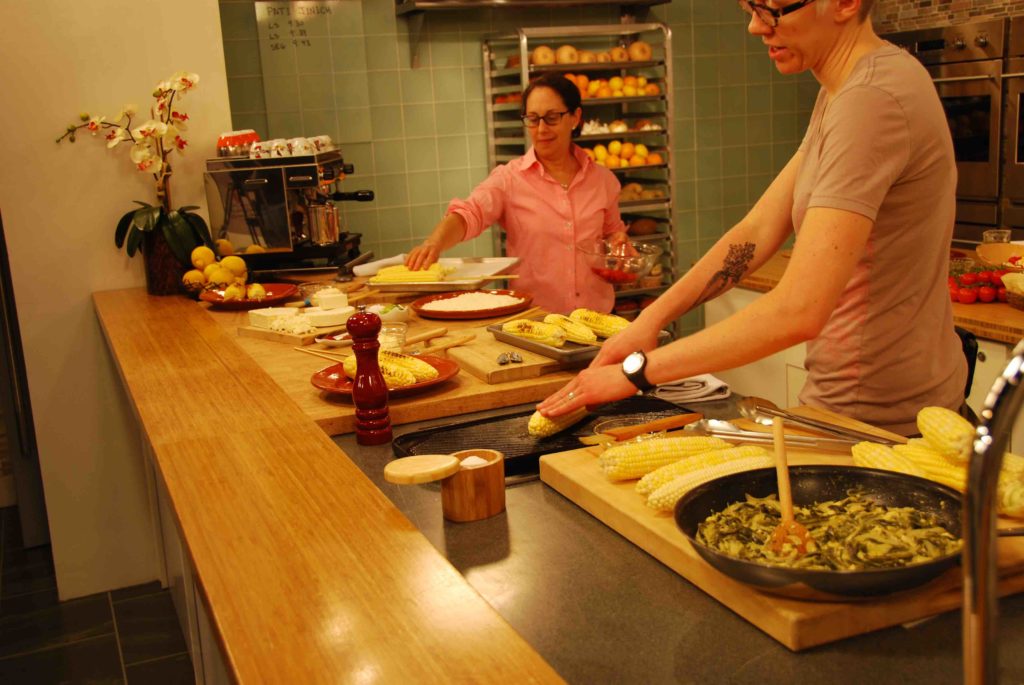
  • Kids love to eat them with a tall glass of milk, I like them with a hot cup of coffee.

Notes

Chochinitos: Galletas de Piloncillo y Canela

Salami de Chocolate (with Coffee Liqueur made with Tequila)

Come December, everyone seems to be thinking about end of the year traditional tasty treats. Though in my family we used to eat them all year round; chocolate salami came to mind, as it is such a funny, creative and addicting nibble. It works great to bring along to friends (it will make them laugh, you will see), as well as to keep some at home for an anytime sweet bite, since they keep in the freezer for months.

Growing up, my sisters and I used to make batches in minutes. We also managed to eat so much of the chunky, crunchy, funky, gooey batter in the seconds it took to transfer the mix to the wrapping papers set on the table. We would get all messy as we helped my oldest sister give the dough their salami shapes. Then, it was so hard to wait, until the chocolate salamis were frozen and hard enough to slice.

My oldest sister, Karen, told me the recipe came from a Women Community-Cooperative cookbook called Tu y Yo Cocinando (You and I Cooking) which was popular in Mexico City around the 70’s. That book was one of those fabulous gems, where participants pitched in their tried and true favorite recipes.

Now my sisters and I are all grown up and raising our families in different cities and countries. Yet, we all make chocolate salamis for our kids. None of us have the cookbook anymore (it makes me sad to think of all the wonders we are missing). As time moved on, we each have given this dessert our own personal spin, with no recipe, just by hunch as we each have made it so many times.

However one thing remains, we all use Maria cookies since they have such a deliciously loud crunch and the perfect balance of sweetness. Brought to Mexico by the Spaniards more than five centuries ago, they grew deep and strong roots in Mexico’s kitchens. Today, you can find them in most grocery stores throughout the US too. If you can’t find them, you can substitute with vanilla wafers or plain Graham crackers.

Here, I am sharing my personal spin.

The recipe below makes two generous chocolate salami portions. I like to mix half the batter with pecans and Tequila. It is absolutely to die for and gives this treat a rich and interesting layer of flavor with just a hint of alcohol. Some Mexican cooks add Rum or Kahlua to the mix as well.

I leave the other half of the batter plain for my boys (yes, it kills me, but they are picky eaters).  This is one of those desserts that is pretty accommodating.  Now that I think about it, some dried cherries would be pretty amazing in that mix too… But you can play around and see what flavors you would like to the mix as well…

chocolate salami
Print Recipe
5 from 4 votes

Salami de Chocolate (with Coffee Liqueur made with Tequila)

Come December, everyone seems to be thinking about end of the year traditional tasty treats. Though in my family we used to eat them all year round; chocolate salami came to mind, as it is such a funny, creative and addicting nibble. It works great to bring along to friends (it will make them laugh, you will see…), as well as to keep some at home for an anytime sweet bite, since they keep in the freezer for months.
Prep Time10 minutes
Cook Time2 hours
Course: Dessert
Cuisine: Mexican
Keyword: Chocolate, cookies, Dessert, Maria Cookies, pecans, Recipe, tequila, vanilla
Servings: 2 logs (6 to 8 people)
Author: Pati Jinich

Ingredients

  • 8 ounces or 225 grams bittersweet chocolate
  • 3/4 cup unsalted butter
  • 2/3 cup sugar
  • 1/2 teaspoon vanilla extract
  • 1 tablespoon unsweetened cocoa powder
  • 5 egg yolks
  • 12 ounces Maria cookies broken into small pieces, or plain Graham crackers or Vanilla Wafers
  • 4 tablespoons coffee liqueur made with tequila rum or kahlua, optional
  • 1/2 cup pecans lightly toasted and roughly chopped, optional

Instructions

  • In a double boiler over simmering water, melt the chocolate and cocoa powder along with the butter. Remove from the heat and stir the mix into a large heatproof bowl. Pour in the sugar and vanilla and combine with a spatula in a circular motion. Slowly add the egg yolks, one by one, mixing very well after each addition. Fold in the broken cookie chunks. If adding the tequila and pecans, fold them all in as well. You will have a moist and chunky, rough looking mix.
  • Cut 2 pieces of waxed or parchment paper of about 15" length. Spoon half of the mixture onto each piece of paper. Shape them into logs with your hands. Roll them in the paper and give them a salami shape of about 2" thickness. Having the paper cover makes it easy to give them a quick roll to give them a round shape. To finish, twist the ends in opposite directions.
  • If you made some with liquor and/or pecans and the other without, use a marker to recognize them when ready. Then wrap each one in a layer of plastic wrap. Place them in the freezer for about 2 or 3 hours or until frozen. Slice them as thin or thick as you like, while frozen, and serve.
  • Chocolate salami will keep in the freezer, tightly wrapped, for about 6 months. Remove from the freezer around 10 minutes before you want to slice it.
  • If you bring them over as gifts, you may want to buy colored paper to give them a festive feel, though I also like to use brown/unbleached parchment paper. It gives them a deli style. In any case, if you traveled with them for a while, don't forget to tell your friends to place the chocolate salamis in the freezer or refrigerator as soon as you give it to them (!).

Guest: Cristina Potters’ Refried Beans

In this post, I have invited Cristina Potters to be a guest and share one of her favorite recipes. Cristina is the author of Mexico Cooks!, a culinary and cultural website about all things Mexico. She is also known for giving outstanding tours. 

A Chicago native who arrived in Mexico in 1981, she was first a social worker in Tijuana.  Now, after 30 years, she is a permanent fixture in Morelia, Michoacan.  She learned the cuisines of the central highlands of Mexico from the Mayoras (Michoacan home cooks). Now, without further ado, here is Cristina…

I’d like to offer my personal recipes for frijoles refritos and frijoles de la olla. The following recipe for refried beans is not only simple and delicious; it converts people who turn up their noses at ordinary refried beans into folks who insist on another helping!

Christina Potters Refried Beans 1

In central Mexico, the most commonly eaten bean is the peruano (peh-roo-AH-noh), an oval, yellow bean that cooks to a pale beige color with a creamy consistency.  I like frijoles de la olla (freshly cooked beans, straight from the pot) served with a big spoonful of salsa fresca (chopped tomato, minced onion and chile serrano, salt, and roughly chopped cilantro).  I often steam white rice, fill a bowl with it, add frijoles de la olla, salsa fresca, and crumble cotija cheese and call it comida (main meal of the day).

Cristina Potters Refried Beans 2

For breakfast, I often prepare frijoles refritos (refried beans).  Served with scrambled eggs, sliced Mexican avocado, and a stack of hot tortillas, beans are a great way to start the morning.

Here’s some fun bean trivia: frijoles refritos doesn’t really mean ‘refried’ beans. Mexican Spanish often uses the prefix ‘re-‘ to describe something exceptional.  ‘Rebueno’ means ‘really, really good’.  ‘Refrito’ means–you guessed it–well-fried.

Frijoles de la olla are very easy to cook and the fresh-cooked flavor is a million times better than canned beans! In my kitchen I prepare about a pound of dried beans at a time.  After cooking, I serve some as frijoles de la olla, prepare some as refried beans, and freeze the rest in plastic sandwich bags.  The cooked beans and their pot liquid freeze very well.

To make frijoles de la olla, the traditional cooking method I use has no onions, no garlic, no salt, and no other seasonings–just water and dried beans. First, pick carefully through your beans.  Put the cleaned beans in a strainer and wash well under running water.  Now, to soak or not to soak?  I have tried both soaking and not soaking and have noticed that the cooking time is about the same either way. I never soak my beans.  My olla de barro (clay bean pot) holds about a half kilo of frijol plus enough water to cook them.  If you don’t have an olla de barro, a heavy metal soup pot will work almost as well.  After the beans are in the pot, add 6 to 8 cups of cold water.

Over a high flame, bring the pot of beans to a rolling boil.  Turn the flame to a medium simmer and cover the pot.  Allow the beans to cook for about an hour and check the water level.  If you need to add more water, be sure it is boiling before you pour it into the bean pot; adding cold water can cause the beans to toughen.  Continue to cook the beans until, when you bite into one, it is soft and creamy.  The pot liquid will thicken slightly.

Cristina Potters Refried Beans 3(Frijoles de la Olla, already cooked over the fried chilies, ready to be turned into refried beans)

Now’s the time to salt your beans–after cooking, but while the beans are still hot. I use Espuma del Mar (Mexican sea salt from the state of Colima) for its wonderful sweetly salty flavor, but any salt will do.  Add a little less salt than you think is correct–you can always add more later, and you don’t want to over salt your beans.

If you live in the United States or Canada, you’ll want to order the fabulous heritage dried beans sold by Rancho Gordo.  Its owner, my friend Steve Sando, has nearly single-handedly brought delicious old-style beans to new popularity in home and restaurant kitchens.  If you’ve tasted ordinary beans and said, “So what?”, try Rancho Gordo beans for a huge WOW! of an eye opener.

Following is a recipe for turning these frijoles de la olla into refried beans.

Cristina Potters Refried Beans 4 (Refried beans ready to eat)


Christina Potters Refried Beans Main
Print Recipe
4.20 from 5 votes

Refried Beans

I’d like to offer my personal recipes for frijoles refritos and frijoles de la olla. The following recipe for refried beans is not only simple and delicious; it converts people who turn up their noses at ordinary refried beans into folks who insist on another helping!
Prep Time2 minutes
Cook Time10 minutes
Course: Side Dish
Cuisine: Mexican
Keyword: beans, Peruvian beans, pinto beans, refried beans, serrano chiles
Servings: 6 servings
Author: Pati Jinich

Ingredients

  • 3 cups recently cooked frijoles peruanos de la olla
  • 1 or 2 chiles serranos depending on your heat tolerance
  • 1 or 2 tablespoons lard or vegetable oil -- preferably lard and definitely NOT olive oil
  • Bean cooking liquid
  • Sea salt to taste

Instructions

  • Melt the lard in an 8-inch skillet. Split the chile(s) from the tip almost to the stem and add to the melted lard. Saute over a medium flame until the chile is dark brown, almost black. Allow the lard or oil and chile to cool a bit before the next step.
  • Now add the beans and a little of the bean liquid. When the beans begin to simmer, mash them and the chile with a potato or bean masher until they are smooth. Add more liquid if necessary to give the beans the consistency you prefer. Add sea salt to taste, stir well, and serve.

Notes

Frijoles Refritos

Foods of Michoacan are Forever

You know how some people become attached to a certain dish? They try it somewhere once and then want to go back to eat it again and again, or they make it at home repeatedly in an until-death-do-us-part kind of vow? Well, I am one of those people, and I have made that vow with quite a few dishes from the Mexican state of Michoacan. It surprises me how Michoacan’s cuisine has remained such a well-kept secret. It has a defined personality and a complex layering of delicious flavors like the more popular cuisines from Oaxaca and Puebla, but its dishes seem to be a bit more comforting and use fewer ingredients.

What’s more, some of Michoacan’s basic ingredients, such as pasilla chiles, tomatillos, cotija cheese and fruit pastes, have become readily available in stores outside of Mexico.

My love for Michoacan is inevitably tied to its food, but it goes well beyond its kitchens. The first time I went to Michoacan as a little girl, it had such an impact on me that whenever our family planned a trip, I begged my parents to return there. It wasn’t only the enchanting cobbled streets, the immense wooden doors framed in cantera stone, the aromas of freshly made breads and ground mountain coffee, or the town squares filled with dozens of home-style ice cream carts and sweets stands, all surrounded with colorful balloons and birdseed sellers. There was something more.

I returned a couple of decades later, as a production assistant for a traveling cooking show. It was breathtaking. As we researched for and filmed foods prepared for Day of the Dead — a Mexican holiday celebrated this week — we traveled from town to town, sampling delicate and simple dishes in the markets filled with fresh ingredients and goodies that women brought in baskets and set down on mats on the floor.

In the cities surrounding the Patzcuaro Lake area, we saw the famous fishermen using their immense nets, which seemed to fly off into the sky, before sunrise. We tasted to-die-for fish soups, meat stews, tamales and sweets that cooks prepared for this occasion.

Day of the Dead is one of Mexico’s most meaningful celebrations, and Michoacan is a spectacular place to experience it, partly because of its beauty and cuisine, but also because of the richness and depth of its centuries-old traditions.

The Purepechas, also called Tarascos, who remain the predominant indigenous group of the region, believed since pre-Hispanic times that the dead return once a year to visit those they miss. Centuries of intermarriage between Purepecha, Spanish and Catholic Church traditions and ingredients resulted in an eclectic mix of rituals and exquisite foods.

Last year, a decade after my second trip, I returned to Michoacan to do further research for the culinary program I teach at the Mexican Cultural Institute in Washington, D.C. We brought our three young sons, and I was eager to share with them the things and foods I had been fascinated with on previous trips. Yet as soon as we unpacked, it became clear that there was so much more to taste and learn. I experienced new things along with my boys.

After a stay in Morelia, the colonial capital where we tasted traditional and modern spins of Michoacan cuisine, we spent a sweet time in the small town of Santa Fe de la Laguna among a Purepecha community. Some of the women fed us their traditional foods and invited us into their kitchens to teach us how to make those dishes. They also taught our boys, with so much patience and tranquility, how to work with their traditional black and green clay.

Upon our return, I finally realized what makes the cuisine of Michoacan distinctive: its people. Michoacanos are generous, warm, hospitable and caring. No wonder the state is known as “the soul of Mexico.” And it is a beautiful soul for Mexico to have. The more I cook, the more I am convinced that the food of a place resembles the characteristics of its people. If asked to define in one word the cuisine from Michoacan, I would say “soulful.”

In my until-death-do-us-part vow with the food of Michoacan, I shall keep sharing and cooking what I have learned from its cuisine until I am able to go back to explore and eat some more. What’s more, if I’m given a license to come back from another world for Day of the Dead, I will happily feast on this menu with the people I love.

Article written for and published by National Public Radio’s Kitchen Window.

tarascan soup
Print Recipe
4.45 from 9 votes

Tarascan Pinto Bean and Tomato Soup

Tarascan Soup Pinto Bean and Tomato Soup, from Pati’s Mexican Table Season 7, Episode 12 "Photographic Food Memories"
Prep Time5 minutes
Cook Time30 minutes
Total Time35 minutes
Course: Soup
Cuisine: Mexican
Keyword: beans, pati’s mexican table, pinto beans, Recipe, soup, Vegetarian
Servings: 6 to 8 Servings
Author: Pati Jinich

Ingredients

For soup:

  • 1 pound ripe plum or roma tomatoes
  • 1 clove garlic
  • 1 (about 1 ounce) ancho chile, stem and seeds removed
  • 1/2 cup white onion, coarsely chopped
  • 1 1/2 teaspoons kosher or sea salt divided, or more to taste
  • 3 tablespoons safflower or corn oil
  • 1 pound cooked pinto beans plus 2 cups of their cooking liquid or 2 14-ounce cans cooked pinto beans plus 2 cups water
  • 3 cups chicken broth vegetable broth or water

For garnishes:

  • 1/2 cup Mexican style cream
  • 1 cup crumbled Cotija cheese
  • 1 1/2 cups crumbled tortilla chips or tortilla strips
  • 1 ancho chile stemmed, seeded, diced, deep fried for a few seconds
  • 1 avocado, peeled seeded, meat scooped out and diced, optional

Instructions

  • Place the tomatoes, garlic, and ancho chile in a saucepan. Cover with water, and simmer over medium-high heat for 10 to 12 minutes, until the tomatoes are completely cooked through and ancho chile is rehydrated.
  • Transfer the tomatoes, garlic, and ancho chile to a blender or food processor, along with 1 cup of the cooking liquid, the white onion, and 1 teaspoon of the salt. Puree until smooth.
  • Heat the oil in a large soup pot over medium-high heat. Add the pureed tomato mixture and cook for 6 to 8 minutes, stirring occasionally, until it darkens in color and thickens in consistency.
  • Meanwhile, rinse your blender or food processor, then add the pinto beans and 2 cups of their cooking liquid (or water, if using canned beans) and puree until smooth.
  • Reduce the heat to medium and stir the bean puree, broth and the remaining ½ teaspoon of salt into the thickened tomato mixture. Simmer for 10 to 15 minutes, or until the soup has seasoned and has a creamy consistency. Taste for salt and add more if needed. Turn off the heat, as it thickens quickly.
  • Ladle the soup into bowls, drizzle with a tablespoon of the cream and top with some cheese, a handful of crumbled tortilla chips or tortilla strips, a few fried ancho chile crisps and some diced avocado. You can also place the garnishes in bowls on the table to let your guests decide how much of each garnish they want to add to their bowls.
  • The soup itself may be cooled and stored in a tightly sealed container in the refrigerator for up to 4 days. Because this soup thickens a bit as it cools, you may need to add some chicken broth or water to thin it out when you reheat it.

Notes

Sopa Tarasca
Print Recipe
4.80 from 5 votes

Brisket in Pasilla Chile and Tomatillo Sauce

This is by far, the best brisket I’ve ever had. The meat chunks gain a nutty brown crust as they cook, yet as you take a bite they fall apart in your mouth. And the sauce, thick, a bit tart, a bit spicy and wholeheartedly rich, enhances the flavor of the meat. It is a dish with a flavor hard to forget: it has loads of personality.
Prep Time10 minutes
Cook Time4 hours 15 minutes
Course: Main Course
Cuisine: Jewish, Mexican
Keyword: beef, chile, garlic, Jewish Mexican, pasilla, pati’s mexican table, piloncillo, Recipe, tomatillos
Servings: 6 to 8 servings
Author: Pati Jinich

Ingredients

  • 3 pounds trimmed brisket of beef rinsed and cut into about 2-inch chunks (leave some fat on!)
  • 5 garlic cloves peeled
  • 5 peppercorns
  • 2 teaspoons kosher or sea salt divided (plus more to taste)
  • 1 pound tomatillos husks removed and rinsed
  • 3 ounces black or pasilla chiles (may sub for New Mexico chiles) stems and seeds removed
  • 3 tablespoons corn or safflower oil
  • 1/2 cup white onion chopped
  • 1 cup boiling water
  • 2 cups meat cooking liquid
  • 2 to 3 tablespoons grated piloncillo or dark brown sugar
  • Chopped white onion and cilantro leaves optional garnish

Instructions

  • Place meat chunks in a large cooking pot along with 5 garlic cloves, peppercorns and salt. Cover with water, bring to a boil, cover partially and simmer over medium heat for 3 hours, or until meat is very soft. Drain and reserve 2 cups of its cooking liquid.
  • Meanwhile, char or roast the tomatillos on a baking sheet under the broiler, or directly on the comal or dry skillet or grill over medium heat, for about 10 minutes, turning 2 or 3 times. Tomatillos are ready when their skin is blistered and lightly charred, and their flesh is soft, mushy and juicy.
  • Toast chiles on a hot comal or dry skillet over-medium heat for 5 to 10 seconds per side. Chiles will release their aroma and become more pliable, and their inner skin will become a bit opaque. Don’t let them burn.
  • Place toasted chiles and roasted or charred tomatillos in a bowl and cover with 1 cup boiling water and 2 cups of reserved meat cooking liquid (if you don’t have 2 cups, add more water). Let this mixture soak for at least a half-hour and up to 4 hours. Pour the mixture into the blender or food processor, puree until smooth and reserve.
  • Add 3 tablespoons of corn or safflower oil to the same pot in which meat was cooked, and heat over high heat until hot but not smoking. Add cooked meat chunks and brown them, 2 to 3 minutes. Reduce heat to medium, add the chopped onion, and stir as you continue to brown the meat for another 2 to 3 minutes.
  • Incorporate pureed chile mixture, a teaspoon of salt and the piloncillo or brown sugar. Stir and simmer over medium heat for about 10 more minutes. The meat should be completely tender, yet still in chunks. The sauce should be thick enough to coat the back of a wooden spoon, but not pasty. Taste for salt and add more if need be. To serve, you can garnish with some raw chopped onion and cilantro leaves.
  • If there is any meat left over, you can cool, store and refrigerate it in a closed contained and then reheat, covered over a low simmer.

Notes

Carne Enchilada
tarascan bean and tomato soup
Print Recipe
5 from 4 votes

Cheesecake with Guava

In Mexico, a favorite dessert is to pair sweet slices of guava or other fruit pastes called ates with savory slices of cheese. Cheesecake with guava paste is a modern take on this combination. We tried it for the first time in the Museo del Dulce — the sweets museum — in Morelia. My adaptation has a thinner layer of guava paste than the museum's, and it is placed between the crunchy bottom and the smooth cream cheese batter, rather than on top. Also, the sweetened sour cream topping reflects a craving of mine, but it seems to make the combination even more irresistible. You can use this recipe as a guideline and see if you want to take the cheesecake in other directions: more guava, less guava, more sour cream or no sour cream.
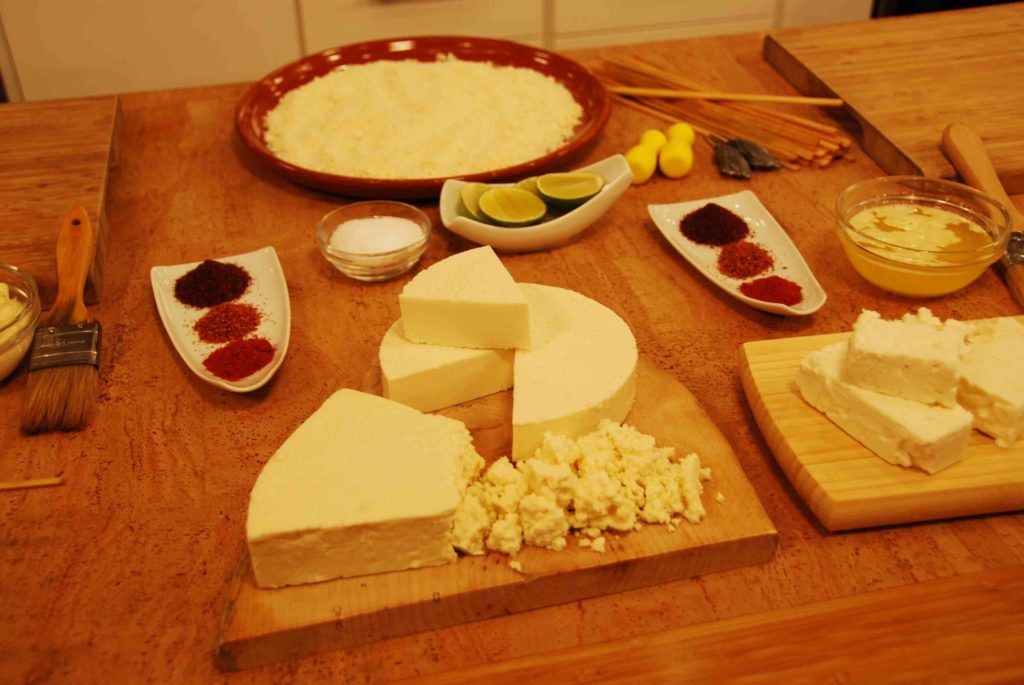
Prep Time30 minutes
Cook Time35 minutes
Chilling Time4 hours
Course: Dessert
Cuisine: Mexican
Keyword: Ate De Guayaba, cheesecake, Dessert, guava, guava paste, Guayaba, pay de queso, Recipe
Servings: 10 servings
Author: Pati Jinich

Ingredients

Crust:

  • 1 1/2 cups (6 ounces ground) Maria cookies or vanilla wafers, or graham crackers
  • 1 teaspoon sugar
  • 3 ounces (or 3/4 stick) butter melted

Guava Spread:

  • 11 ounces guava paste or ate de guayaba
  • 5 tablespoons water

Cheese Filling:

  • 1 pound cream cheese
  • 1/3 cup sugar
  • 1 teaspoon vanilla extract
  • 3 large eggs
  • 1/4 cup heavy cream

Sour Cream topping:

  • 1 1/2 cups sour cream
  • 1/4 cup sugar

Instructions

Crust:

  • In a big bowl, stir the ground cookies, sugar and melted butter until thoroughly mixed. Butter a 9- to 10-inch springform pan. Turn the cookie mixture into the pan. With your fingers or a small spatula, spread it evenly along the pan. Press gently, making a side rim of 1/2 to 1 inch on the sides. Refrigerate while you make the guava spread, cheese filling and sour cream topping.

Guava Spread:

  • Place guava paste and water in the blender jar or food processor. Process until smooth, and reserve.

Cheese Filling:

  • Place the cream cheese in the bowl of an electric mixer, and beat at medium speed until smooth and foamy, 3 to 4 minutes. Add sugar and vanilla, and continue beating until well mixed. Add eggs, one at a time. You may need to stop the mixer to scrape down the sides and bottom of the bowl, as the batter may stick to it. Add the heavy cream, and beat until the mixture is all incorporated and smooth. Reserve.

Sour Cream Topping:

  • In a bowl, mix the sour cream and the sugar together.

Assemble Together:

  • Adjust rack of the oven one-third up from the bottom and preheat to 350°F.
  • Remove the pan with the crust from the refrigerator. With a spatula, spread the guava mixture evenly over the crust. Turn out the cheese filling onto the guava layer, and spread gently and evenly.
  • Place the cheesecake in the oven and bake for 35 minutes, or until it is cooked and has a lightly tanned top. Remove from oven and let cool for at least 10 minutes. Then spoon the sweetened sour cream over the cheese filling and place it back in the oven for 10 more minutes.
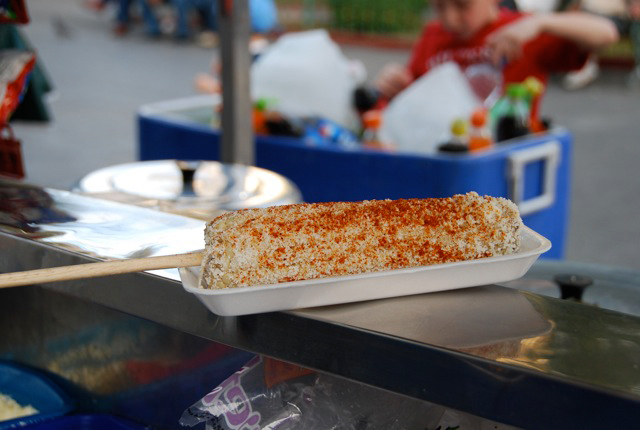
  • Remove from the oven and let it cool to room temperature. Cover and refrigerate for at least 4 hours before serving. It tastes even better if it chills overnight.
  • Before serving, release the sides of the springform pan. Place the cheesecake onto a plate (keeping it on the bottom of the pan), slice and serve.

Notes

Pay De Queso Con Ate De Guayaba

Micheladas and Spiced Up Pepitas: You Are Invited!

For Labor Day, our friends Jeannie and Bill invited us to their farm on the Eastern shore. Jeannie said snacks and grown up drinks are welcome. We can’t wait! Since we are going to be a large crowd, meals there are so leisurely and her family likes to try new things, I want to bring an interesting and friendly snack. Since I’ve been experimenting with pumpkin seeds, spiced up pumpkin seeds came to mind. Micheladas are a great pairing for them, especially since this may be one of the last weekends with enough heat for such drink.

Pumpkin seeds, Pepitas in Spanish, are one of the things I used to stuff in my suitcase when visiting Mexico. That’s because they have a mellow, somewhat nutty, almost sweet, barely chewy and nutritious nature, but also because of its multiple uses in Mexican cooking. They are used hulled and un-hulled, toasted or fried, to make salsas, moles, soups and drinks. There is more to Pepitas than being used for an unnoticeable role as a salad topping. So you can imagine my happiness when I began noticing their appearance in not just one, but many grocery stores here in the US.

pepitas 1(Pepitas gently frying in my pan, popping and changing from an olive green to a light brown toasted color)

Pepitas are also a craved for snack for many Mexicans, including myself, when going to the movies. Un-hulled, soaked in salted water, dried and toasted, they are sold in little packages in street stands and bring long-lasting entertainment. It takes a couple hours to go through a small bag, as you place one by one between your teeth to crack the salted shell open and then triumphantly pop the hidden and gentle tasting Pepita into your mouth. You get the pleasure of repeating that again and again throughout the ups and downs of the film.

However, one of my favorite ways to eat Pepitas is hulled, toasted or lightly fried and tossed with ground dried Chile Piquí­n (which can be bought ready to use), salt and sugar. It takes five minutes to make this tasty crunchy nibble. If you make plenty, there is extra to use, not for an unnoticeable role but for a stellar one, on top of salads or fish. The mix of chile, salt and sugar makes them come alive in your mouth.

As for the Michelada, it is the ultimate Mexican way to drink beer. Beer purists: do not fear, you will like what you try. Non-beer drinkers: You will love beer this way.

Classic Michelada is made by pouring beer onto a cold or frozen glass mug with a salted rim (previously rubbed with lime) and freshly squeezed lime juice at the bottom. Some people add ice, some people don’t. For the more playful Michelada, a combination of salty ingredients (such as Maggi and Worcestershire sauces) and spicy ones (Tabasco, Valentina, Cholula, or any spicy sauce) are added before pouring the beer.

There is no agreement as to how to pour the beer. I make mine with lime juice, some dashes of Maggi, Worcestershire and Valentina, and pour the beer up to the salted rim. That way I can taste a bit of the salt around the rim with each sip. Some people pour the beer quickly so it goes over the rim and bubbles up with the salt so that the volcano explodes over their hands, and then they drink the top of the delicious disaster and everything is already mixed up (!)

Here are the super easy recipes for the Pepitas and the Micheladas… why work hard on Labor Day?

Spiced Up Pumpkin Seeds
Print Recipe
4.25 from 4 votes

Spiced Up Pumpkin Seeds

One of my favorite ways to eat Pepitas is hulled, toasted or lightly fried and tossed with ground dried chile piquín, salt and sugar. It takes five minutes to make this tasty crunchy nibble.
Prep Time0 minutes
Cook Time5 minutes
Total Time5 minutes
Course: Appetizer, Snack
Cuisine: Mexican
Keyword: chile piquín, pepitas, pumpkin seeds, snack, spiced
Servings: 1 1/2 cups of pepitas
Author: Pati Jinich

Ingredients

  • 1 1/2 cup hulled raw pumpkin seeds
  • 1 tablespoon corn, safflower or vegetable oil
  • 1 teaspoon ground chile piquín or ground Mexican chile, more or less to taste
  • 1 1/2 teaspoon kosher or coarse sea salt more or less to taste
  • 1 1/2 teaspoon sugar more or less to taste

Instructions

  • Heat the oil in a saute pan over medium heat. Once it is hot but not smoking add the pumpkin seeds. Saute, stirring often, for about 4 to 5 minutes, they will have begun making popping sounds and some of them will begin gaining a nice tanned brown color.
  • Transfer to a mixing bowl with a slotted spoon, leaving the remains of the oil behind in the pan. Sprinkle with the ground chile, salt and sugar and toss to coat. As they cool down, they will dry up and become crunchier. Eat or store covered with a lid. They will keep for about a week, if you don’t finish them before then.

Notes

Pepitas
dressed up Mexican beer or michelada
Print Recipe
5 from 4 votes

Dressed Up Mexican Beer

Dressed Up Mexican Beer recipe from Pati's Mexican Table Season 3, Episode 9 “Pot Luck Party”
Prep Time1 minute
Cook Time2 minutes
Total Time3 minutes
Course: Drinks
Cuisine: Mexican
Keyword: beer, hot sauce, lime, Maggi sauce, pati’s mexican table, soy sauce, Worcestershire sauce
Servings: 1 beer
Author: Pati Jinich

Ingredients

  • 1 beer mug chilled
  • Kosher or sea salt for coating the rim
  • 1 lime wedge
  • Ice cubes (optional)
  • 2 to 3 tablespoons freshly squeezed lime juice
  • 1 beer preferably Mexican, chilled
  • Dash of hot sauce like Tabasco Cholula or Valentina (optional)
  • Dash of a salty sauce like soy sauce Worcestershire or Maggi Sauce (optional)
  • Pinch of freshly ground black pepper (optional)
  • Pinch of kosher or coarse sea salt (optional)

Instructions

  • Pour a layer of salt onto a small plate. Rub the rim of a chilled beer mug with the lime wedge and dip the rim gently into the salt to coat. Place the ice cubes, if using, into the mug. If making a basic michelada, add the lime juice on top of the ice, then pour in the beer.
  • If making a michelada especial, salt the rim of a chilled beer mug as directed above, then place the optional ingredients, to taste, into the mug. Stir the mixture lightly then pour in the beer.

Notes

Michelada

A True Mexican Collectible: Versatile Summertime Salsas…

When asked recently whether I was a collector of some sort, I thought of my grandmother’s cabinet that holds hundreds of elephant figurines — more than 60 years’ worth, from many places. And she’s still adding to the lot. So my response was no.

Then a few days later I realized that I am a collector: of foods tasted throughout my life, or at least the memories of them. This is especially true of salsas. I have countless papers scattered on my desk with notes about the names of them, the places I ate them, their ingredients, the cooks who made them and, when generously given, directions on how to re-create them.

When the mood strikes, I search to find that precise note (which may be in a coat pocket, bag or drawer). Or I sit down with eyes closed and try to remember the feel of the sauce.

When all else fails, I make one up.

If you look in my refrigerator, you will find a salsa. That is mainly because my husband is always asking for one but also because salsas can pump up the beauty and richness of any meal. To me, salsas are one of the exceptional elements of Mexican cooking: delicious, accommodating and versatile. Among the many possibilities, we eat salsas on top of rice, beans, potatoes; alongside meats, chicken, seafood and vegetables; spooned inside or outside all sorts of dishes such as tacos, quesadillas and enchiladas; scooped with a piece of toast and spooned straight from the container.

I wouldn’t dare guess how many salsas there are in Mexican cooking as I am sure to be wrong, and the cuisine keeps evolving. But I can safely say that if I were to give you a different salsa to taste each month, my lifetime, however long, wouldn’t give us enough time to cover the choices.

Salsas can be eaten from morning till night, and are known to be especially savored after midnight when the food stands on Mexican streets — and some in Los Angeles, as well — serve their secret-recipe salsas with antojos and quick dishes. The late-night crowds crave them.

Some are made with dozens of ingredients, prepared in laborious ways. Others use a few easy-to-find ingredients and can be assembled in minutes. For me, the latter sound like the perfect salsas for summer.

Three of my no-cook favorites, from my ever-growing and scattered collection, are a raw tomatillo and chipotle salsa, made lush with the addition of avocado and fresh cheese; a luxurious mango salsa with slivers of red onion, jalapeño and chopped cilantro; and a versatile, ancho chili pickled salsa, which keeps in the fridge for months.

If you are so inclined, please leave comments online about the accompanying recipes (or share with me whatever food-related things you tend to gather). I will collect them all.

This article was written for and published by The Washington Post on August 5, 2009 The Washington Post.

salsa verde or tomatillo salsa
Print Recipe
5 from 2 votes

Raw Tomatillo and Chipotle Salsa Verde

A raw tomatillo and chipotle salsa made lush with the addition of avocado and fresh cheese.
Prep Time10 minutes
Cook Time0 minutes
Total Time10 minutes
Course: Appetizer, Sauce
Cuisine: Mexican
Keyword: Avocado, Chipotle, cruda, queso fresco, raw, Recipe, Salsa, salsa verde, tomatillos
Servings: 2 cups salsa approximately
Author: Pati Jinich

Ingredients

  • 1 pound tomatillos husked, rinsed and quartered
  • 1 medium garlic clove coarsely chopped
  • 2 tablespoons coarsely chopped white onion
  • Leaves and thin stems from 4 or 5 stems of cilantro coarsely chopped (about 1/3 cup)
  • 2 tablespoons sauce from canned chipotle chiles in adobo plus 1 canned chipotle chile (optional)
  • 3/4 teaspoon kosher or sea salt or more to taste
  • 1 ripe avocado cut into large dice (optional)
  • 8 ounces queso fresco cotija, or farmers cheese, cut into large dice (optional)

Instructions

  • Combine the quartered tomatillos, garlic, onion, cilantro, sauce from the canned chipotle chiles, the canned chipotle chile, if desired, and salt in the bowl of a food processor. Puree until smooth, then transfer to a 2-cup container with a tight-fitting lid.
  • At this point, the salsa can be covered and refrigerated for a day.
  • When ready to serve, transfer to a serving bowl; add the avocado and cheese, if desired. Toss gently to combine. Taste and adjust salt as needed.

Notes

Salsa Verde Cruda con Chipotle
Fresh Mango Salsa
Print Recipe
5 from 5 votes

Fresh Mango Salsa

A luxurious mango salsa with slivers of red onion, jalapeño and chopped cilantro.
Prep Time10 minutes
Resting Time10 minutes
Total Time20 minutes
Course: Appetizer, Sauce
Cuisine: Mexican
Keyword: mango, Pico de Gallo, raw, Recipe, Salsa
Servings: 4 1/2 cups salsa
Author: Pati Jinich

Ingredients

  • 1/2 medium red onion cut into very thin slivers (about 1/3 cup)
  • Juice from 2 limes about 4 tablespoons
  • 2 1/2 pounds (about 4) ripe mangoes peeled and cut into large dice
  • 1 large jalapeño pepper stemmed, seeded and finely chopped (about 2 tablespoons, or more to taste)
  • Leaves from 4 stems cilantro finely chopped (about 3 tablespoons)
  • 2 tablespoons olive oil
  • 1 teaspoon kosher or sea salt or more to taste

Instructions

  • Combine the onion and lime juice in a mixing bowl; toss to coat and let sit for 10 minutes.
  • Combine the mango, jalapeno, cilantro, oil and salt in a separate mixing bowl. Add the onion and lime juice mixture when it’s ready and toss to mix well. Taste and add salt or jalapeno as needed.

Notes

Pico de Gallo de Mango
ancho chile salsa
Print Recipe
4 from 9 votes

Ancho Chile Salsa (or Pickle)

This marinated salsa – more like a pickle or relish – is sweet, mildly spicy, and beguiling. It is a very versatile salsa, too, as you can use it like a regular salsa and spoon it on top of any kind of antojito, like tacos, quesadillas, and even scoop it up with chips. It can also act as a luxurious relish for grilled meat, chicken or seafood, not to mention paninis, tortas or hamburgers. You can also use it as the surprising final touch on crostinis with a base of goat or fresh cheese, or cherry tomatoes… And these are just a few options.
Prep Time5 minutes
Cook Time8 hours
Course: Sauce
Cuisine: Mexican
Keyword: ancho chiles, brown sugar, chile, garlic, onion, piloncillo, Recipe, Salsa, vinegar
Servings: 2 cups
Author: Pati Jinich

Ingredients

  • 6 to 8 ancho chiles rinsed, stemmed and seeded, about 3 ounces
  • 1/2 cup finely chopped white onion
  • 1 clove garlic finely chopped
  • 1/4 cup unseasoned rice vinegar
  • 1/4 cup distilled white vinegar
  • 1/2 cup vegetable oil
  • 1 1/2 teaspoons kosher or coarse sea salt or to taste
  • 2 teaspoons brown sugar or grated piloncillo or to taste

Instructions

  • Using kitchen scissors or a sharp knife, cut the stemmed and seeded chiles lengthwise into thin strips and place them in a mixing bowl. Add the onion, garlic, vinegars, oil, salt and sugar to the bowl and toss to mix well. Transfer everything to a container with a tight-fitting lid and refrigerate for at least 8 hours before using.

Notes

Escabeche de Chile Ancho

Jamaica Flowers Charm the Kitchen

Growing up in Mexico City, my sisters and I used to prepare exotic meals, perfumes and potions for the inhabitants of our enchanted forest. That was our dog, the bluebird, snails, butterflies and ladybugs that happened to peek into our backyard and witness our extravagant mess. It also included any family friend who happened to stop by and become a willing victim. We sometimes offered cooking classes too.

My mother set us up in the backyard on a big blanket with random pots and pans, while she cooked laborious weekend meals. There was a fig tree, an apple tree, a peach tree, a couple of what we called Chinese orange trees and tons of azaleas and herbs that offered an immense array of witch-crafting material. But among our most prized ingredients were dried jamaica flowers, known here as hibiscus flowers, stored in a big jar in the kitchen.

Although not native to Mexico, with a contested origin between Africa and India, jamaica flowers arrived in colonial times and are now deeply integrated into Mexican cuisine. Mainly used to prepare agua de jamaica, one of the freshly flavored waters (aguas frescas), they are enjoyed daily throughout Mexico. Agua de jamaica is extremely popular because its tart flavor, also refreshing and light, complements Mexican food so well.

As a treat, and to make our wait more bearable, my mother would bring us a big pitcher of agua de jamaica. We would drink it, of course, but we would also pour it into ice cube molds with wooden sticks to make mini popsicles, or mix it with gelatin to make happy-looking jello, both of which are common in Mexico.

It was more fun, however, to sneak into the kitchen to get the dried flowers and experiment firsthand. Oh, how fascinating it was to see how they slowly infused the liquid in which they were soaking with an intensely deep and vivid red color. Their flowery and fragrant smell seemed to help with our magic spells, too.

After my husband and I moved to the U.S. in the 1990s, I would stuff them in my suitcase or ask someone to bring some when they visited from Mexico. My craving intensified while I was pregnant, since aside from their tangy taste (more welcome when carrying extra weight), their diuretic and digestive properties and richness in vitamin C and minerals are common knowledge in Mexico.

Luckily, I don’t have to stuff them in my suitcase anymore. As with most ingredients used to cook Mexican food, they can be found in a store close by or with the click of a button, which is wonderful because I use plenty of them. The traditional jamaica water is a staple on my table, but most of all, I am still playing with them in my own enchanted forest or busy kitchen.

Like other adventurous Mexican cooks, I have been experimenting with and expanding their culinary uses. For example, the easy-to-make concentrate used to flavor water makes a rich and sophisticated base for a thick and syrupy sauce to drizzle over gamey meats such as duck, venison or lamb.

An even more daring approach, which I find irresistible, is to munch on these wholesome flowers. However, they are hard and rather tasteless as they are. They have to macerate for at least a couple of hours before they become deliciously chewy and release their tart and cranberrylike flavor. Thus, they are perfect for making exotic vinaigrettes.

The concentrate has also been splashed into margaritas for some time now, and I was recently surprised to find hibiscus-infused tequila at a restaurant in downtown Washington, D.C. While I am no tequila connoisseur, it tasted heavenly.

These days when my mother visits, she tries to set up my three boys on a big blanket with pots and pans in our backyard. Within 10 minutes, the potion-making ends in a wrestling match. However, since one of their favorite things is to have brownies outside, maybe next time we bake some I can drizzle sweetened jamaica syrup and whipped cream on top. That is a recipe I still haven’t tried.
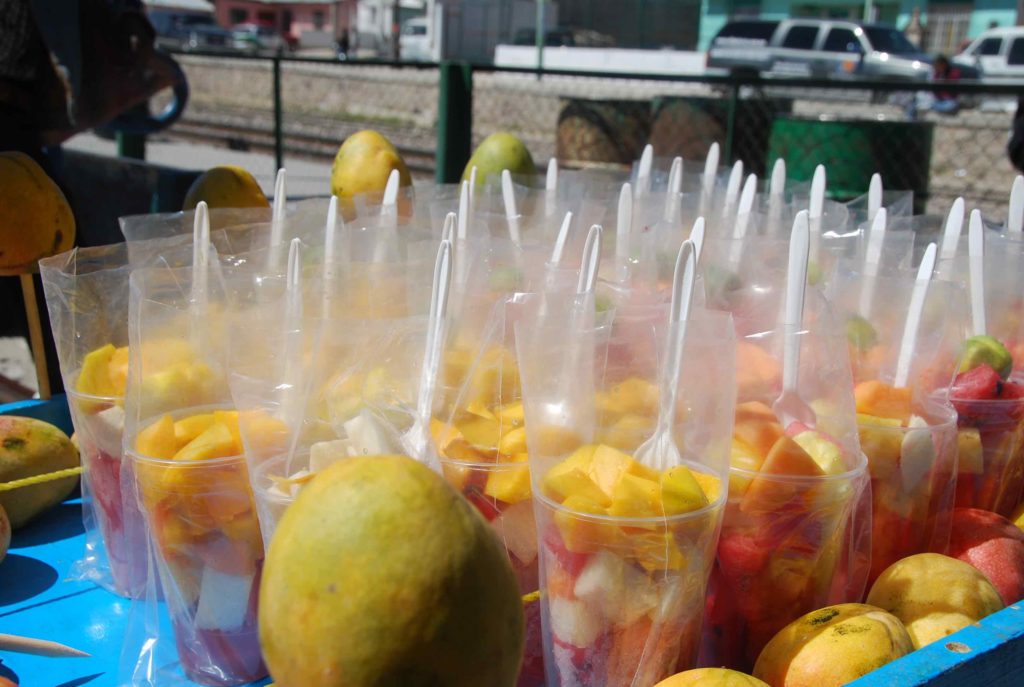
Article written and photos taken for and published by NPR’s Kitchen Window on July 22, 2009.

jamaica water
Print Recipe
4.50 from 6 votes

Hibiscus Flower Concentrate

Although not native to Mexico, with a contested origin between Africa and India, jamaica flowers arrived in colonial times and are now deeply integrated into Mexican cuisine. Mainly used to prepare agua de jamaica, one of the freshly flavored waters (aguas frescas), they are enjoyed daily throughout Mexico.
Prep Time0 minutes
Cook Time10 minutes
Total Time10 minutes
Course: Drinks
Cuisine: Mexican
Keyword: Concentrado, concentrate, flowers, hibiscus, jamaica, water
Servings: 5 cups
Author: Pati Jinich

Ingredients

  • 8 cups water
  • 2 cups (about 2-3 ounces) dried hibiscus or jamaica flowers
  • 1 1/2 cups sugar or to taste
  • 2 tablespoons fresh lime juice

Instructions

  • In a 6- or 8-quart saucepan, bring water to a boil. Add flowers, stir and simmer over medium heat for 10 to 12 minutes. Turn off the heat and let the mixture cool a bit.
  • Strain mixture into a large container (with a lid to cover later), and add the sugar and lime juice. Stir until well-dissolved.
  • Once the concentrate has cooled, cover well and refrigerate. It will keep in the refrigerator for months.

Notes

Concentrado de Jamaica
jamaica water
Print Recipe
4.75 from 8 votes

Jamaica Water

Jamaica Water recipe from Pati's Mexican Table Season 1, Episode 6 "Hibiscus Flowers"
Cook Time10 minutes
Total Time10 minutes
Course: Drinks
Cuisine: Mexican
Keyword: agua fresca, beverage, coconut water, drink, hibiscus, jamaica, Mexican, non-alcoholic, refreshing, water
Servings: 4 to 5 cups
Author: Pati Jinich

Ingredients

Jamaica Concentrate (makes about 5 cups):

  • 8 cups water
  • 2 cups dried hibiscus or jamaica flowers about 2-3 ounces, depending on how tightly you pack the cups
  • 1 1/2 cups sugar or to taste
  • 2 tablespoons fresh lime juice or to taste

Jamaica Water:

  • 1 cup of the Jamaica Concentrate
  • 3 to 4 cups water

Instructions

To make the concentrate:

  • In a saucepan, pour 8 cups of water and place over high heat. Once it comes to a boil, add the jamaica flowers, simmer at medium heat for 10 to 12 minutes and turn off the heat. Let it cool down and strain into a heat proof glass or plastic water jar. Add the sugar and lime juice, mix well, cover and refrigerate.
  • It will keep in the refrigerator for at least 3 months.

To make the jamaica water:

  • When ready to serve, dilute 1 cup concentrate with 3 to 4 cups water, or to your liking, and some ice cubes.

Notes

Agua de Jamaica
Print Recipe
4.15 from 7 votes

Hibiscus Flowers and Hibiscus Tea

Hibiscus Flowers and Hibiscus Tea recipe from Pati's Mexican Table Season 4, Episode 10 "Modern Mexico"
Cook Time15 minutes
Total Time15 minutes
Course: Drinks
Cuisine: Mexican
Keyword: drink, hibiscus, honey, jamaica, tea
Servings: 6 cups tea
Author: Pati Jinich

Ingredients

  • 6 cups water
  • 1/2 cup honey
  • 2 ounces dried hibiscus flowers

Instructions

  • In a medium saucepan, bring water and honey to a boil. Stir in dried hibiscus flowers, stir and cook at a simmer for about 15 minutes, until flowers are completely rehydrated and soft.
  • Strain flowers, reserving liquid for tea, and finely chop. Set aside.
jamaica popsicles
Print Recipe
5 from 7 votes

Jamaica Popsicles

Jamaica Popsicles recipe from Pati's Mexican Table Season 1, Episode 6 “Hibiscus Flowers”
Prep Time15 minutes
Cook Time4 hours
Total Time4 hours 15 minutes
Course: Dessert
Cuisine: Mexican
Keyword: Chocolate, coconut, flowers, hibiscus, jamaica, mango, Paleta, Popsicle, rum
Servings: 8 popsicles
Author: Pati Jinich

Ingredients

To make Jamaica Concentrate (makes about 5 cups):

  • 8 cups water
  • 2 cups, about 2-3 ounces, dried hibiscus flowers depending on how tightly you pack the cups
  • 1 1/2 cups sugar or to taste
  • 2 tbsp fresh lime juice or to taste

To make Jamaica Popsicles:

  • 2 cups hibiscus flower/jamaica concentrate
  • 3/4 cup mango peeled, pitted diced
  • Chocolate morsels to taste optional
  • Shredded coconut to taste optional
  • For adult fun you can make them grown up and add some Rum!

Instructions

To make the concentrate:

  • In a saucepan, pour 8 cups of water and place over high heat. Once it comes to a boil, add the jamaica flowers, simmer at medium heat for 10 minutes and turn off the heat. When cool, strain into a heat proof glass or plastic water jar. Add the sugar and lime juice, mix well, cover and refrigerate.

To make the popsicles:

  • Pour 2 cups of jamaica concentrate into 8, 4 ounce molds. Add pieces of mango, chocolate and coconut. Place in freezer until set and frozen, about 4 to 5 hours. Enjoy!

Notes

Paletas de Jamaica
Jamaica Water Main
Print Recipe
5 from 3 votes

Seared Duck Breast with Hibiscus Flower and Orange Sauce

Easy-to-make hibiscus flower concentrate is used to make a rich and sophisticated base for a thick and syrupy sauce to drizzle over gamey meat, such as duck.
Prep Time5 minutes
Cook Time1 hour
Total Time1 hour 5 minutes
Course: Main Course
Cuisine: Mexican
Keyword: duck, duck breast, edible, flowers, hibiscus, jamaica, meat, Naranja, orange, pato, Pechuga, Recipe
Servings: 6 servings
Author: Pati Jinich

Ingredients

Sauce:

  • 4 cups jamaica or hibiscus flower concentrate
  • 2 cups chicken broth homemade or store-bought
  • Rind of an orange
  • 1 bay leaf
  • 3 whole cloves
  • 5 black peppercorns
  • 1 cinnamon stick about 2 inches long (use Ceylon or true cinnamon if you can)
  • 1 tablespoon balsamic vinegar
  • 1/2 teaspoon kosher or sea salt or more to taste

Duck Breasts:

  • 6 duck breasts with skin about 6 to 8 ounces each
  • 1 teaspoon kosher or sea salt or more to taste
  • 1/2 teaspoon black pepper freshly ground, or to taste

Instructions

Sauce:

  • Pour concentrate and broth into a medium-sized heavy saucepan over medium high heat. Bring to a boil and add the orange rind, bay leaf, cloves, peppercorns, cinnamon stick, vinegar and salt. Simmer at medium-high heat for about 35 minutes.
  • Bring heat down to medium-low, as the sauce will have reduced considerably and will be simmering too strongly. Keep on a low simmer until the sauce achieves a thick, syrupy consistency, about 10 more minutes. Don’t let it thicken too much, as the sauce will continue to thicken as it cools. Remove the spices using a slotted spoon or strainer, and reserve in a container.
  • If you are not going to use it in the next couple of hours, or you made more than you need, let it cool, cover and refrigerate. Reheat before using.

Duck breasts:

  • Thoroughly rinse the duck breasts under a thin stream of cold water and pat dry. Make 6 to 8 diagonal cuts through the skin of each breast, being careful not to cut through the meat. Season with kosher salt and pepper to taste.
  • Preheat the oven to 400°F.
  • Heat a heavy skillet over medium-high heat. Once it is hot but not smoking, place the duck breasts skin-side down and sear for 6 to 7 minutes, until the skin is brown and crisp, and most of the fat melts and turns into liquid.
  • Move the breasts, skin-side up, to an ovenproof dish or pan. Place in the oven for 5 to 9 minutes, depending on how rare you like your meat: about 5 minutes for quite rare and about 8 to have a nice pink center.
  • Remove the breasts from the oven and let them sit for a couple of minutes before slicing. Slice diagonally along already marked skin. Drizzle jamaica and orange sauce on top.

Notes

Pechuga De Pato Con Salsa De Jamaica Y Naranja
Jamaica Water Main
Print Recipe
5 from 1 vote

Watercress, Goat Cheese and Pecan Salad with Hibiscus Flower Vinaigrette

Hibiscus flowers are hard and rather tasteless as they are. They have to macerate for at least a couple of hours before they become deliciously chewy and release their tart and cranberry-like flavor. Thus, they are perfect for making exotic vinaigrettes.
Prep Time15 minutes
Cook Time0 minutes
Resting Time4 hours
Total Time4 hours 15 minutes
Course: Appetizer, Side Dish
Cuisine: Mexican
Keyword: Berros, Ensalada, flowers, goat cheese, hibiscus, jamaica, Nueces, pecans, Queso De Cabra, Recipe, salad, vinaigrette, watercress
Servings: 6 servings
Author: Pati Jinich

Ingredients

  • 1/4 cup champagne vinegar
  • 1/4 cup olive oil
  • 1/2 cup safflower or corn oil
  • 1 garlic clove finely minced
  • 2 teaspoons kosher or sea salt or to taste
  • 1/4 teaspoon freshly ground pepper or to taste
  • 1 cup hibiscus flowers
  • 12 ounces watercress rinsed and drained
  • 8 ounces fresh goat cheese cut into 12 slices (can be crumbled, too)
  • 1/2 cup pecans or pine nuts lightly toasted

Instructions

  • Pour the champagne vinegar into a 3- to 4-quart mixing bowl. Slowly add both the olive oil and the safflower oil as you whisk them into the vinegar with a fork or whisk. Mix in the minced garlic, sugar, salt and pepper. Add the flowers and toss them well. Let them macerate from 4 to 6 hours.
  • Remove the flowers with a slotted spoon, reserving the vinaigrette. Chop the flowers and return them to the vinaigrette. You may use then, or cover and refrigerate up to a week. Mix very well before using and taste for seasoning as it may have become a bit more tart as the days go by and need more salt and sugar.
  • Place the watercress in a salad bowl. Toss with some vinaigrette and top with goat cheese slices and toasted pecans or pine nuts.

Notes

Ensalada De Berros, Queso De Cabra Y Nueces Con Vinagreta De Jamaica

We could all use a little Horchata…

No matter how hard we tried we just couldn’t stay dry.

A single step out of the plane and it all seemed part of a magical realism novel from Gabriel Garcí­a Márquez. In that hot, humid and tropical pueblo, every move was slowed down in a permanent mist, which made my clothes feel damp. Under the open sunny sky, that mist was shiny and full of light as it transformed the colors from the exotic overgrown plants, colorful houses and small streets. There were cute little insects, bees and hummingbirds moving all around. Wide chubby trees offered some shade, as people walked by with no hurry, wearing earth colored hats.

And everything, absolutely everything, was infused with the lusciously sweet aroma of vanilla.

No. I don’t do drugs.

This is a true description of a small town in the region of Totonacapan in the state of Veracruz, where vanilla originated and is still heavily grown. Also where my husband and I were invited to a wedding, more than a decade ago. And it was in that small pueblo, where I tasted the best horchata I have ever tried.

Granted, memory has its ways of doing its own little thing. And granted, I was much younger and a complete newlywed, so probably more melodramatic. But I would bet this sweet, comforting, silky and refreshing horchata my hand is holding, that if I were there today my description would be just the same.

One could say I got lucky recently at a cooking demonstration and dinner for the Smithsonian. In small part by meticulous planning and in large part by chance, everyone there must have felt transported to Veracruz. Here’s why.

Son de Madera had just performed Son Jarocho music. The entire Mexican Cultural Institute was infused with the aroma of the vanilla beans and extract we had been cooking with all day, which was shipped from a company in that region to create the vanilla inspired menu. An unforeseen thunderstorm had left behind a wet ambiance. And to top it all off, in that hot summer evening, a couple air conditioning units decided to contribute to the programs’ authenticity and take a brake.

Horchata 1(Members from Son de Madera, getting ready for an outstanding performance)

As the 100 audience members listened to my description of the steamy pueblo, I kept wiping my forehead dry. I couldn’t help but laugh out loud in amazement. Indeed! It was tropical, hot and humid. All we were missing were the cute little insects, bees and hummingbirds.

It was a good thing that aside from wine and peanut Toritos, an original aperitif, we had big glass barrels filled with this cold homemade horchata. People could drink as much of it as their hearts pleased.

As it gets hotter as the summer advances, and we are not even near August, I am sharing the recipe with you too. It is very easy to make.

There are many versions of horchatas in Mexico. Some have a base of white rice while others use cantaloupe seeds. I prefer the former. But rice horchatas can be made in many ways. Some add condensed and/or evaporated milk. I add milk, which is more traditional, as well as vanilla extract and true cinnamon. And rather than grinding the rice first, I like to soak it for a couple hours before it is pureed and strained. It seems easier, and somehow, has more flavor.

(Rice and cinnamon soaking in warm water, getting ready for an outstanding performance too!)

But the special spin of this horchata, which is not that common and makes it go from delicious to you can’t have anymore because I am finishing it all up, is coconut water. It makes it thirst quenching and energizing, as it brings you a couple steps closer to those tropical pueblos. Plus, it adds a soft layer of thickness without making it heavy.

There is always a shortcut to most things in the kitchen… If you don’t want to make horchata from scratch, you can find horchata concentrate in many stores or online. Just add coconut water as you mix the concentrate with water and/or milk. But if you have a bit of extra time to spare, try making it from scratch. I am sure you will enjoy it.

Horchata main
Print Recipe
4.67 from 3 votes

Horchata with Coconut Water, Cinnamon and Vanilla

This is a true description of a small town in the region of Totonacapan in the state of Veracruz, where vanilla originated and is still heavily grown. Also where my husband and I were invited to a wedding, more than a decade ago. And it was in that small pueblo, where I tasted the best horchata I have ever tried. Granted, memory has its ways of doing its own little thing. And granted, I was much younger and a complete newlywed, so probably more melodramatic. But I would bet this sweet, comforting, silky and refreshing horchata my hand is holding, that if I were there today my description would be just the same.
Prep Time2 minutes
Cook Time2 hours 10 minutes
Course: Drinks
Cuisine: Mexican
Keyword: cinnamon, cocktail, coconut water, mexican vanilla, milk, Recipe, rice
Servings: 6 glasses
Author: Pati Jinich

Ingredients

  • 2 cups long or extra long white rice
  • 2 cups hot water
  • 1 cinnamon stick (Ceylon or true cinnamon, if you can)
  • 2 cups coconut water can be fresh or canned
  • 1 tablespoon vanilla extract
  • 3 cups milk
  • 1 1/4 cup sugar
  • Ground cinnamon to sprinkle on top optional

Instructions

  • Place the rice in a bowl, cover with hot water. Roughly crumble cinnamon piece into the rice mix and let it all sit and rest anywhere from 2 to 8 hours outside of the refrigerator.
  • Place half of the rice mixture in the blender with the coconut water and vanilla and blend until smooth, strain into a pitcher or container. Place the other half of the rice mixture in the blender with the milk and the sugar, pure until smooth and strain into the same pitcher or container.
  • Stir well and serve over ice cubes, or place in the refrigerator until it is cold. Serve with more ice cubes to your liking and sprinkle some ground cinnamon on top if you wish to do so.

Notes

Horchata

I am packing my own Torta…

Some people get motion sickness when they travel. Some people get hungry. I am among the latter.

The minute I step on whatever will transport me from one place to another, my mind swims through related food memories, and I just have to eat. So since I know I will have a craving for something other than a moist, soggy, chewy and never-ever crunchy baguette from the Amtrak train, and after being so spoiled with the food from El Chepe Train, I am packing my own Torta.

Torta (according to me…): A satisfying and delicious, self contained, easy to transport, edible package filled with tasty ingredients that just love to schmooze together.

I guess we owe a big part of the Torta to the French, since the bolillo or telera bread used to make them, is the Mexican adaptation of the French Baguette. Brought to Mexico City in the 1860s by Emperor Maximilian’s troupe of cooks, its use quickly spread out throughout the country. Maximilian ruled over Mexico’s very own, very last and very short-lived European Monarchy. Although it was unfortunate politically (he ended up executed for one thing), it was blissful in a culinary sense.

When it comes to Tortas, I have eaten a fair share of variations. There are outstanding long established Torta stands and shops where I grew up, each with a peculiar signature twist. Moreover, my father is famous in our food-centered family for making blow-your-mind-away ones (his favorite has sardines, Mexican avocado, white onion and pickled Jalapeños).

But I think the best Torta I ever had (sorry Papi) was in the state of Michoacán at the home of Diana Kennedy. Aside from an outstanding Torta maker, she is also one of the most respected authorities in Mexican cooking, and a woman whose books I have happily swallowed whole.

I ate Diana’s Torta almost ten years ago, when I was a production assistant for a PBS cooking series based in Texas. I traveled with the production team to different locations in Mexico, as each show focused on the foods of a specific region. There was of course one show about Diana and the food from Michoacán, her beloved and adopted home. She prepared many dishes to feature on the show and by the time lunch came, she assembled a Torta for each of the, by then, desperately famished members of the crew.

It tasted like a little piece of Michoacano heaven.

The bread, if freshly baked that day, doesn’t need to be toasted. Most of the ingredients Diana used were brought from the nearby pueblo that morning, including the fresh cheese and the farm style ham. She had homemade refried beans and pickled Jalapeños which I think were the biggest treat of it all.

Pack my own torta 1

Here is how I assembled mine for today, in memory of Diana’s:

I sliced the bolillos in half, but since I bought them yesterday I toasted them slightly. On one side I spread home made pinto refried beans (I had leftover from the sopes I made last night). On the other side, some fork smashed slices of avocado. Then went a layer of queso fresco or fresh cheese and one of smoked turkey (what could be found in my refrigerator), slices of tomato, onion, a very generous spoonful of Mexican style cream and a layer of homemade pickled Jalapeños, so packed, it seemed like a Torta wallpaper.

Right before adding the top half, I sprinkled a bit of salt, a habit I got from my father. It seems to help the flavors from all the ingredients shine through.

NOTE: For the bread you can use bolillo, telera, Portuguese rolls or small baguettes. the refried beans as well as the pickled Jalapeños can be homemade or there are excellent brands of already made ones at the stores.

Pack my own torta main
Print Recipe
4.34 from 3 votes

TORTA

Some people get motion sickness when they travel. Some people get hungry. I am among the latter. The minute I step on whatever will transport me from one place to another, my mind swims through related food memories… and I just have to eat. So since I know I will have a craving for something other than a moist, soggy, chewy and never-ever crunchy baguette from the Amtrak train, and after being so spoiled with the food from El Chepe Train, I am packing my own Torta.
Prep Time5 minutes
Cook Time5 minutes
Course: Main Course
Cuisine: Mexican
Keyword: Antojo, Avocado, bolillo, cheese, chicken, ham, mexican crema, mozzarella, Oaxaca cheese, onion, Pickled Jalapeños, queso fresco, Recipe, refried beans, Sandwich, telera, Tomatoes, Torta, turkey
Servings: 1 hungry traveler
Author: Pati Jinich

Ingredients

  • 2 bolillos teleras, Portuguese rolls or small baguettes
  • 2 tablespoons refried beans
  • 1/2 ripe Mexican avocado peeled and sliced
  • 4 slices of queso fresco or fresh cheese farmers cheese, Oaxaca or Mozzarella
  • 4 cups to 6 slices of turkey ham or 1/2 cooked shredded chicken
  • 1 sliced and seeded tomato
  • 2 to 4 thin slices of white onion
  • 2 generous tablespoons of Mexican or any Latin style cream
  • Pickled Jalapeños homemade or storebought to taste ( Jalapeños en Escabeche/Vinagre)
  • Salt to taste optional

Instructions

  • Slice the bolillos in half lengthwise. If not fresh, toast them slightly for a couple minutes. On one side spread a tablespoon of refried beans and on the other mash 1/4 of an avocado with a fork. Top the base half with a couple slices of cheese, 2 or 3 slices of turkey, a couple slices of tomato and onion.
  • Drizzle a tablespoon of Mexican style cream and crown your package with as many pickled Jalapeños as your heart desires. Sprinkle a bit of salt if you want. Place the top half and slice the Torta horizontally.
  • Eat it or wrap it up so it may travel along with you.

Tostada Buzz: To infinity, and beyond!

I am so surprised tostadas haven’t become wildly popular in the US. Here are some reasons for my surprise…

They can be assembled in a couple minutes, as ingredients can be prepared beforehand or store-bought. They can be eaten anytime of day, depending on what you layer on them. They are a wholesome one stop meal, for proteins, vegetables and carbohydrates happily mingle in there. They are accommodating, you can decide how much to add of each topping. They are forgiving, choices can vary from one tostada to the next. Moreover, they are fun to prepare, eat and share.

In a sense, they are the perfect dish for casual entertaining. So much of Mexican food just lends itself to being in a Fiesta mood.

What can you layer on a tostada? Well, almost anything! There are regional specialties, traditional favorites, modern twists and family staples. Yet, after the hundreds of variations there is a lot of room to play and create your own. But for a memorable tostada, you need to know some simple basics.

First of all, start with a good tostada. A tostada is a corn tortilla that is either toasted (that is what the word tostada translates to in English) or deep fried until golden and crisp.

Now, you can go as hands on as you want. You can make your own tortillas or buy the already made tortillas and make your own tostadas. But there are pretty good ready to eat tostadas at the stores. If that’s the way you want to go, try a couple brands to see which you like best. They do taste different. Once you have the tostadas, you already have a filling, crunchy and sturdy base for your creation.

The most common tostadas add a layer of smooth and tasty refried beans, home made or store bought. From there, you can go many ways.

My sister Karen likes to host tostada parties. She places a basket with tostadas, a bowl of refried beans and different hearty toppings (which shouldn’t be too saucy, just nice and moist, as tostadas are somewhat flat), such as chicken tinga and shredded beef in a chile sauce. She plates fresh garnishes, like Mexican avocado, tomatoes, lettuce, onion, cream and crumbled cheese. Her guests just go around the table adding whatever they feel like on top.

I will leave you with the ones I make most often at home. My kids are happy adding crumbled cheese and Mexican cream on top of the refried beans. I am more satisfied throwing in some shredded chicken, tomato, lettuce, ripe avocado and a salsa verde, made with tomatillos, to drizzle on top.
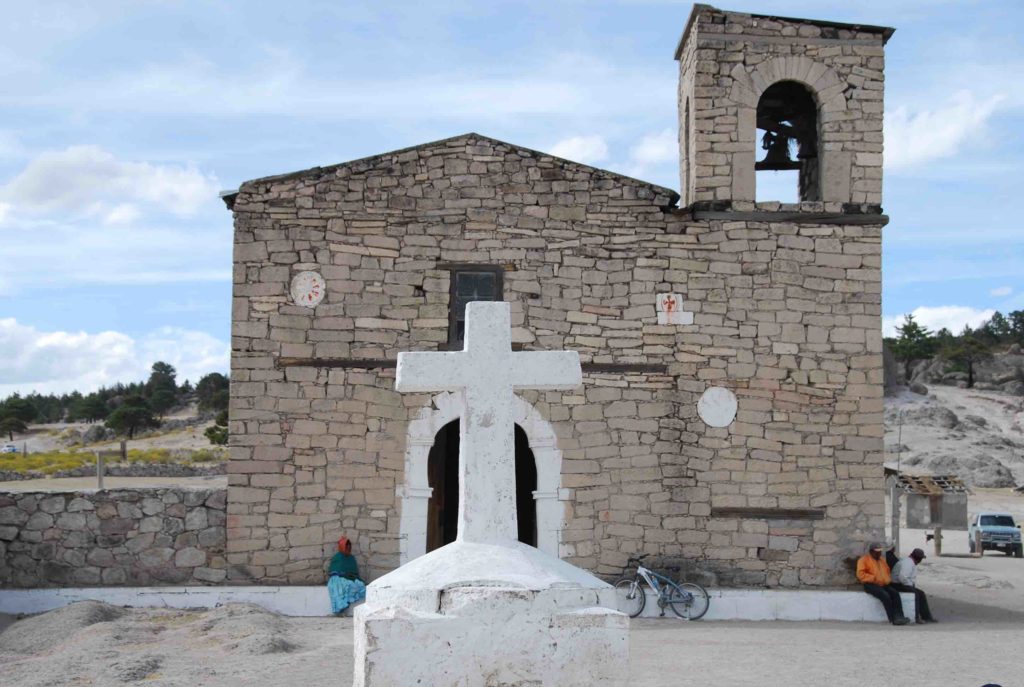
Don’t let any version stop you though. You may start with the tostadas and the refried beans. From there, it is up to your imagination. It can go to infinity, and beyond!

Print Recipe
5 from 2 votes

Basic Tostadas

I am so surprised tostadas haven’t become wildly popular in the US. Here are some reasons for my surprise…They can be assembled in a couple minutes, as ingredients can be prepared beforehand or store-bought. They can be eaten anytime of day, depending on what you layer on them. They are a wholesome one stop meal, for proteins, vegetables and carbohydrates happily mingle in there. They are accommodating, you can decide how much to add of each topping. They are forgiving, choices can vary from one tostada to the next. Moreover, they are fun to prepare, eat and share.
Prep Time5 minutes
Cook Time5 minutes
Course: Antojos
Cuisine: Mexican
Keyword: Antojo, Avocado, beans, chicken, corn tortillas, cotija, mexican crema, pati's mexican table, queso fresco, Recipe, refried beans, salsa verde, Tomatoes, tortilla
Servings: 12 tostadas
Author: Pati Jinich

Ingredients

  • 12 corn tostadas
  • 2 cups refried beans warmed up
  • 2 cups shredded chicken
  • 1 cup finely sliced iceberg or romaine lettuce
  • 1 ripe Mexican avocado pitted, peeled and sliced
  • 1 cup tomato sliced
  • 1/2 cup Mexican or Latin style cream
  • 1 cup green tomatillo salsa or your salsa of choice
  • 1 cup Cotija, Fresco or Farmers Cheese crumbled

Instructions

  • Place the tostadas on a large platter and all of the toppings and garnishes in separate bowls.
  • For a complete basic tostada: Layer a couple tablespoons of refried beans on the tostada. Spread a couple tablespoons of shredded chicken, lettuce, and one or two slices each of avocado and tomato. Top it all with a tablespoon or so of crumbled cheese and cream. Drizzle some green salsa, if you wish, to your liking.

Notes

Tostadas

Tortillas: Make Corn Tortillas at Home

Yes, you can buy them already made at the store, but there are few things that can’t compare to the nurturing and filling sensation of homemade corn tortillas.

And the great thing is, we can buy the premade corn tortilla flour of extraordinary quality in the US these days, so you don’t have to nixtamalize the corn kernels (dry in the sun, cook and soak in hot water with lime, peel and grind to a paste) through a process of more that 36 hours to make your own fresh corn tortilla dough. Here is how you make them.

Print Recipe
4.80 from 5 votes

Corn Tortillas

Yes, you can buy them already made at the store… but there are few things that can compare to the nurturing and filling sensation of homemade corn tortillas.
Prep Time15 minutes
Cook Time10 minutes
Course: Antojos, Side Dish
Cuisine: Mexican
Keyword: corn tortillas, dough, masa, pati's mexican table, Recipe, tortilla
Servings: 10 to 12 tortillas
Author: Pati Jinich

Ingredients

  • 2 cups corn tortilla flour such as MASECA
  • 1 3/4 cup water or enough to achieve a play dough consistency dough! varies with climate
  • Pinch of salt optional

Instructions

  • Set a comal or ungreased dry skillet over medium heat, for at least 5 to 8 minutes, until thoroughly heated. (If your pan isn’t hot enough, the tortillas will stick.)

To make masa or dough:

  • Mix together the flour, salt, and water in a large mixing bowl and knead the masa in a circular motion. Do so for a couple minutes, until the dough feels smooth and has no lumps. If it feels too dry, add a bit more water. Masa dries out fast, so if you leave it unattended, cover it with a clean moist kitchen towel or cloth.

To make the tortillas:

  • Cut out 2 plastic circles from a thin plastic bag, like ones you get at grocery stores. (Don’t use plastic wrap.) Roll a piece of the masa in your palm into a ball about 1 1/2″ in diameter. Place one plastic circle on the bottom of the tortilla press and place the masa ball on top. Place the other plastic circle on top of the ball and press down the press to make a flat disk, jiggling the press a little as you get to the bottom (this makes a rounder tortilla). Open the press and check the tortilla for dryness and, if needed, add water to the remaining masa (the masa should be as soft and smooth as Play-Doh). Take the top plastic off, lift the bottom plastic with the tortilla in one hand and peel the tortilla from the plastic with the other hand.
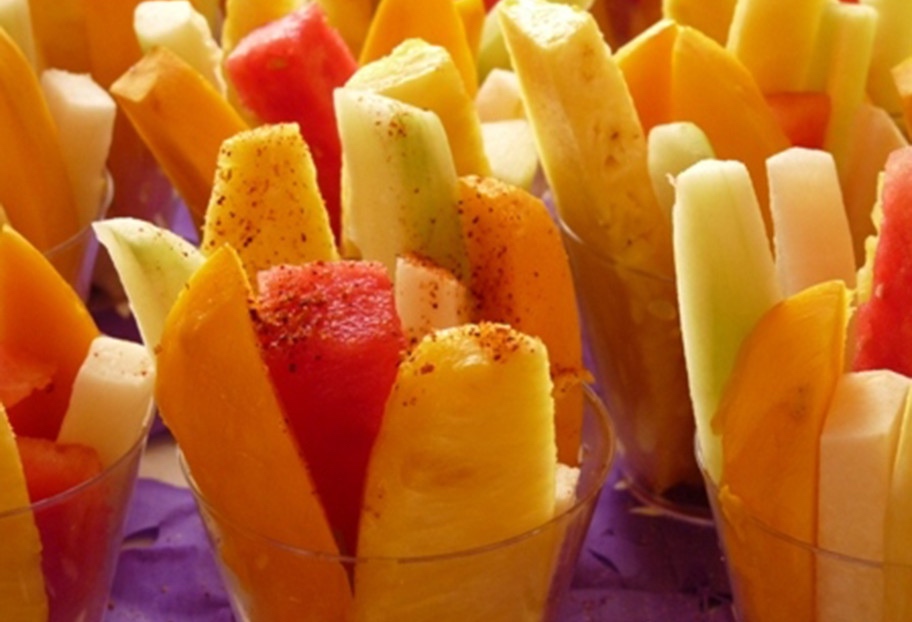
  • Alternatively, you can place a ball between plastic sheets or parchment paper and roll the tortillas out with a rolling pin. They should be about 5″ in diameter and about 1/8″ thick.
  • Place the tortilla on the hot comal or skillet. Let it cook for at least 30 seconds (resist the urge to touch or adjust it). As soon as it can be flipped without sticking to the comal – it should be opaque on the side that it was cooking on. Flip with a spatula and cook for about a minute, until opaque and starting to freckle on the other side. If it is opaque but it has white-ish areas, you need to leave it a bit more, until those white-ish shadows become freckled with brown spots. Turn over once more, and now, after a couple seconds, tortilla should puff up like pita bread, if not all over tortilla, at least in an area of it. Let the tortilla cook still, for about 10 seconds, so that it cooks in between the area that puffed up.
  • If eaten that same day, tortillas may be kept wrapped in a clean kitchen towel or cloth. If not, wrap in a kitchen towel, inside a closed plastic bag and place in the refrigerator. They will keep for up to 3 days, afterwards they will turn too hard. Reheat in hot comal for 30 seconds or so on each side before eating. They can also be frozen and kept for months.

Corn: In a bowl or on a stick

In Mexican cooking, corn is eaten and drank, in just about every possible way. Esquites, freshly shaved corn usually cooked in a buttery broth with epazote leaves and Serrano chile, is one of the most popular takes. So much so, that my boys counted eight Esquite street carts in the small down town square of Chihuahua, when we were there last month.

It is very common to walk through the streets in a Mexican city or village, no matter how tiny it may be, and find a wide array of street food stands boasting the dishes that Mexicans abroad hanker for the most: Antojitos, or little cravings. Each one being a universe compounded with layers of flavors, in its own right.

Corn in a bowl or on a stick 2a-thumb-510x342-2014
Esquites, as most of the Antojitos, is a very versatile dish. You may eat the whole cooked corn on a stick, or shaved off the cob, cooked and seasoned and served in a cup. Then, you can dress it up or dress it down according to your mood, with the traditional and complementing garnishes of mayonnaise or Mexican cream, crumbled salty Cotija or aged cheese, lime juice, salt and ground dried piquí­n chile.

I just shared it last week with the Fox midday news team.

My boys, of course, prefer the more hands on way of eating it, on a stick. They each have their personal spins. My middle one likes it with just butter, mayo and crumbled salty cheese. On top of that, my little one adds salt and some drops of limejuice. My oldest one proudly eats it, “with a lot of absolutely everything” which just means adding ground chile piquin to the later mix, but heavily loaded on all fronts.

It is a good time to try it now that we start to see the beautiful fresh corn in the markets. It is up to you to decide if you want it nice and neat in a cup or deliciously messy on a stick.

Print Recipe
4 from 3 votes

Cooked and Seasoned Corn

In Mexican cooking, corn is eaten and drank, in just about every possible way… Esquites, freshly shaved corn usually cooked in a buttery broth with epazote leaves and Serrano chile, is one of the most popular takes. So much so, that my boys counted eight Esquite street carts in the small down town square of Chihuahua, when we were there last month.
Prep Time5 minutes
Cook Time13 minutes
Course: Antojos, Side Dish
Cuisine: Mexican
Keyword: Antojo, chile, Corn, cotija, epazote, lime, mayonnaise, mexican crema, piquí­n chiles, queso anejo, Recipe, serrano chiles, Vegetarian
Author: Pati Jinich

Ingredients

  • 2 tablespoons unsalted butter
  • 1 tablespoon safflower or corn oil
  • 1 serrano chile or more to taste, chopped (seeding optional for less heat)
  • 8 cups fresh corn kernels from about 12 ears of corn
  • 2 cups water
  • 2 tablespoons fresh epazote leaves chopped, or 1 whole leave dried, optional
  • 1 teaspoon kosher or sea salt or more to taste
  • 2 limes or about 4 tablespoons of fresh lime juice
  • 1/4 cup mayonnaise or Mexican cream
  • 1/2 cup crumbled Cotija fresco or añejo cheese
  • Dried ground Piquí­n chile to taste

Instructions

  • Melt the butter together with the oil on a cooking pot over medium-high heat. Add the chopped chiles and let them cook for about 20 to 30 seconds, moving them around.
  • Incorporate the corn, chopped fresh epazote leaves or dried epazote leaf, water and salt. Stir it all up and bring to a simmer. Cover with a lid, bring heat to medium-low and cook for 12 to 14 minutes, until the corn is cooked but still tender. Turn off the heat. You may leave the corn in the pot for a couple hours.
  • Serve corn in cups or small bowls. Let your guests add to their liking the fresh limejuice, mayonnaise or Mexican cream, crumbled cheese, powdered chile piquí­n and salt.
  • You may also cook the whole corn in salted water with the epazote leaves. Once it is cooked and ready, garnish with the same ingredients.

Notes

Esquites

A comfy soup for the still chilly nights

While most of us in DC have stacked our winter clothes up in the attic or inside a trunk, the truth is, it’s still a bit chilly. So today I made this mushroom soup, yet again. I should be tired of it already, since I just cooked 100 portions of it for last Friday’s cooking class at the Institute and I had tested it for weeks… But here I go.. It is just too good!

It is not your typical soup at all. It has the woody and earthy feel of the mushrooms, but their flavor is somehow enhanced by the chile de árbol. It may sound strange, since one would think that chiles mask the flavor of ingredients. But depending on how you use them, they can pronounce rather than overpower other flavors.

Although the chile de árbol is quite spicy, in this soup you can taste its depth but not its heat, since they are browned but never opened. This is one of the subtle ways to use them, as the seeds and veins which contain most of the heat are bundled up inside throughout the cooking.

Luckily, these chiles can be found almost anywhere these days. Like other dried chiles, they are a very smart staple to incorporate into your pantry since they last forever, they are filled with Vitamin A (great excuse to indulge…) and they can enrich your home cooking immensely.

The soup has a flavorful roasted tomato base. You can buy the already roasted tomatoes, but down below I tell you how to roast or char them yourself. It takes no more than 10 minutes, it is rather simple and it gives the soup a nice rustic feel. I include the epazote in the end, but if you don’t find it don’t worry, it is optional. It just gives it a nice accent.

It takes about 25 minutes to make this soup. Go for it! You can make a double batch and reheat it the next day for lunch, accompanied with some sliced toasted baguette or bolillo, and a slice of ripe Mexican avocado on top.

Print Recipe
5 from 3 votes

Mushroom, Chile de Arbol, and Roasted Tomato Soup

Prep Time5 minutes
Cook Time35 minutes
Course: Soup
Cuisine: Mexican
Keyword: Avocado, bolillo, chicken broth, chile, chiles de arbol, epazote, garlic, Mushroom, onion, pati's mexican table, Recipe, soup, Tomatoes, Vegetarian
Servings: 4 to 6 people
Author: Pati Jinich

Ingredients

  • 1 1/2 pound, or 6 to 7, ripe roma/guaje tomatoes
  • 3/4 cup white onion roughly chopped
  • 4 garlic cloves peeled
  • 2 tablespoons safflower or corn oil
  • 1 tablespoon butter
  • 3 chiles de arbol
  • 2 pounds mushrooms rinsed and sliced
  • 1 teaspoon kosher or sea salt or to taste
  • 8 cups chicken broth homemade or storebought
  • 2 fresh epazote sprigs may substitue for dried, optional
  • 1 ripe Mexican avocado peeled and sliced
  • 1 or 2 bolillos or small baguettes sliced and toasted, optional

Instructions

  • Char the tomatoes, onion and garlic, by placing them in a single layer on a baking sheet under the broiler. Alternatively, you can char them on the grill or on a hot comal, the traditional way. Whichever method you choose, tomatoes will take between 6 to 9 minutes, and the onion and garlic between 3 to 4 minutes. Turn them around halfway through.
  • Tomatoes are ready when they are completely cooked through, mushy and their skin is charred, blistered and wrinkled. Garlic and onion will have also charred and softened.
  • Place charred tomatoes, onion and garlic in the blender and puree until smooth. In a pot, heat one tablespoon of the oil and the butter over medium heat until butter starts to bubble. Add Chiles de Arbol and sautee for a couple minutes, turning them around, until they are lightly browned and crisp.
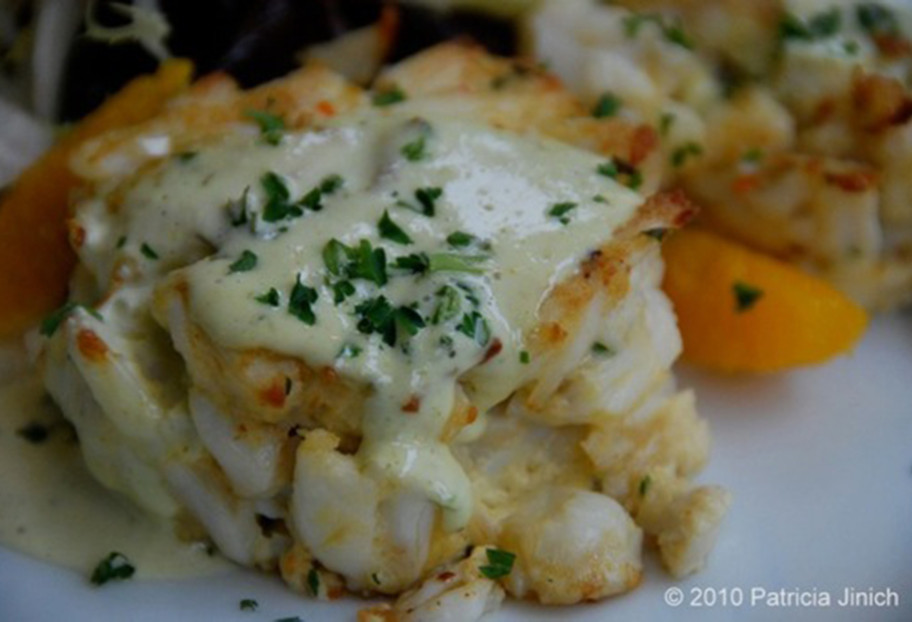
  • Add sliced mushrooms, sprinkle with salt, cover the pot and let them steam for 5 minutes.
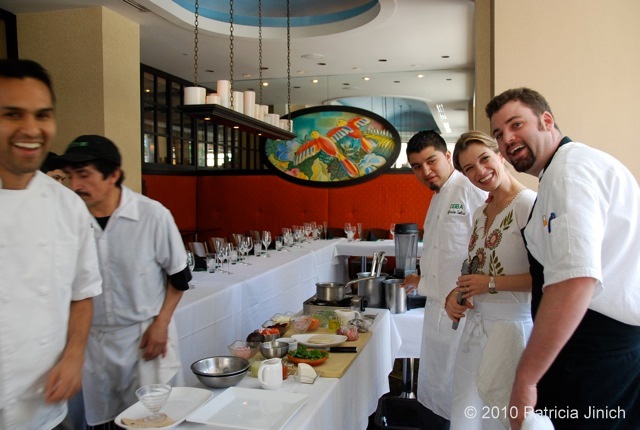
  • In a soup pot, add a tablespoon of oil and heat over medium high heat. Stir the tomato puree into the pot. For a smoother feel, you can place a strainer on top of the soup pot, and strain the tomato puree into the pot. Let the puree simmer, season and thicken for about 4 to 5 minutes. Its color will darken and become deeper.
  • Stir in the chicken broth and simmer for 5 more minutes. Incorporate the mushrooms along with the chiles. Add the fresh epazote sprigs, if you want, and let it all simmer 5 more minutes. Taste for salt and add more if need be.
  • Serve very hot. If you wish, add a slice of avocado on top of each bowl of soup. It can be eaten with a side of toasted bolillos or baguettes as well.

Notes

Sopa de Hongos con Tomate y Chile de Arbol

The double life of an avocado

My friend Vered walked into my house carrying a pound of French feta cheese and some freshly baked pitas she found at a Middle Eastern store. It was the kind she used to cook with in her Israeli home. Just a taste made us realize how hungry we were, though we were not near any mealtime. Nonetheless, we had 20 minutes before we had to run, so that’s a great excuse for a snack.

The last beautifully ripe Mexican avocado I had in the basket was staring at me. So I offered to make a Mexican Farolada out of her pita, of course to top with some fresh Guacamole.

The Farolada, named after the Farolito chain of taco restaurants, consists of pita bread stuffed with Mexican Manchego cheese (similar to Monterey Jack), thrown on the grill until the cheese oozes out. If let to sit there per your request, it will become crispy too.

I turned around to start chopping some Serrano chile for the guacamole when Vered said she had another plan for my avocado and her pita: the Israeli way. Which, she said in a challenging fashion, was incredibly tasty.

Now, you can’t just walk into my kitchen and tempt me with something I have never eaten before.

We split that creamy, perfect avocado in half.

She mixed hers with feta cheese, green olives, lime juice (much to her dismay since she never uses limes, but it is very strange to find a lemon in my kitchen) olive oil and salt. She didn’t fill her pita with anything, just heated it up.

While the Farolada was getting nice and crunchy, I prepared my favorite guacamole version: smashed avocado with rivers of lime juice, generous amounts of serrano chile and cilantro and a healthy sprinkling of salt. No chopped tomatoes in there, thank you.

She ate my Mexican version and nodded in approval; I ate her Mediterranean one and loved it. In fact, I think I liked hers more. It seemed more exotic, plus I really enjoy the tangy taste of French feta.

Nonetheless, I finished with a piece of mine, if only because it tasted like home.

Here, you can try them both! See what you think.

Avocados main
Print Recipe
5 from 1 vote

Vered’s Avocado Salad with Toasted Pita Bread

My friend Vered's avocado salad the Israeli way. She mixes the avocado with feta cheese, green olives, lemon juice, olive oil and salt.
Prep Time15 minutes
Cook Time0 minutes
Total Time15 minutes
Course: Appetizer, Snack
Cuisine: Israeli, Mexican
Keyword: Avocado, cheese, Eggs, feta, lemon, olives, pita, Recipe
Servings: 6 servings
Author: Pati Jinich

Ingredients

  • 2 ripe Mexican avocados halved, pitted and peeled
  • 1/2 cup pitted green olives chopped (preferably the cracked bitter ones)
  • 3 scallions chopped
  • 2 to 3 tablespoons fresh lemon juice (she asked me to point out that she meant lemon and never lime)
  • Salt to taste
  • Ground black pepper to taste
  • 2 hard boiled eggs peeled and chopped (optional)
  • 1/2 cup Israeli or French feta cheese crumbled (optional)
  • Hot or toasted pita breads

Instructions

  • In a mixing bowl, mash the avocados with a fork to a chunky paste. Add the olives, scallions, lemon juice, salt and pepper and mix well. Add chopped egg and/or crumbled feta if you are going to use.
  • Spread the avocado salad over toasted pita bread or a slice of bread. For the perfect Israeli dinner – eat with a side of an Israeli salad and scrambled eggs (she pointed out I should add that too…)

Notes

Ensalada de Aguacate con Pita Arabe
avocado
Print Recipe
5 from 1 vote

Pati’s Guacamole Ranchero with Faroladas

The Farolada, named after the Farolito chain of taco restaurants, consists of pita bread stuffed with Mexican Manchego cheese (similar to Monterey Jack), thrown on the grill until the cheese oozes out. If let to sit there per your request, it will become crispy too.
Prep Time15 minutes
Cook Time5 minutes
Total Time20 minutes
Course: Antojos, Appetizer, Main Course, Snack
Cuisine: Mexican
Keyword: Avocado, cheese, Farolada, guacamole, Mexican Manchego, pita, Ranchero, Recipe, serrano chiles
Servings: 4 servings
Author: Pati Jinich

Ingredients

Guacamole:

  • 2 ripe Mexican avocados halved, pitted, peeled and diced
  • 1 tablespoon chopped white onion
  • 1 serrano chile or to taste, minced (seeding is optional and may substitute with jalapeño)
  • 1 tablespoon roughly chopped cilantro leaves
  • 3 tablespoons fresh lime juice
  • 1 teaspoon kosher salt or to taste

Faroladas:

  • 4 whole pita breads
  • 1 cup shredded Mexican Manchego cheese or Monterey Jack

Instructions

To make the guacamole:

  • Gently mix ingredients in a bowl and serve. It can be prepared a couple of hours in advance if covered and stored in the refrigerator.

To make the faroladas:

  • Heat a comal or heavy dry skillet over medium-low heat for about 5 minutes. Gently heat the pita breads over the comal or skillet for about 15 seconds per side. Remove and make a horizontal slice halfway through, making a long and wide pocket.
  • Stuff each pita with about 1/4 cup shredded cheese. Place them back on the hot comal or skillet and heat for about 3 to 4 minutes on each side, to your liking, until cheese is melted and depending how crunchy or soft you want the pita bread. For crunchier, leave longer. Remove from heat, cut into 4 pieces and eat with the guacamole.

Notes

Guacamole Ranchero con Faroladas

Tex Mex or Mex Tex: Take Two

Talking about American foods enriched by Mexican ingredients, I can’t leave out those tasty, juicy and smoky Ancho Chile hamburgers. My mother used to make them for our birthday parties as me and my sisters grew into teenagers. We felt more hip having funky burgers instead of kid sized tacos. Plus, they were a hit with our friends.

They are a snap to make and for the Mexican spin you just need to prepare a seasoning paste with Ancho Chiles.  Anchos, being ultra mild and somewhat fruity with a hint of prunes, make an instant click with the meat.

My mother used to mix half veal and half beef, when making hamburgers, meatloaf or meatballs. It works out well, but it is not necessary. She used to serve these hamburgers with the traditional American trimmings: sliced onions, tomatoes, fresh lettuce, ketchup and mustard.

But when I was reminiscing with my friend Andrea about these Mexicanized American dishes, she suggested we try a citrusy mayo spread. What a surprise! That tangy spread makes these tasty hamburgers bounce off the walls out of happiness.

I wouldn’t dare call this hamburger traditional Mexican food, although the recipe has been in my family for more than four decades. When you think about it, once an ingredient or a dish of a country enters another country and becomes accepted, it gains a life of its own.

I don’t think there ever is a right or wrong take in the kitchen (Diana Kennedy may just be aiming at me with a rifle now). It seems to me that it is all fair game as long as you get to know your ingredients and how to use them. And of course, there has to be a worthwhile and delicious result.

Print Recipe
4.50 from 2 votes

Ancho Chile Mexican Hamburgers with Lime Aioli

Talking about American foods enriched by Mexican ingredients, I can’t leave out those tasty, juicy and smoky Ancho Chile hamburgers. My mother used to make them for our birthday parties as me and my sisters grew into teenagers. We felt more hip having funky burgers instead of kid sized tacos. Plus, they were a hit with our friends. They are a snap to make and for the Mexican spin you just need to prepare a seasoning paste with Ancho Chiles.  Anchos, being ultra mild and somewhat fruity with a hint of prunes, make an instant click with the meat.
Prep Time15 minutes
Cook Time8 minutes
Course: Main Course
Cuisine: Mexican
Keyword: ancho chiles, beef, chile, hamburger, lime, lime aioli, mayonnaise, Recipe, veal
Servings: 8 burgers
Author: Pati Jinich

Ingredients

For the burgers:

  • 1 1/2 pounds ground beef
  • 1 1/2 pounds ground veal
  • 1 1/2 cup white onion roughly chopped
  • 3 cloves garlic
  • 4 ancho chiles rinsed, seeded and soaked (explanation follows)
  • 1 1/2 teaspoons kosher or sea salt or to taste
  • 1/2 teaspoon black pepper freshly ground, or to taste
  • 2 eggs lightly beaten
  • safflower or corn oil

For the lime aioli:

  • 1 cup mayonnaise
  • Juice of 1 lime about 2 tablespoons
  • 1 teaspoon grate lime rind
  • 3 garlic cloves pressed
  • 1 teaspoon kosher or sea salt
  • 1/4 teaspoon black pepper

For the garnishes:

  • 8 hamburger buns
  • yellow mustard
  • ketchup
  • 2 red tomatoes sliced
  • 8 iceberg or romaine lettuce leaves rinsed and dried
  • 1/2 white onion sliced

Instructions

  • Rinse the ancho chiles. On a chopping board, make a slit down their side and take out all of their seeds, veins and stems. Place the cleaned chiles in a small bowl and cover with 1/2 cup boiling hot water. Let it soak for 10 to 15 minutes. Places chiles in the blender along with the soaking liquid, onion and garlic, and puree until smooth.
  • In a mixing bowl, combine the ground beef and veal. Add the chile mixture, two lightly beaten eggs, salt and pepper. Mix until it is all well incorporated.
  • Heat the griddle or pan over medium heat until very hot, about 6 to 8 minutes. Brush some oil on the griddle or pan.
  • With your hands, mold the patties and place them on the hot griddle or pan. Cook for about 4 to 6 minutes per side, depending on how well cooked you like your burgers. I like them medium-well, so it is about 5 minutes per side for me.
  • Place the garnishes on the table so that everyone can choose to their liking.
  • To make the lime aioli, place everything in a mixing bowl, and just mix it all up!
  • If you want to make this hamburger into a cheeseburger, Monterey jack is a great companion. Just place a slice of cheese on to the burger once you flipped it and let it melt as it finishes cooking.

Notes

Hamburguesas con Chile Ancho y Aioli de Limon